



info@mecobrush.com
Kabuki Brush Cleaning Durability: What OEM Buyers Need to Know Before Specifying Production
2025-10-25
- Why Cleaning Durability Is a B2B Sourcing Priority, Not a Consumer Education Issue
- The Three Construction Variables That Determine Cleaning Durability
- Ferrule Engineering — The Primary Failure Point
- Adhesive Chemistry — The Hidden Variable
- Bristle Fiber Grade — Durability and Shape Retention
- How to Evaluate Cleaning Durability at the Sample Stage
- Bristle Type and Cleaning Protocol Compatibility — The Specification Decision That Affects Care Instructions
- What to Include in Your OEM Brief for Cleaning Durability
- Meco's Cleaning Durability Standards
- Frequently Asked Questions
Why Cleaning Durability Is a B2B Sourcing Priority, Not a Consumer Education Issue
The instinct of most brands when they receive shedding or softening complaints is to add cleaning instructions to their packaging. This is the wrong response to a manufacturing problem.
Dense kabuki bristle bundles create specific structural stresses that standard face brush construction cannot reliably withstand. Every cleaning cycle applies mechanical stress to the ferrule joint, chemical stress to the adhesive bond, and deformation pressure to the bristle bundle shape. A kabuki brush specified with insufficient ferrule wall thickness, single-crimp construction, or standard epoxy will fail under these stresses — regardless of how carefully the consumer cleans it.
The correct response to cleaning durability complaints is to fix the specification before the next production run — not to instruct consumers more carefully about drying technique.
For wholesale buyers and private label brands, this means cleaning durability must be evaluated at the sample approval stage, not discovered in post-launch reviews.
The Three Construction Variables That Determine Cleaning Durability
Ferrule Engineering — The Primary Failure Point
The ferrule is the structural component that fails first under repeated cleaning stress. Water infiltration at the ferrule joint degrades the adhesive bond from the inside — a failure mode that is invisible until the brush head begins to wobble or shed, typically after 30 to 60 cleaning cycles in consumer use.
Three ferrule specifications determine whether this failure occurs.
Wall thickness must be sufficient to resist deformation under the crimping pressure required for dense kabuki bristle bundles. Thin-wall ferrules that crimp correctly on sparse bristle bundles deform under the higher compression load of kabuki density — creating micro-gaps at the joint that allow water infiltration.
Double-crimp construction creates two mechanical anchor points between the ferrule and handle — distributing the stress that a single crimp concentrates at one point. The second crimp is not a decorative detail. It is structural insurance against the rotational and pulling forces that daily buffing use applies to the ferrule joint.
Ferrule-to-handle sealing must create a watertight joint that prevents water from traveling down into the handle during washing. This requires a precision fit between ferrule diameter and handle socket — a manufacturing tolerance that most commodity production does not control.
Adhesive Chemistry — The Hidden Variable
The adhesive used to bond the bristle bundle inside the ferrule determines whether the brush survives exposure to the cleaning products consumers actually use — not just water.
Professional brush cleansers, alcohol-based sanitizers, and acetone-based makeup removers all degrade standard construction adhesives over repeated exposure cycles. A brush bonded with commodity epoxy that has not been tested against these chemicals will progressively weaken at the adhesive joint — the failure mode that produces the gradual shedding that starts as one or two bristles per use and escalates.
Water-based chemical-resistant epoxy, properly cured at controlled temperature during production, is the adhesive specification that maintains bond integrity under repeated professional cleaning conditions. This is not a premium upgrade. It is the baseline specification for any brush intended for regular consumer use.
Bristle Fiber Grade — Durability and Shape Retention
The bristle fiber grade determines whether the brush head maintains its shape and softness across hundreds of cleaning and drying cycles — or progressively stiffens, frizzes, or deforms.
For synthetic PBT and nanofiber bristles, fiber diameter consistency is the quality variable that most directly affects long-term shape retention. Fibers with inconsistent diameter across a bundle deform unevenly under cleaning stress — the thinner fibers bend and distort while thicker ones maintain shape, producing the irregular bristle profile that makes a brush feel worn and perform inconsistently after extended use.
For natural hair bristles, processing quality determines moisture absorption behavior. Properly processed natural hair with intact cuticle structure maintains softness and spring across cleaning cycles. Commodity-grade natural hair with damaged cuticles absorbs water unevenly, swells, and permanently distorts — a failure mode that occurs much faster than the consumer-facing marketing narrative for luxury natural hair brushes would suggest.
How to Evaluate Cleaning Durability at the Sample Stage
Most brands evaluate a kabuki brush sample by testing it once on skin and approving the application result. This evaluation tells you nothing about how the brush will perform after six months of consumer use.
A cleaning durability evaluation at the sample stage requires a different protocol.
Run the sample through 30 simulated cleaning cycles before approving bulk production. Wash with a professional brush cleanser, reshape, and lay flat to dry — repeat 30 times. Evaluate bristle shedding count per cycle, bristle bundle shape retention, ferrule joint stability under lateral pressure, handle finish integrity, and ferrule-to-handle seal under water exposure.
Any shedding in the first 10 cycles indicates an adhesive or ferrule specification problem that will appear as consumer complaints within the first month of retail use. Any ferrule wobble after 30 cycles indicates a crimp specification problem that will escalate to head separation within six months.
Request batch QC documentation confirming pull-test results — 5kg minimum pull force on the ferrule joint — and adhesive soak test results confirming bond integrity after 48-hour exposure to brush cleanser chemistry. A manufacturer who cannot provide this documentation is not testing to professional production standards.
Bristle Type and Cleaning Protocol Compatibility — The Specification Decision That Affects Care Instructions
The bristle type you specify determines the cleaning protocol your end consumer needs to follow — and therefore the care instructions your packaging must include.
| Bristle Type | Cleaning Compatibility | Drying Requirement | Care Instruction Implication |
|---|---|---|---|
| Synthetic PBT | Brush cleanser, mild soap, alcohol-based cleaner | Lay flat or hang inverted | Minimal — synthetic is forgiving |
| Nanofiber Synthetic | Brush cleanser, mild soap | Lay flat or hang inverted | Minimal — same as PBT |
| Natural Goat Hair | Mild brush shampoo only — no alcohol | Lay flat only — reshape immediately | Detailed care instructions required |
| Natural Squirrel Hair | Specialist natural hair cleanser only | Lay flat only — reshape immediately | Detailed care instructions required |
For brands targeting mass retail or subscription box channels where consumers have varying levels of brush care knowledge, synthetic bristle specification reduces the care instruction complexity that natural hair requires — and the return rate that results when those instructions are not followed.
For brands targeting professional MUA and luxury segments where consumers have established brush care routines, natural hair specification is defensible at appropriate retail pricing — provided the care requirements are clearly communicated at point of purchase.
The dual-ended kabuki care consideration is worth specific mention for brands developing that format. A brush with bristles on both ends cannot be dried upright — water drains into the lower ferrule and degrades the adhesive bond over time. This is a structural care requirement that should be included on packaging regardless of bristle type, and should be confirmed with your manufacturer at the brief stage that the ferrule construction can withstand the water exposure pattern this format creates.
What to Include in Your OEM Brief for Cleaning Durability
Brands that specify cleaning durability requirements in their OEM brief receive brushes engineered for longevity. Brands that omit these specifications receive brushes built to the factory's default cost-optimized standard.
Include the following in your kabuki brush OEM brief:
Target cleaning frequency — daily, weekly, or professional multi-use — so the manufacturer can calibrate ferrule wall thickness and adhesive grade accordingly.
Primary cleaning product type — water and mild soap, professional brush cleanser, or alcohol-based sanitizer — so adhesive chemistry can be specified for the relevant chemical exposure.
Minimum pull-test requirement — 5kg is the professional standard. State this explicitly and request documentation.
Bristle shape retention requirement after 30 cleaning cycles — this can only be evaluated from a sample but stating it in the brief signals that you will test for it.
Ferrule sealing requirement — watertight joint between ferrule and handle, confirmed by water exposure test on sample.
Meco's Cleaning Durability Standards
Every kabuki brush produced at Meco is built to withstand the cleaning conditions of professional and daily consumer use — not just initial application performance.
Our standard construction specification for all kabuki formats includes double-crimp ferrule construction with wall thickness calibrated to bristle bundle density, water-based chemical-resistant epoxy bonded under controlled curing conditions, watertight ferrule-to-handle joint engineering, and 5kg mechanical pull-test on every production batch before shipment.
Batch QC reports documenting pull-test results, ferrule dimensional verification, and adhesive soak test outcomes are provided to all wholesale clients as standard — not on request.
MOQ from 500 units per style. Samples in 7 to 10 business days. Bulk production in 25 to 35 days from sample approval.
Certifications: ISO 9001 | BSCI | SGS | Vegan | Cruelty-Free | FSC
Frequently Asked Questions
How do I test a kabuki brush sample for cleaning durability before approving bulk production?
Run the sample through 30 simulated cleaning cycles using the cleanser type your end consumer will actually use. Evaluate bristle shedding count per cycle, ferrule joint stability under lateral pressure after cycles 10, 20, and 30, and bristle bundle shape retention after drying. Any shedding in the first 10 cycles indicates an adhesive or ferrule specification problem. Request batch QC pull-test documentation — 5kg minimum — before approving bulk production regardless of sample performance.
What adhesive specification should I request for a kabuki brush that will be cleaned with professional brush cleansers?
Request water-based chemical-resistant epoxy with documented soak test results confirming bond integrity after 48-hour exposure to the specific cleanser chemistry your end consumers will use. Standard construction epoxy degrades under repeated professional cleanser exposure — this failure mode produces the gradual shedding that begins after 30 to 60 cleaning cycles and escalates as adhesive bond integrity progressively weakens.
Does bristle density affect how quickly a kabuki brush degrades under repeated cleaning?
Yes directly. Higher density kabuki bristle bundles create greater mechanical and hydrostatic stress on the ferrule joint during cleaning — requiring proportionally heavier ferrule wall thickness and stronger adhesive bond to maintain structural integrity across the same number of cleaning cycles. Specify ferrule wall thickness in proportion to bristle density, not as a fixed specification across all brush formats. A manufacturer who uses the same ferrule specification for a dense kabuki and a sparse powder brush is not engineering for the specific structural requirements of each format.
What is the correct drying method for a dense kabuki brush and why does it matter for longevity?
Lay flat on a clean towel with bristles slightly off the edge of a surface, or hang inverted on a brush drying rack. Both methods prevent water from pooling at the ferrule joint during drying — the water infiltration pathway that degrades adhesive bond integrity over time. Drying upright is the single most common consumer behavior that accelerates kabuki brush failure, which is why the drying instruction is the most important care instruction to include on product packaging regardless of bristle type or construction quality.
Ready to specify a cleaning-durable kabuki brush for your brand?
Request a free sample and evaluate ferrule construction, pull-test strength, and bristle shape retention under your actual cleaning protocol before committing to bulk production. Our team responds to all OEM inquiries within 24 hours.
→ Request a Free Sample → Get a Custom Quote
📧 info@mecobrush.com 💬 WhatsApp: +86 133 9214 4121
Recommended for you
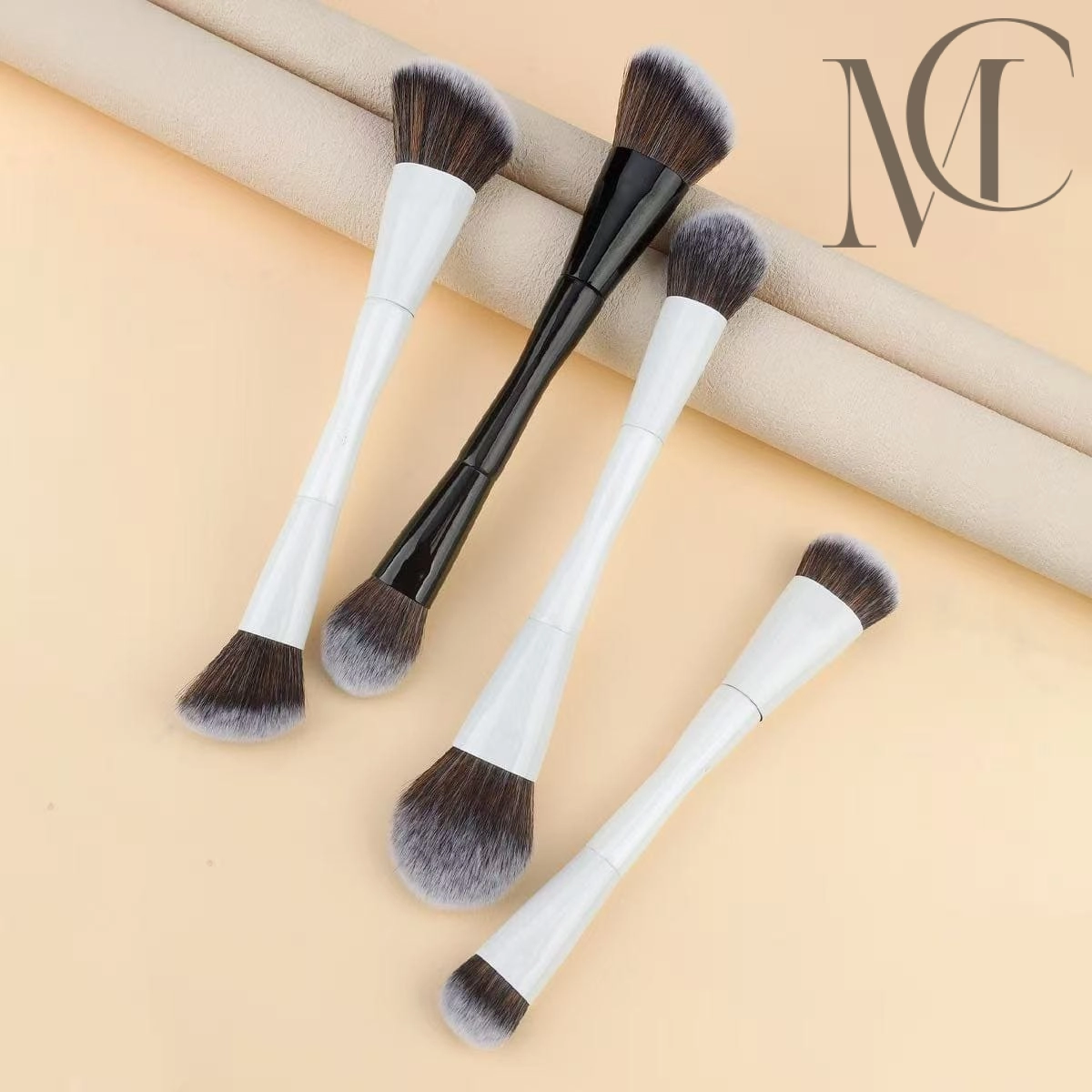
Dual-Ended Foundation & Contour Brush | 2-in-1 OEM Private Label
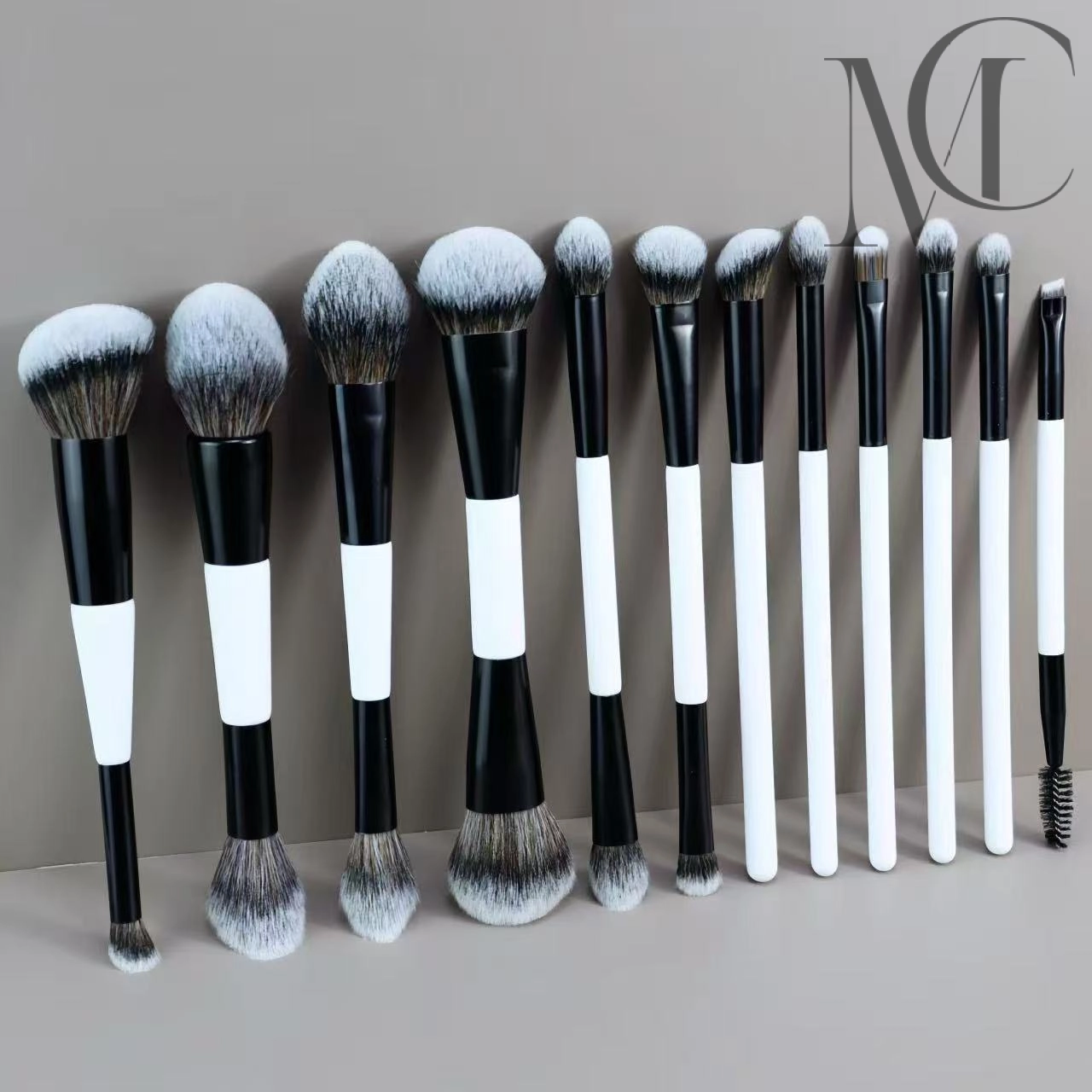
Private Label 12-Piece / 19-Head Dual-Ended Pro Makeup Brush Set | OEM Customization
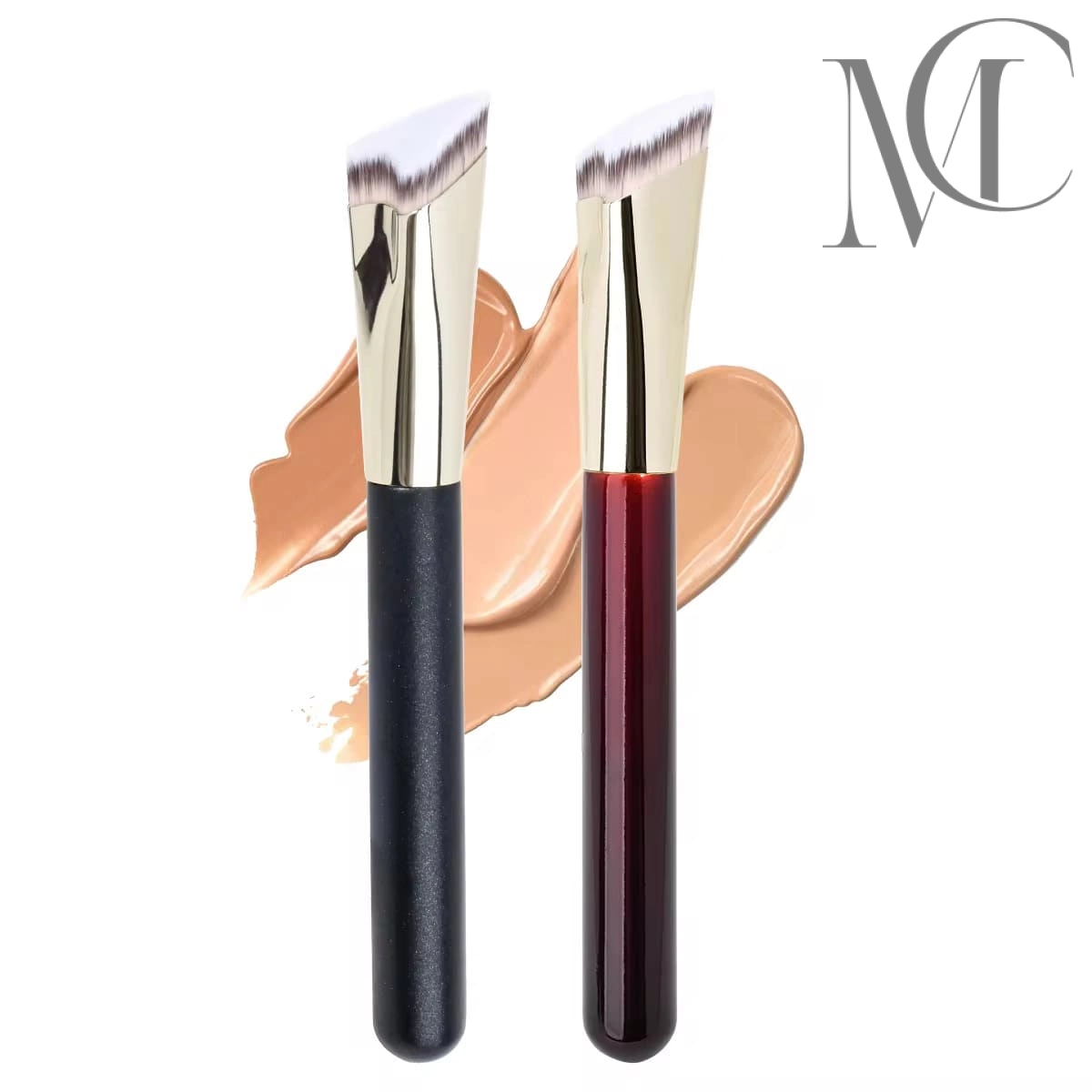
Premium Angle Foundation Brush with Synthetic Hair & Thickened Aluminum Ferrule, Elegant Wooden Handle
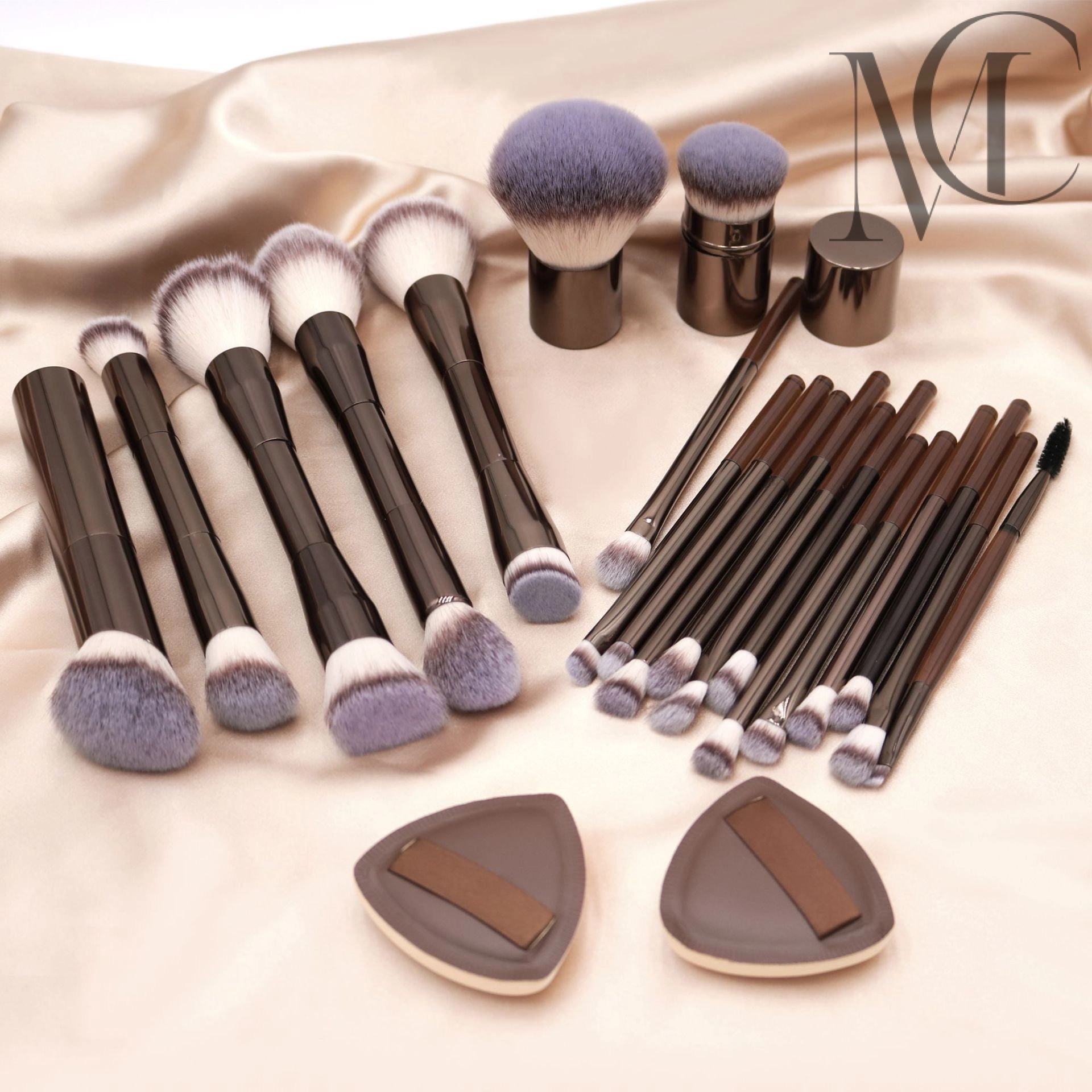
22-Piece Professional Makeup Brush Set| Brown Luxury Series | OEM Private Label Ready | Wholesale Cosmetic Brush Manufacturer
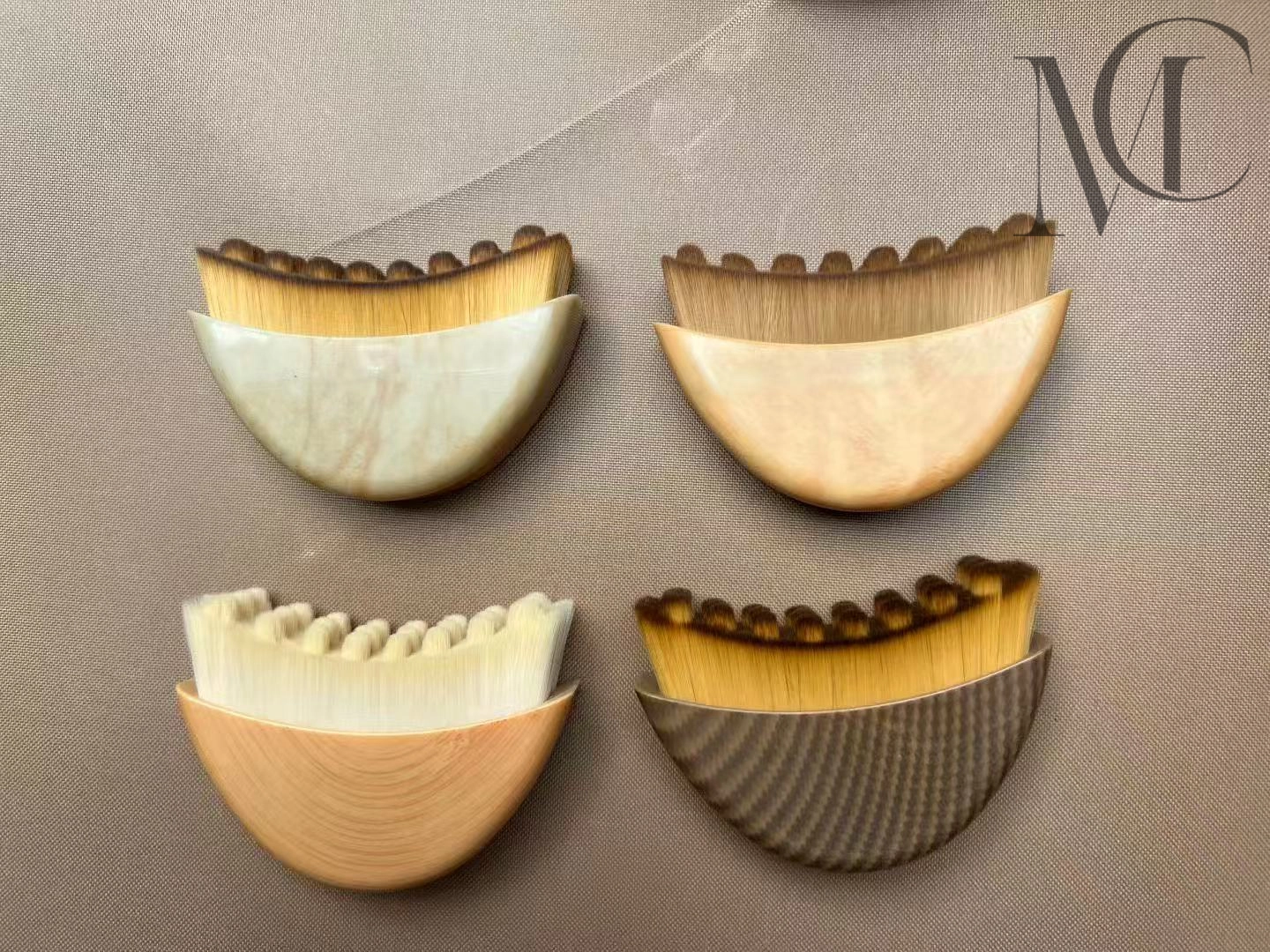
Premium Lymphatic Contour Facial Brush | Popular Makeup Brush Manufacturers
Prdoucts Categories
FAQ
For Customization
Can I request samples before placing a bulk order?
Yes. We offer sample production so you can test the quality, softness, and overall feel before confirming your bulk order. Sampling ensures every detail meets your brand expectations.
Can I customize the design, logo, and color of my makeup brushes?
Absolutely. MECO Brush provides complete customization options, including brush shape, handle design, logo printing (silk, laser, or hot stamping), ferrule color, and packaging. You can personalize every detail to reflect your brand’s identity.
Can MECO Brush help with packaging design?
Definitely. We offer custom packaging services — from simple pouches and paper boxes to luxury gift sets. Our design team can help create packaging that enhances your brand presentation and customer experience.
Can I see samples before placing a bulk order?
Absolutely. We create prototypes or samples for your approval, so you can check the quality and design before mass production.
How long does it take to make my own shape and color?
Yes, custom shapes are possible. We require a drawing with precise dimensions, either a 3D or 2D design.
As for color, just give us a color number and we'll match it. Delivery time is 7-10 days upon request.
More Insights from an Expert Cosmetic Brush Manufacturer
Dive deeper into the engineering secrets, material guides, and OEM supply chain strategies that help global beauty brands build their next best-sellers.

Hero SKU vs. Full Set: How to Build the Right Product Mix for Your Makeup Brush Brand
A lot of brand owners conflate two separate decisions when thinking about their product line: product structure and sales strategy. Untangling them makes everything clearer.
This guide explores the supply chain and commercial logic behind single hero brushes versus complete brush sets, helping you structure a product mix that maximizes Average Order Value (AOV), minimizes inventory risk, and builds a defensible luxury makeup brushes private label brand.
04/08/2026
Details ››

Skincare Applicators & Spa Brushes: The Next Big OEM Growth Category for Beauty Brands (2026)
The global spa and wellness market is projected to reach $6.6 trillion by 2025.
The professional skincare tools segment is growing at twice the rate of makeup brushes.
Most cosmetic brush brands have not noticed yet.
The ones that have are quietly launching skincare applicator lines that command retail price points 40% to 60% higher than equivalent makeup brushes—with lower competitive saturation and stronger repeat purchase rates.
This is your manufacturing guide to the category before it gets crowded.
04/06/2026
Details ››

Eco-Friendly Makeup Brushes: The Complete OEM Sourcing Guide for Sustainable Beauty Brands (2026)
In 2024, the EU banned over 2,400 chemical substances from cosmetic products. In 2025, major US retailers began requiring sustainability documentation from all new beauty tool suppliers. In 2026, your customer is reading your material list before they read your price.
The question is no longer whether your brush brand needs a sustainability strategy. The question is whether your current manufacturer can actually deliver one.
Sustainability in makeup brushes is no longer a niche positioning play for indie clean beauty brands. It is a baseline sourcing requirement being driven simultaneously by three forces:
→ Retail buyers at Sephora, Target, and major EU chains now require ESG documentation from suppliers
→ EU and US regulations are actively restricting virgin plastics and non-compliant chemical finishes
→ Millennial and Gen Z consumers—now the dominant beauty purchasing demographic—treat sustainability as a non-negotiable brand filter
This guide gives you the practical, technical framework for building a genuinely eco-friendly makeup brush line—covering materials, production standards, certifications, packaging, and what to actually ask your cosmetic brush manufacturer before placing an order.
04/05/2026
Details ››

B2B Sourcing Guide: How to Transition to a New Cosmetic Brush Factory Without Supply Chain Risks
Switching cosmetic brush suppliers without supply chain disruption is possible. Meco's B2B guide covers the 4-step transition roadmap, shedding prevention, and pilot run strategy. MOQ from 500 units. Factory-direct Shenzhen.
03/24/2026
Details ››

Beyond Synthetic: How a Vegan Makeup Brushes Manufacturer Crafts Professional-Grade Tools (2026 Edition)
True vegan brush manufacturing goes beyond synthetic bristles — it requires auditing adhesives, handle coatings, and every hidden component. Meco's complete B2B guide covers materials, certification, and sourcing strategy. Factory-direct from Shenzhen.
03/12/2026
Details ››

The Complete Technical Guide to Eco-Friendly Makeup Brushes (2026 OEM Specification)
Eco-friendly brushes require more than a bamboo handle. Meco's OEM engineering guide covers FSC, PCR, bristle specs, and retail compliance for Sephora, EU & Amazon. MOQ 500 units. Factory-direct Shenzhen.
03/02/2026
Details ››
Request Sample
Request a sample today, and our team will arrange fast delivery, helping you evaluate our materials and craftsmanship.

Contact Information


+86 133 9214 4121

Baolong Subdistrict, Longgang District, Shenzhen City, Guangdong Province, Nanyue, Dalang, North District
Add our WhatsApp
+86 133 9214 4121
Direct factory supplier of premium makeup brushes, offering small to large-scale customization.
Quick Links
• Tel: +86 13392144121
• Add: Baolong Subdistrict, Longgang District, Shenzhen City, Guangdong Province; Nanyue Dalang North District