


info@mecobrush.com
B2B Sourcing Guide: How to Transition to a New Cosmetic Brush Factory Without Supply Chain Risks
2026-03-24
- Recognizing the Tipping Point: When Is It Time to Switch?
- The 3 Biggest Risks in Transitioning—And How to Avoid Them
- The 4-Step Roadmap to a Smooth Supplier Transition
- Why Vertically Integrated Makeup Brush Contract Manufacturing Reduces Supply Chain Risk
- Ready to Future-Proof Your Beauty Supply Chain?
- Frequently Asked Questions (FAQ): Supplier Transition
Switching a core OEM supplier is one of the most difficult decisions a sourcing manager can make. When the product involved is something as brand-sensitive as cosmetic brushes, the stakes in makeup brush contract manufacturing become even higher. A single production mistake can mean inconsistent brush quality, delayed product launches, or worse—disappointed customers and damaged brand reputation.
Yet, many brands eventually reach a point where staying with their current supplier becomes even riskier. Perhaps the factory that once delivered excellent quality has begun to show signs of quality fade. Production timelines start slipping, and new material requirements—such as PCR plastics or vegan fibers—suddenly become difficult for them to support.
At that moment, procurement teams face a dilemma: do you tolerate the ongoing problems, or do you take the risk of transitioning to a new factory? The good news is that switching suppliers does not have to be chaotic. With the right technical preparation, brands can transition production smoothly and permanently strengthen their supply chain.
Recognizing the Tipping Point: When Is It Time to Switch?
Most sourcing managers don’t decide to change suppliers overnight. It usually begins with a few small warning signs that gradually become impossible to ignore. Recognizing these signals early helps brands execute a controlled transition rather than waiting for a full supply chain crisis.
-
Inconsistent Quality Across Batches: A foundation brush that once felt perfectly soft suddenly becomes scratchy in the next shipment or begins shedding bristles during cleaning. These variations often indicate deeper production control issues, such as inconsistent fiber sourcing, weak ferrule crimping, or unstable adhesive formulas.
-
Stagnant Innovation & Compliance Challenges: The beauty industry is evolving rapidly. Retailers increasingly require PCR plastic components, 100% vegan fibers, and strict compliance with chemical safety standards like the REACH Regulation and RoHS Directive. If a supplier cannot keep up with these regulatory frameworks, brands may find themselves blocked from entering major retail channels.
-
Communication Breakdowns & Missed Deadlines: When emails go unanswered, production updates become vague, and delivery schedules slip during peak holiday seasons, it completely disrupts product calendars. In a fast-moving market, unreliable communication is a fatal red flag.
The 3 Biggest Risks in Transitioning—And How to Avoid Them
Changing manufacturers introduces technical risks, but an experienced factory will anticipate and neutralize them before mass production begins.
Risk 1: Dimension and Fit Discrepancies Cosmetic brushes are often designed to fit specific packaging inserts or palettes. Even a millimeter of dimensional difference can mean brushes no longer fit into existing trays. The most reliable way to prevent this is through strict reverse engineering. A professional manufacturer will precisely measure every component, create high-accuracy 3D technical drawings, and define clear dimensional tolerances to ensure new production matches the original structure exactly.
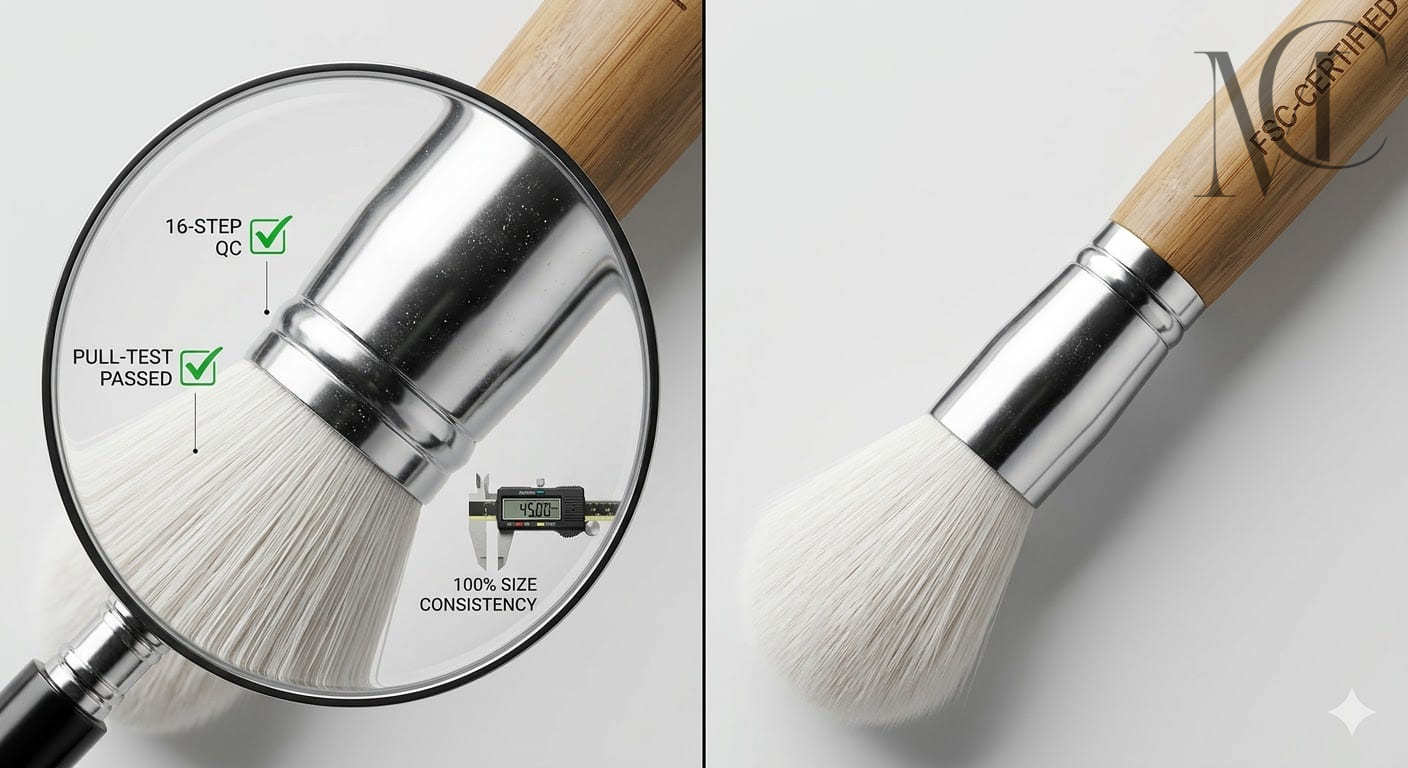
Risk 2: The "Shedding" Disaster Nothing damages a cosmetic brush's reputation faster than shedding loose fibers during makeup application. Shedding usually originates from weak adhesive formulas, insufficient ferrule pressure, or improper bristle bundling. To avoid this, demand documented testing from your new factory, including pull-test reports for bristle retention and durability tests after repeated washing. A double-crimp ferrule structure combined with industrial-grade epoxy bonding significantly improves fiber stability.
Risk 3: Color Matching and Brand Identity If a brush handle's color shifts slightly from the original design, the entire product line looks inconsistent on store shelves. Professional manufacturers rely on standardized color systems, such as the Pantone Matching System (PMS), allowing for exact shade reproduction across batches. Furthermore, abrasion testing for logo printing ensures your branding remains intact throughout the product's lifecycle.
The 4-Step Roadmap to a Smooth Supplier Transition
A structured transition process dramatically reduces sourcing risks. Follow these four steps to ensure a flawless handover:
-
The Golden Sample & Technical Package: Provide the new factory with a “golden sample”—the exact physical standard your brand wants to reproduce. Accompany this with a detailed technical package (Tech Pack) outlining handle materials, bristle fiber types, ferrule dimensions, and tolerance ranges.
-
Rapid Prototyping & Material Validation: Before mass production, physical prototyping is essential. This allows your team to physically verify brush softness, weight balance, color accuracy, and logo durability, preventing costly corrections later.
-
The Pilot Production Run: Instead of jumping directly into a 50,000-unit order, begin with a pilot run (typically 1,000 to 3,000 units). This acts as a real-world simulation, allowing both parties to evaluate material sourcing, production efficiency, and packaging compatibility.
-
Establish Clear AQL Inspection Standards: Before scaling, agree on a formal inspection framework based on the Acceptable Quality Limit (AQL). Defining acceptable thresholds for critical, major, and minor cosmetic defects ensures that the final shipment aligns perfectly with your expectations.
Why Vertically Integrated Makeup Brush Contract Manufacturing Reduces Supply Chain Risk
When evaluating partners for makeup brush contract manufacturing, the internal capabilities of the factory matter immensely. Vertically integrated factories—those that control multiple production stages entirely in-house—provide significantly greater stability than trading companies that outsource key processes.
A vertically integrated manufacturer typically operates its own in-house mold development, fiber processing workshops, ferrule forming lines, and handle coating facilities. This structure allows engineering teams to instantly troubleshoot production challenges without waiting on third-party vendors. For brands managing global launches, this absolute control over the supply chain guarantees consistent quality and rock-solid delivery timelines.
Ready to Future-Proof Your Beauty Supply Chain?
Changing cosmetic brush manufacturers doesn't have to be a gamble. With a structured transition strategy and a technically advanced manufacturing partner, you can turn a challenging sourcing decision into a long-term competitive advantage.
Don't let an underperforming supplier hold your brand back. Contact Meco Brush's engineering team today to submit your current technical drawings or golden samples. We will provide a comprehensive structural audit, precise 3D prototyping, and a risk-free pilot production plan to seamlessly upgrade your supply chain.
Frequently Asked Questions (FAQ): Supplier Transition
Q: How long does it typically take to transition makeup brush contract manufacturing to a new factory?
A: A safe and risk-free transition usually takes between 45 and 90 days. This timeline accommodates the essential steps: receiving your golden sample, reverse engineering the dimensions, rapid prototyping (7–10 days), conducting a pilot run, and finalizing strict AQL standards before launching full mass production.
Q: Will I need to pay for new custom molds if I switch my cosmetic brush supplier?
A: Not always. If your current brushes utilize standard handle shapes or ferrule sizes, a vertically integrated factory like Meco Brush often has an extensive library of existing molds that match exactly, saving you tooling costs. If your design is 100% proprietary, our in-house engineering team will create a new high-precision 3D injection mold to ensure a perfect fit for your packaging.
Q: How can I guarantee the new factory won't have bristle-shedding issues?
A: Never rely on visual inspections alone. You must demand documented structural testing. During the prototyping and pilot phases, require pull-test reports, verify the use of double-crimped metal ferrules, and confirm that the factory applies deep, industrial-grade epoxy resin to permanently lock the vegan or natural fibers in place.
Q: Do I have to place a massive mass-production order immediately with the new supplier?
A: No. A reliable partner in makeup brush contract manufacturing will actually advise against this. We highly recommend starting with a Pilot Run (typically 1,000 to 3,000 units). This smaller initial batch allows your procurement and quality control teams to validate material consistency, production efficiency, and logistics without risking a massive inventory investment.
Recommended for you
Premium Lymphatic Contour Facial Brush | Popular Makeup Brush Manufacturers
Premium Half-Moon Compact Brushes | Leading Synthetic Powder Brush Manufacturer
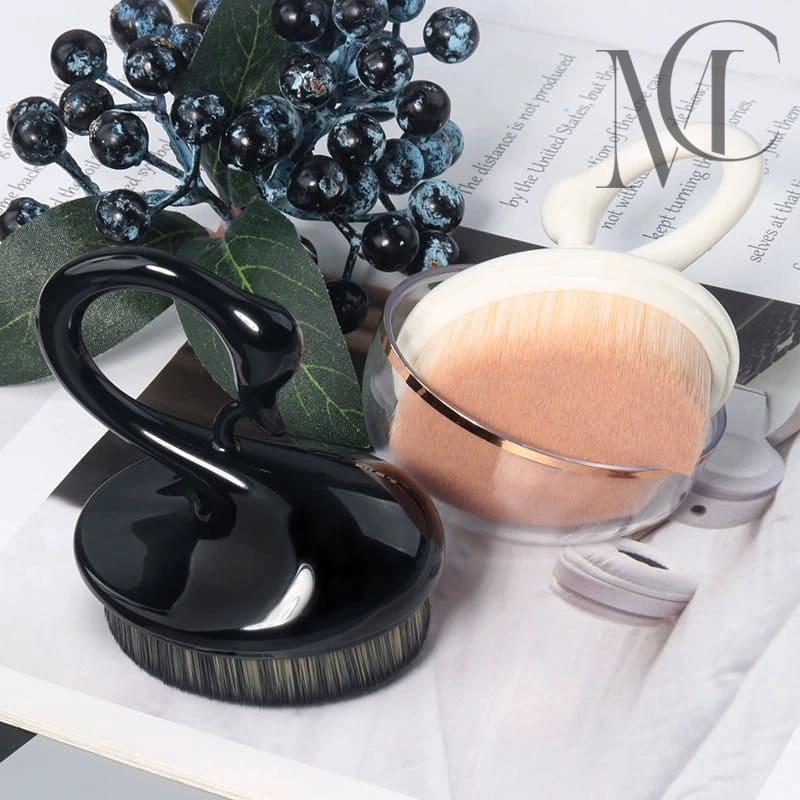
Premium Ergonomic Swan-Neck Body & Face Brush with Hygienic Cap
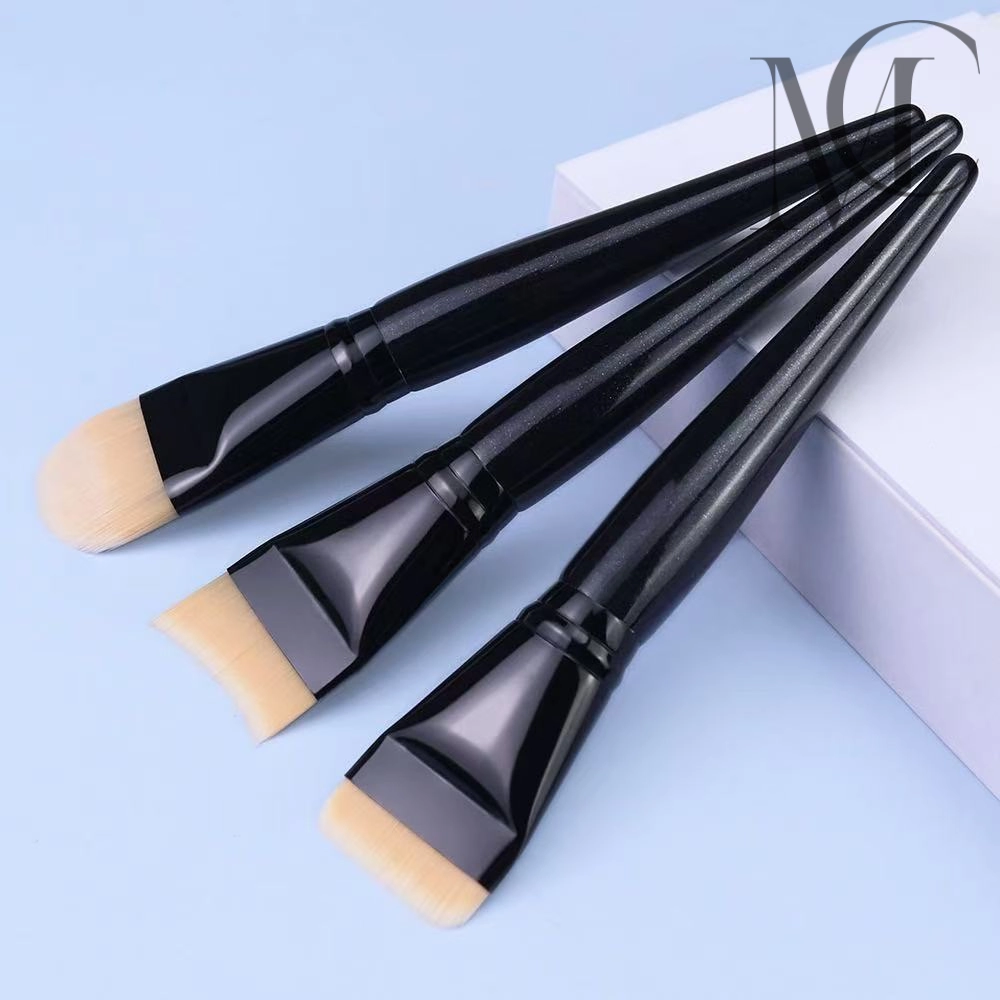
Custom Flat Top Foundation & Face Mask Brush | OEM Cosmetic Brush Manufacturer
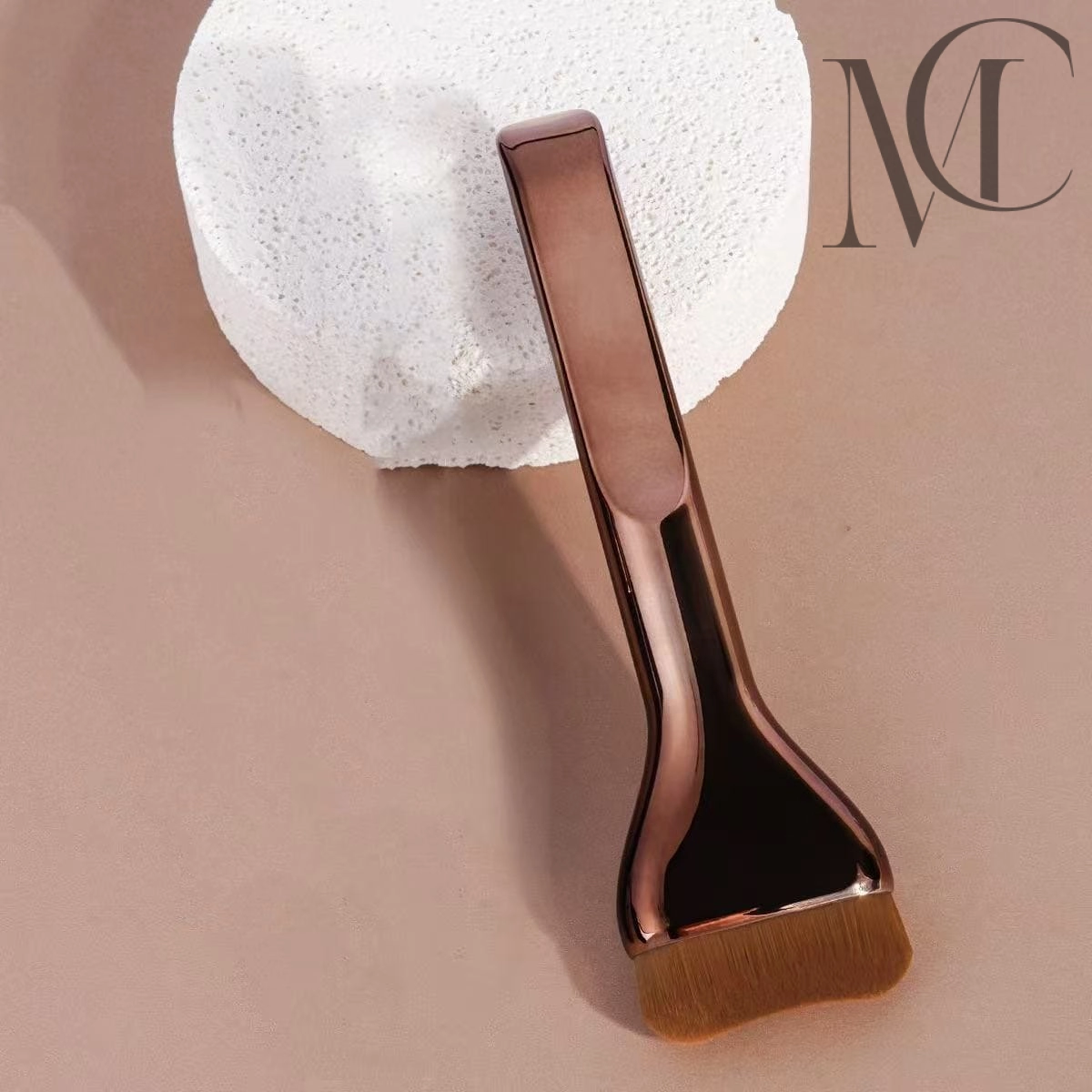
Custom Wave-Shape Contour & Foundation Brush | Ergonomic & Fully Customizable
Prdoucts Categories
FAQ
For Customization
How long does it take to make my own shape and color?
Yes, custom shapes are possible. We require a drawing with precise dimensions, either a 3D or 2D design.
As for color, just give us a color number and we'll match it. Delivery time is 7-10 days upon request.
What is your Minimum Order Quantity (MOQ)?
For in-stock brushes, our MOQ is relatively low, making it ideal for small or startup brands.
For customized brushes, the MOQ varies depending on design complexity — typically around 500–1000 sets.
How do I pay?
Trade Assurance Order, Western Union, PayPal, T/T, L/C, D/A, MoneyGram.
Can I request samples before placing a bulk order?
Yes. We offer sample production so you can test the quality, softness, and overall feel before confirming your bulk order. Sampling ensures every detail meets your brand expectations.
For Company
How can I start my custom makeup brush project with MECO Brush?
Simply reach out to our team via the contact form or email.
We’ll guide you through every step — from selecting materials to final packaging.
More Insights from an Expert Cosmetic Brush Manufacturer
Dive deeper into the engineering secrets, material guides, and OEM supply chain strategies that help global beauty brands build their next best-sellers.

The Complete Guide to Eco-Friendly Makeup Brushes (2026 OEM & Sustainable Materials Guide)
Discover meco’s 2026 guide to Eco Friendly Makeup Brushes, featuring OEM options and sustainable materials. Learn how to choose quality brushes that are kind to the planet, blending performance with eco-conscious innovation for a greener beauty routine.
03/02/2026
Details ››

Popular Makeup Brushes: The Complete Guide from a Cosmetic Brush Manufacturer
Discover the secrets behind the beauty industry's best-selling tools. As a professional cosmetic brush manufacturer, we break down the design innovations, material choices, and manufacturing strategies that make popular makeup brushes go viral. Read our complete guide to learn how to engineer your brand's next highly profitable hero product.
02/23/2026
Details ››

Ferrule Failure Can Ruin Everything: Aluminum vs. Brass Deep Dive from a Professional Cosmetic Brush Manufacturer
Why do luxury makeup brushes survive years of professional use, while others fall apart in weeks? The secret rarely lies in the bristles or the handle. It hides in the middle: the ferrule. This small metal sleeve is the structural backbone of your beauty tools. Choose the wrong material, and even the softest synthetic fibers won't save your product from shedding, cracking, or catastrophic failure.
In this expert guide, a seasoned cosmetic brush manufacturer pulls back the curtain on the "invisible craftsmanship" of brush making. We break down the engineering reality of Aluminum vs. Brass makeup brush ferrules, helping beauty brands make bulletproof manufacturing decisions that protect their reputation and bottom line.
02/21/2026
Details ››

Kolinsky vs Synthetic Nail Brushes: Precision, Snap & Acetone Resistance Explained
Is your nail brush "snapping" back, or just snapping under pressure?
In the precision-driven world of nail artistry, the difference between a loyal customer and a product return often hangs by a single bristle. With the 2026 market demanding ultra-fine liners and intricate 3D sculpting, the debate between Kolinsky (Natural) and Synthetic fibers has never been more critical.
But material is only half the story. As a veteran cosmetic brush manufacturer applying engineering precision to nail tools, we are pulling back the curtain on the "invisible craftsmanship."
In this guide, we dive deep into the science of acetone resistance, the art of double-crimp ferrules, and how to choose the perfect tool for Acrylic versus Gel systems. Whether you are a private label brand or a salon supplier, this is your blueprint for building a high-performance nail brush collection that lasts.
02/12/2026
Details ››

2026 Ultimate Guide to Custom Makeup Brushes: A Deep Dive from Bristle Science to Handle Craftsmanship
Discover meco’s 2026 Guide to Custom Makeup Brushes, exploring bristle science and handle craftsmanship. As a leading makeup brush company, we deliver expert insights to help you choose quality, durable brushes tailored to your beauty needs.
02/05/2026
Details ››

Understanding MOQs in Makeup Brush Manufacturing: Why Custom Molds Cost More (But Are Worth the Investment)
Discover why MOQs matter in makeup brush manufacturing and how investing in custom molds enhances quality. Meco, a trusted custom makeup brushes manufacturer, explains the cost factors and benefits, helping meco stand out with superior, tailor-made tools.
02/04/2026
Details ››
Request Sample
Request a sample today, and our team will arrange fast delivery, helping you evaluate our materials and craftsmanship.

Contact Information


+86 133 9214 4121

Baolong Subdistrict, Longgang District, Shenzhen City, Guangdong Province, Nanyue, Dalang, North District
Add our WhatsApp
+86 133 9214 4121
Direct factory supplier of premium makeup brushes, offering small to large-scale customization.
Quick Links
• Tel: +86 13392144121
• Add: Baolong Subdistrict, Longgang District, Shenzhen City, Guangdong Province; Nanyue Dalang North District