

info@mecobrush.com
The Complete Technical Guide to Eco-Friendly Makeup Brushes (2026 OEM Specification)
2026-03-02
- What Makes a Makeup Brush Genuinely Eco-Friendly?
- Material Selection Decision Framework
- Handle Material Specification Guide (What to Actually Ask For)
- FSC-Certified Wood
- Bamboo
- PCR Plastic (Post-Consumer Recycled)
- Bristle Engineering for Sustainable Brush Lines
- Production Engineering: The OEM Verification Checklist
- Certification Requirements by Retail Channel
- Packaging Engineering for Eco-Compliant Brush Lines
- Meco's Eco-Friendly OEM Manufacturing Program
- Frequently Asked Questions
- See and Feel the Engineering Difference
Most brands get sustainability wrong in the exact same way. They switch to a bamboo handle. They print "eco-friendly" on the packaging. They call it done.
Then a retail buyer asks for FSC chain-of-custody documentation. A customer asks why the brush shed after three washes. An EU compliance team flags the handle finish for high VOC content.
"Sustainability is not a marketing label. It is an engineering standard — and it runs from the raw material sourcing decision all the way through to how the product decomposes after consumer use."
This guide gives you the technical framework behind genuinely sustainable makeup brush manufacturing—covering material specifications, production engineering, certification requirements, and the hard questions you must ask your cosmetic brush manufacturer partner. As a trusted supplier to global beauty retailers like Sephora, our engineering team has navigated these exact compliance audits firsthand.
(💡 Related Reading: If you are just starting your sustainable brand journey, read our foundational pillar page: [Eco-Friendly Makeup Brushes: The Complete OEM Sourcing Guide for Sustainable Beauty Brands])
What Makes a Makeup Brush Genuinely Eco-Friendly?
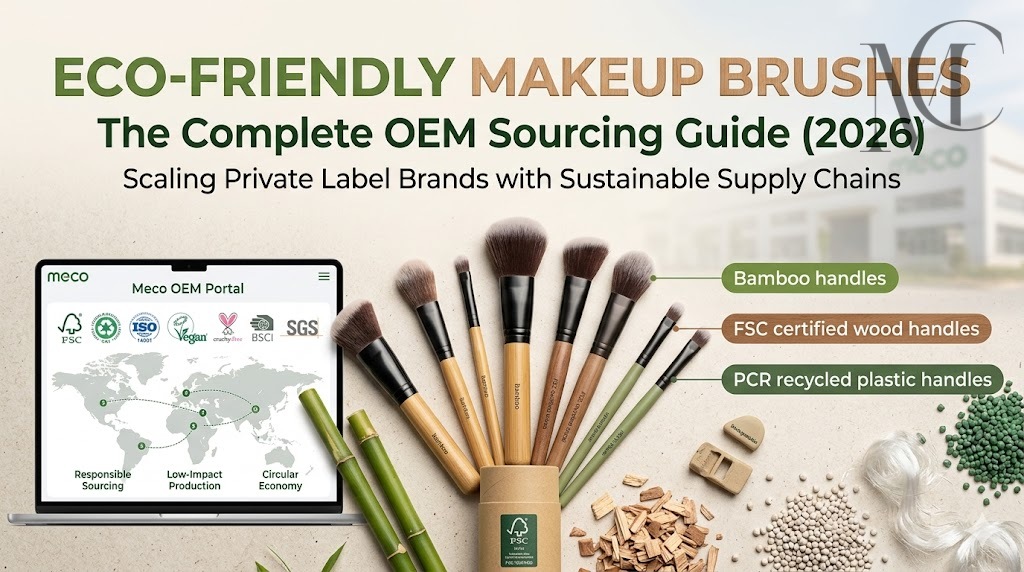
The word "eco-friendly" has been used so broadly in beauty marketing that it has nearly lost its meaning. From a manufacturing perspective, a brush is genuinely sustainable only when it meets responsible standards across three distinct stages:
-
1. Responsible Sourcing: Every material input—from handle timber to bristle fiber to packaging paper—must be either recycled with verified content certification or renewable with traceable chain-of-custody documentation.
-
2. Low-Impact Production: The manufacturing process itself must minimize energy consumption, chemical emissions, water usage, and material waste. ISO 14001 environmental management certification is the benchmark standard for verifying this.
-
3. Durability & End-of-Life Design: A high-quality brush that lasts three years generates a fraction of the waste of three cheap brushes replaced annually. Furthermore, mono-material designs enable consumer-side recycling, and biodegradable components reduce landfill contribution.
Material Selection Decision Framework
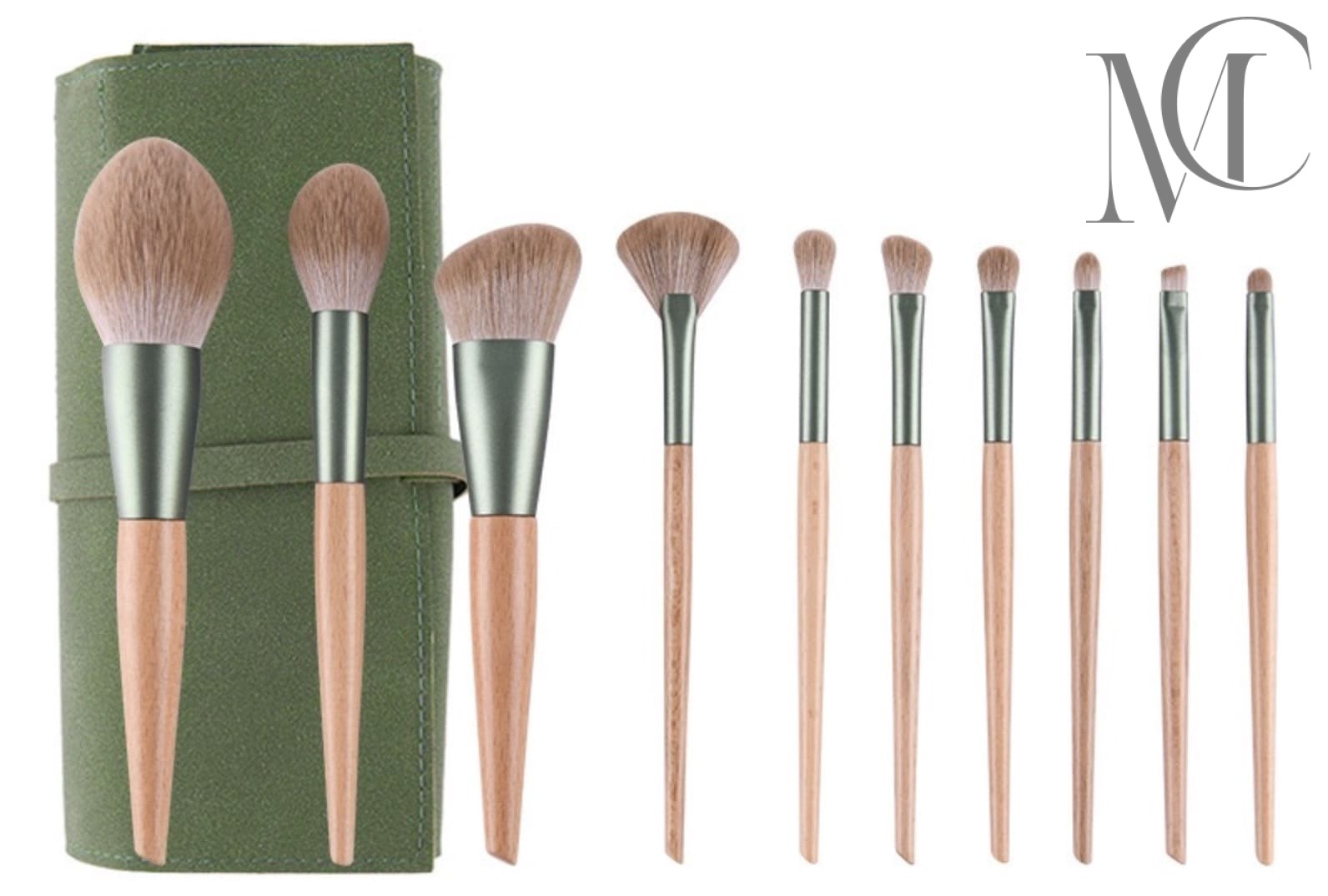
The handle is the highest-impact sustainability decision in brush manufacturing. Use this matrix to match your brand's requirements to the correct material before engaging your manufacturer.
| Handle Material | Best Market Fit & Brand Positioning | Cost Impact | Key Required Certifications |
| FSC-Certified Wood | Premium Retail / Clean Beauty ($40+ sets) | +5% to 15% | FSC Chain-of-Custody |
| PCR Plastic (30-100%) | Sephora/Target Compliance/Complex Shapes | Cost-Neutral | GRS & TC (Transaction Cert) |
| Bamboo | Natural/Minimalist/Asian Eco-Markets | Low-Mid | FSC (Optional but recommended) |
| Bio-Composite / PLA | Gen Z / Story-driven Indie Brands | +20% to 40% | TÜV / DIN CERTCO |
Handle Material Specification Guide (What to Actually Ask For)
FSC-Certified Wood
FSC certification covers the forest management source, but it does not guarantee the finished handle is safe. Specify these two elements in your OEM brief:
-
Finish Chemistry: All finishes must use water-based or low-VOC lacquers. Always request MSDS documentation for the specific coating product used.
-
Moisture Engineering: Wood handles must be properly kiln-dried. If not moisture-stabilized before finishing, they will crack, warp, or delaminate in humid climates.
Bamboo
Bamboo's sustainability credentials are genuine, but bamboo handle failures in retail are disproportionately common due to factory shortcuts. You must verify:
-
Carbonization Depth: Must be sufficient to prevent surface mold.
-
Anti-Mold Treatment: Must be applied and verified—not assumed.
-
Surface Sealing: Must prevent moisture absorption during consumer washing without relying on toxic solvent-based coatings.
PCR Plastic (Post-Consumer Recycled)
PCR is typically available in 30%, 50%, or 100% ratios. Higher ratios deliver stronger credentials but introduce greater batch-to-batch color variation. For precise Pantone matching, 30% to 50% PCR is the practical limit without expensive color standardization engineering. GRS certification is mandatory for retail compliance.
Bristle Engineering for Sustainable Brush Lines
The performance gap between premium synthetic vegan fibers and natural animal hair has closed. But not all synthetic fibers deliver equivalent sustainability credentials.
-
PBT Fiber (The Production Standard): The baseline for professional vegan brushes. When specifying PBT, explicitly define the fiber diameter range (in microns) in your OEM brief. It is the single most impactful quality decision for powder pickup.
-
Nanofiber Technology: Replicates the microscopic cuticle structure of natural hair. Worth the premium for $30+ retail tier brushes, making explicit performance comparisons to animal hair.
-
Antimicrobial Integration: Silver-ion technology integrated into the fiber (not just coated) prevents bacterial growth. A brush that lasts twice as long generates half the waste. Request ISO 22196 certification.
Production Engineering: The OEM Verification Checklist
The most common mistake in sustainable sourcing is accepting material claims without verifying facility standards. A manufacturer who cannot provide specific, documented answers to these questions is not a verified sustainable partner.
Ask your OEM cosmetic brush manufacturer:
-
✅ Wood Processing: What is the moisture content specification at the time of finishing? Do you use CNC precision cutting to reduce waste? (At Meco, CNC cutting reduces wood material waste by ~23%).
-
✅ Chemical Safety: Are handle coatings water-based? Can you provide the MSDS?
-
✅ Fiber Processing: Are closed-loop water systems used during fiber processing?
-
✅ Assembly: Is double-crimp ferrule construction standard? Are you using water-based epoxy?
-
✅ Facility Standards: What is your current ISO 14001 certification status?
Certification Requirements by Retail Channel
Understanding the certification landscape saves significant time and cost:
-
· US Retail (Sephora, Target, Ulta): FSC chain-of-custody for wood/bamboo, GRS for recycled content, Cruelty-Free certification, and SGS safety testing. Manufacturing for retailers like Sephora requires passing strict ESG supplier scorecards and facility audits—a standard we maintain across our production lines.
-
· EU Retail: REACH compliance documentation for all chemical inputs is mandatory. ISO 14001 is increasingly required. EU plastic regulations dictate strict documentation for recycled claims.
-
· Amazon FBA: SGS safety testing, Cruelty-Free certification, and accurate material content labeling.
Packaging Engineering for Eco-Compliant Brush Lines
Packaging is audited before the product in most retail sustainability compliance reviews.
-
Paper & Ink: FSC-certified paper stock with soy-based or water-based ink is the baseline. The FSC certificate must cover the specific paper mill used.
-
Plastic-Free Claims: Every component (inner trays, window films, tape) must be confirmed plastic-free. A kraft box with a PVC window is not a plastic-free product.
-
Reusable Cases: Organic cotton, recycled canvas, or vegan PU leather pouches extend product lifespan. (Explore our [Custom Packaging Solutions for Brush Sets])
-
Carton Optimization: Eliminating void space reduces material usage and dimensional weight freight charges simultaneously.
Meco's Eco-Friendly OEM Manufacturing Program
Meco operates a vertically integrated manufacturing facility in Shenzhen. We process raw bristle fiber, assemble brush components, and fabricate retail packaging under one roof — with no subcontracting at any production stage.
Our facility is fully audited and currently supplies brushes to leading global retail chains, including Sephora. This ensures complete control over every sustainability specification and guarantees your products will pass the most rigorous international buyer compliance reviews.
Our Standard Eco Capabilities Include:
-
FSC-certified wood and bamboo with standard water-based coating.
-
PCR plastic handles (30% to 100% GRS-certified ratios).
-
Vegan PBT and bionic nanofibers with strict diameter specifications.
-
Antimicrobial fiber integration (ISO 22196 certified).
-
Recycled aluminum ferrules with mechanical double-crimping.
-
Complete documentation: FSC, GRS, ISO 14001, BSCI, SGS, Vegan, Cruelty-Free, and MSDS.
[MOQ starts from 500 units | Samples in 7-10 Days | Bulk in 25-35 Days ]
Frequently Asked Questions
Q: How do I verify that eco-friendly claims from a manufacturer are genuine and not greenwashing?
Request specific documentation before accepting any claim. FSC certificates should include a verifiable code. GRS certificates must include Transaction Certificates (TC). If a manufacturer cannot provide these documents upon request before bulk production begins, treat it as unverified.
Q: Can I get all required certifications from a single manufacturer?
Yes, but only if the manufacturer is genuinely vertically integrated. A manufacturer who subcontracts handling production or packaging to separate facilities introduces certification gaps. Ask your manufacturer to document which stages are in-house versus subcontracted.
Q: How long does the certification documentation process take?
For projects using Meco's standard eco materials, documentation is available immediately. For custom formulations requiring new applications (like a proprietary PCR ratio), allow 4 to 6 weeks. Always plan certification timelines before your retail buyer presentation deadlines.
See and Feel the Engineering Difference
Genuine sustainability in makeup brush manufacturing is not achieved by choosing one green material. It is the result of correct specification decisions across every component.
Request Meco's Eco Material Sample Kit to physically compare FSC wood, bamboo, PCR plastic, and bio-composite handles side-by-side—with full certification documentation included for every material.
📧 Email: info@mecobrush.com
💬 WhatsApp: +86 133 9214 4121
Recommended for you
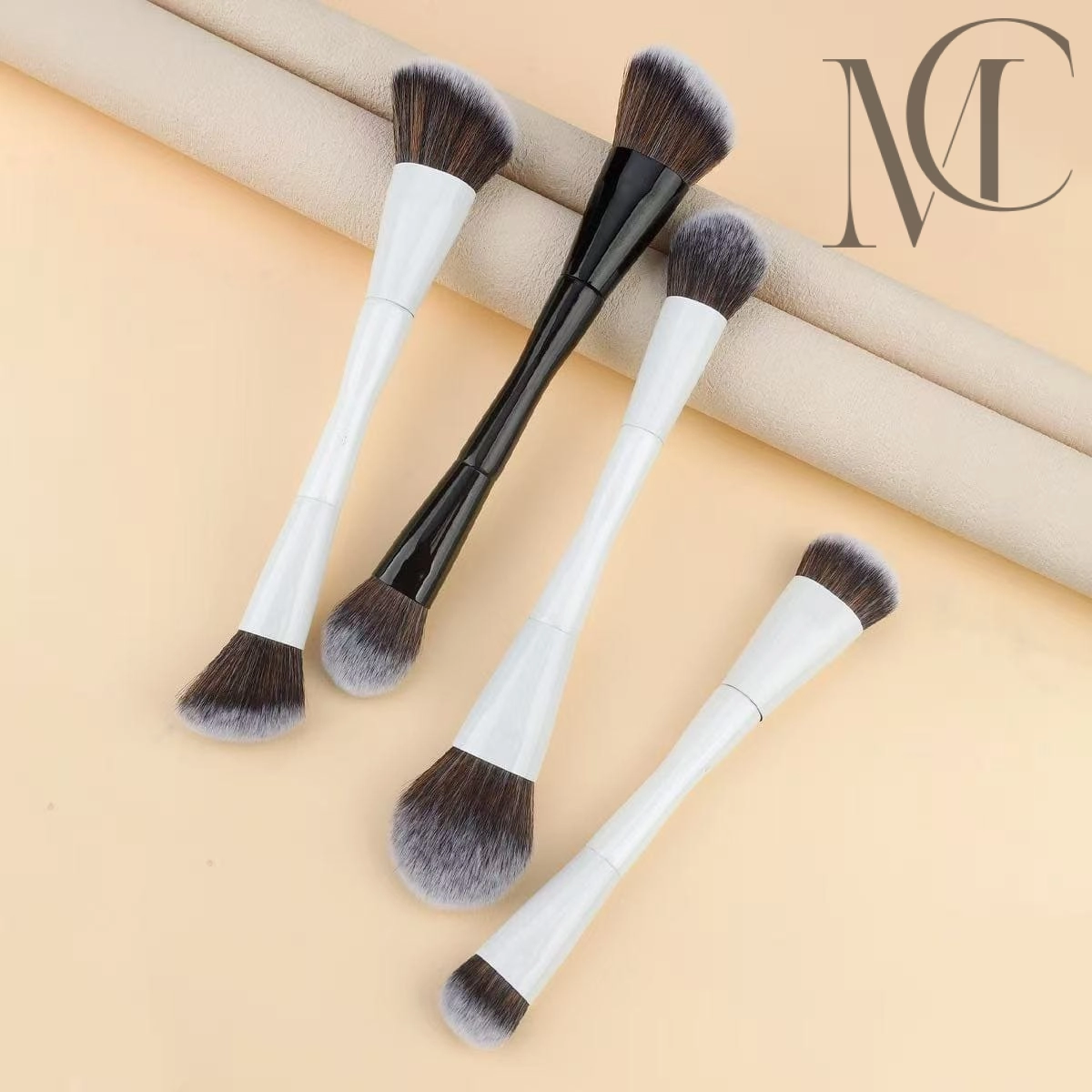
Dual-Ended Foundation & Contour Brush | 2-in-1 OEM Private Label
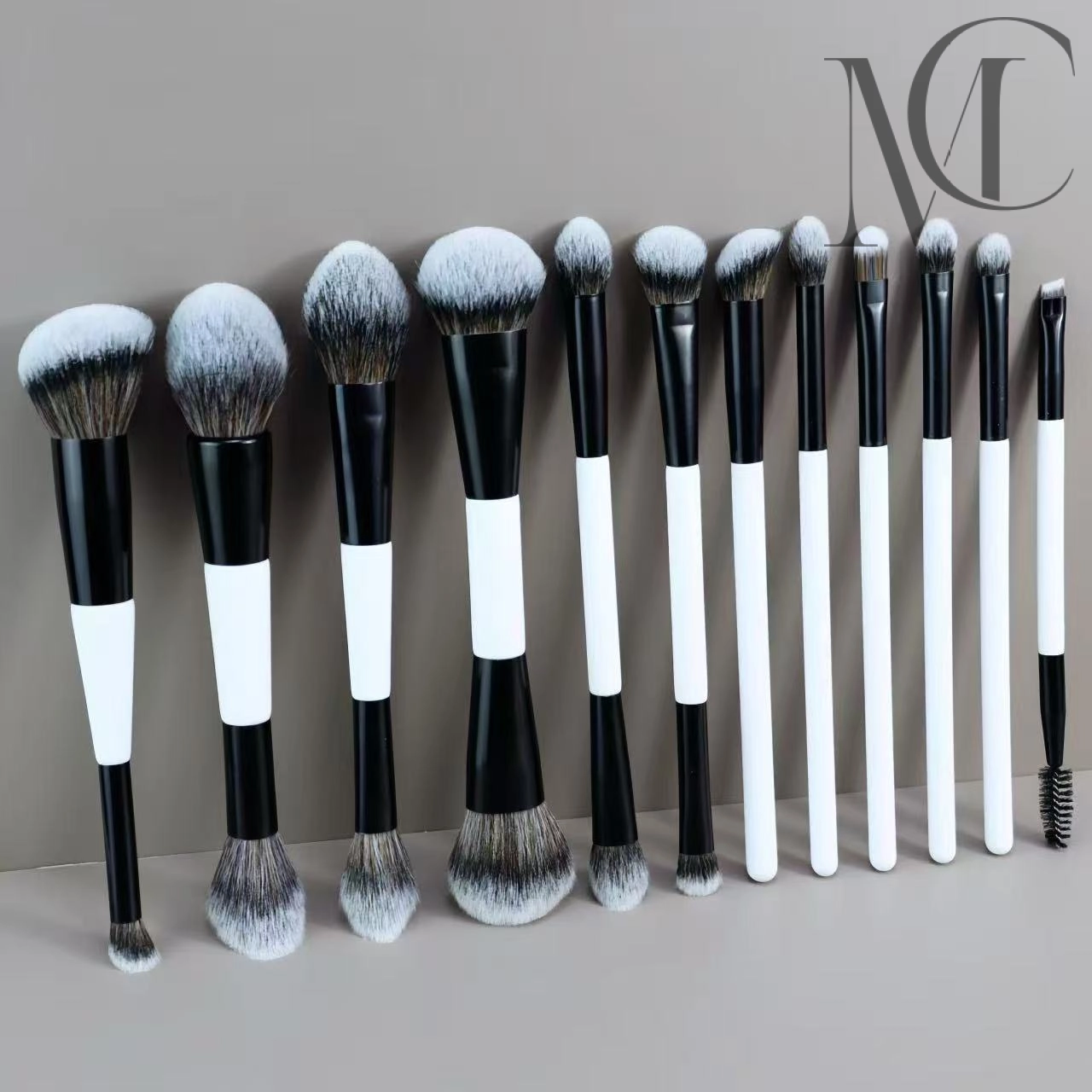
Private Label 12-Piece / 19-Head Dual-Ended Pro Makeup Brush Set | OEM Customization
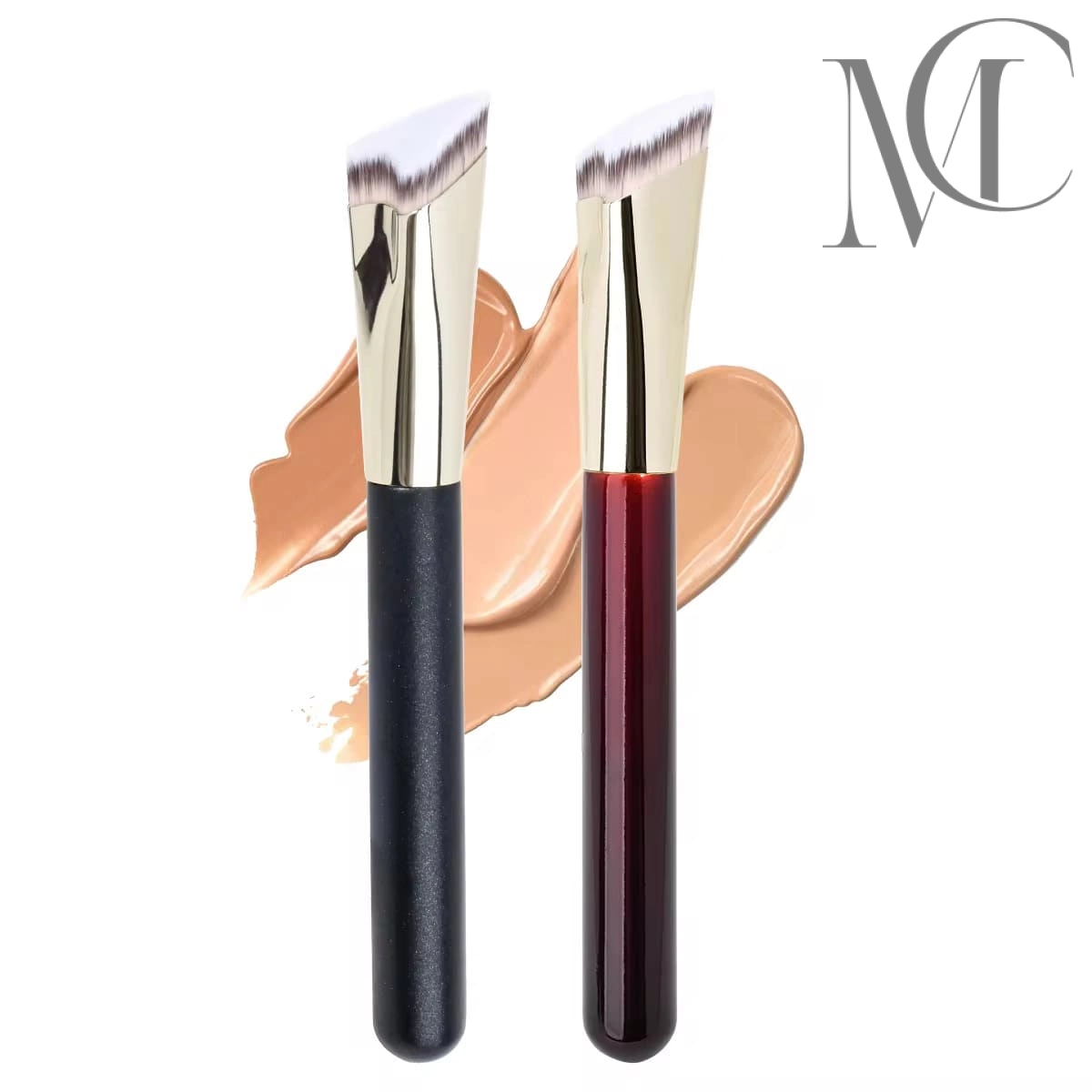
Premium Angle Foundation Brush with Synthetic Hair & Thickened Aluminum Ferrule, Elegant Wooden Handle
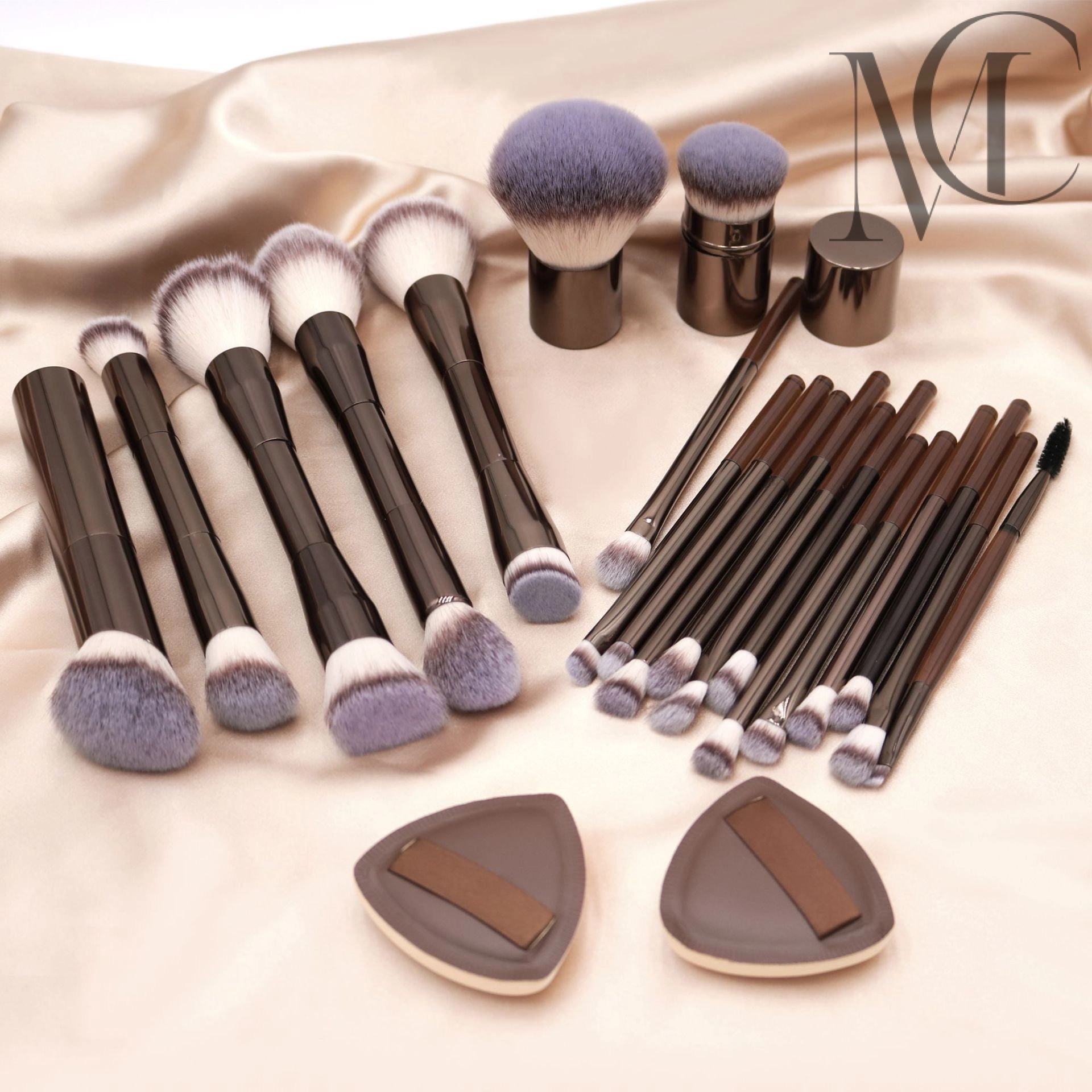
22-Piece Professional Makeup Brush Set| Brown Luxury Series | OEM Private Label Ready | Wholesale Cosmetic Brush Manufacturer
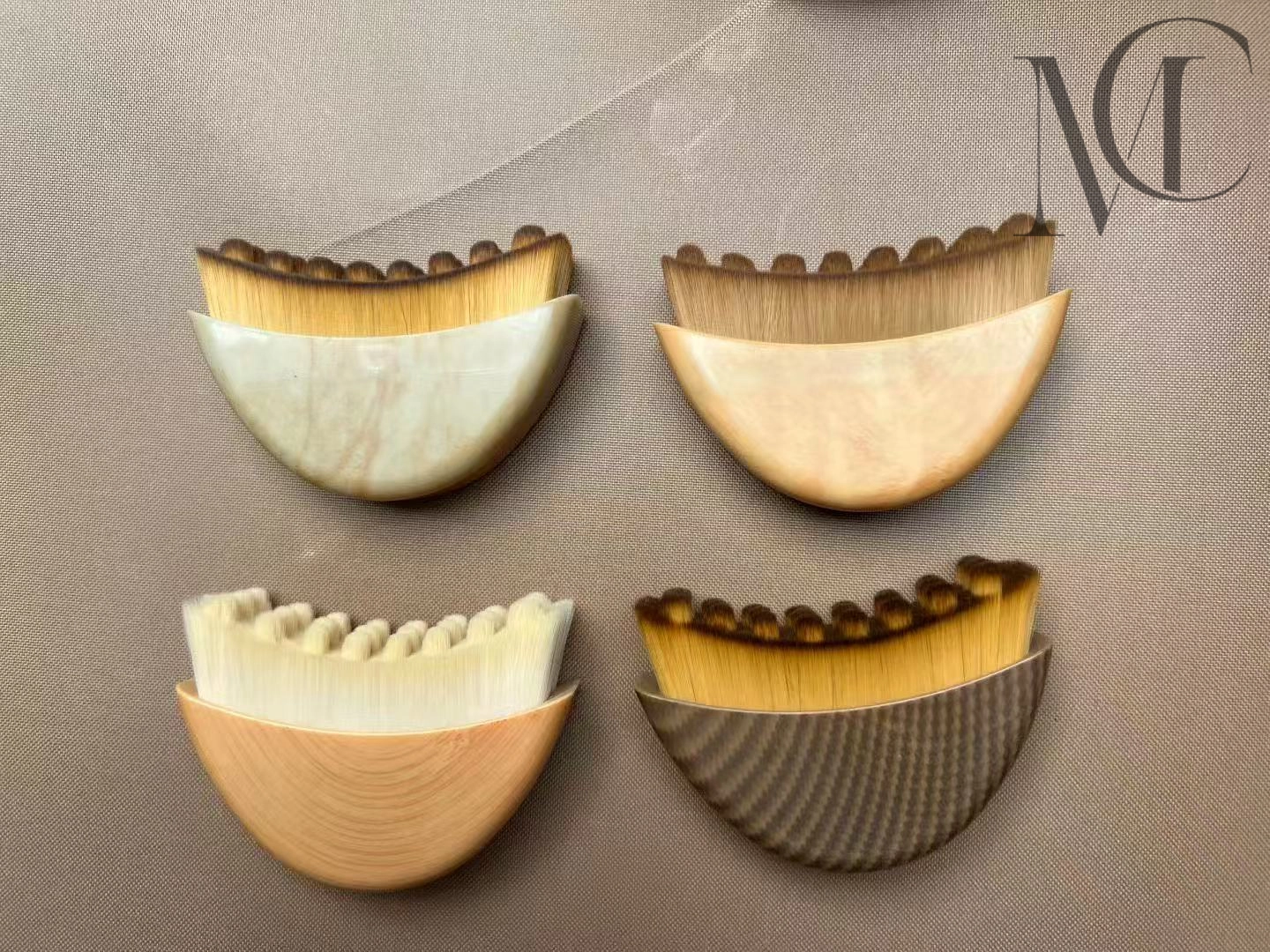
Premium Lymphatic Contour Facial Brush | Popular Makeup Brush Manufacturers
Prdoucts Categories
FAQ
For Customization
Can you comply with our brand's strict chemical testing requirements (e.g., REACH, RoHS)?
-
-
Yes. We source certified raw materials and use eco-friendly, non-toxic adhesives and paints that pass strict international chemical compliance tests.
-
-
How do you ensure quality control?
Quality is our top priority. Each brush goes through multiple inspection stages — checking bristle density, hair shedding, glue strength, handle balance, and overall finish — before shipping.
We guarantee each piece meets international standards and your brand’s expectations.
How long does it take to produce custom makeup brushes?
Production time depends on your order details and customization requirements.
Typically, it takes 15–30 days after sample approval for bulk production.
If you have a specific deadline or launch date, we can create a tailored schedule to meet your timeline.
What is your Minimum Order Quantity (MOQ)?
For in-stock brushes, our MOQ is relatively low, making it ideal for small or startup brands.
For customized brushes, the MOQ varies depending on design complexity — typically around 500–1000 sets.
For Company
Do you accept third-party factory audits (e.g., SGS, Intertek)?
Absolutely. We maintain a transparent supply chain and welcome third-party audits to verify our quality management systems and ethical labor practices.
More Insights from an Expert Cosmetic Brush Manufacturer
Dive deeper into the engineering secrets, material guides, and OEM supply chain strategies that help global beauty brands build their next best-sellers.

Hero SKU vs. Full Set: How to Build the Right Product Mix for Your Makeup Brush Brand
A lot of brand owners conflate two separate decisions when thinking about their product line: product structure and sales strategy. Untangling them makes everything clearer.
This guide explores the supply chain and commercial logic behind single hero brushes versus complete brush sets, helping you structure a product mix that maximizes Average Order Value (AOV), minimizes inventory risk, and builds a defensible luxury makeup brushes private label brand.
04/08/2026
Details ››

Skincare Applicators & Spa Brushes: The Next Big OEM Growth Category for Beauty Brands (2026)
The global spa and wellness market is projected to reach $6.6 trillion by 2025.
The professional skincare tools segment is growing at twice the rate of makeup brushes.
Most cosmetic brush brands have not noticed yet.
The ones that have are quietly launching skincare applicator lines that command retail price points 40% to 60% higher than equivalent makeup brushes—with lower competitive saturation and stronger repeat purchase rates.
This is your manufacturing guide to the category before it gets crowded.
04/06/2026
Details ››

Eco-Friendly Makeup Brushes: The Complete OEM Sourcing Guide for Sustainable Beauty Brands (2026)
In 2024, the EU banned over 2,400 chemical substances from cosmetic products. In 2025, major US retailers began requiring sustainability documentation from all new beauty tool suppliers. In 2026, your customer is reading your material list before they read your price.
The question is no longer whether your brush brand needs a sustainability strategy. The question is whether your current manufacturer can actually deliver one.
Sustainability in makeup brushes is no longer a niche positioning play for indie clean beauty brands. It is a baseline sourcing requirement being driven simultaneously by three forces:
→ Retail buyers at Sephora, Target, and major EU chains now require ESG documentation from suppliers
→ EU and US regulations are actively restricting virgin plastics and non-compliant chemical finishes
→ Millennial and Gen Z consumers—now the dominant beauty purchasing demographic—treat sustainability as a non-negotiable brand filter
This guide gives you the practical, technical framework for building a genuinely eco-friendly makeup brush line—covering materials, production standards, certifications, packaging, and what to actually ask your cosmetic brush manufacturer before placing an order.
04/05/2026
Details ››

B2B Sourcing Guide: How to Transition to a New Cosmetic Brush Factory Without Supply Chain Risks
Switching cosmetic brush suppliers without supply chain disruption is possible. Meco's B2B guide covers the 4-step transition roadmap, shedding prevention, and pilot run strategy. MOQ from 500 units. Factory-direct Shenzhen.
03/24/2026
Details ››

Beyond Synthetic: How a Vegan Makeup Brushes Manufacturer Crafts Professional-Grade Tools (2026 Edition)
True vegan brush manufacturing goes beyond synthetic bristles — it requires auditing adhesives, handle coatings, and every hidden component. Meco's complete B2B guide covers materials, certification, and sourcing strategy. Factory-direct from Shenzhen.
03/12/2026
Details ››

The Complete Technical Guide to Eco-Friendly Makeup Brushes (2026 OEM Specification)
Eco-friendly brushes require more than a bamboo handle. Meco's OEM engineering guide covers FSC, PCR, bristle specs, and retail compliance for Sephora, EU & Amazon. MOQ 500 units. Factory-direct Shenzhen.
03/02/2026
Details ››
Request Sample
Request a sample today, and our team will arrange fast delivery, helping you evaluate our materials and craftsmanship.

Contact Information


+86 133 9214 4121

Baolong Subdistrict, Longgang District, Shenzhen City, Guangdong Province, Nanyue, Dalang, North District
Add our WhatsApp
+86 133 9214 4121
Direct factory supplier of premium makeup brushes, offering small to large-scale customization.
Quick Links
• Tel: +86 13392144121
• Add: Baolong Subdistrict, Longgang District, Shenzhen City, Guangdong Province; Nanyue Dalang North District