

info@mecobrush.com
Inside the Factory: How We Ensure Every Bristle Stays in Place
2026-01-14
For any beauty brand, product failure is a nightmare scenario. A customer unboxes a premium brush, applies their foundation, and looks in the mirror only to find loose bristles stuck to their face.
In the competitive beauty industry, shedding is the number one reason for product returns and negative reviews. As a dedicated cosmetic brush manufacturer for global brands, Mecobrush understands that the durability of a brush is the backbone of your reputation.
That’s why we treat "bristle retention" not just as a manufacturing step, but as a science. Today, we are taking you inside our factory to show you exactly how we ensure every single bristle stays exactly where it belongs.
1. The Foundation: It Starts with the Right Glue
Many manufacturers cut costs by using standard industrial adhesives that become brittle over time or degrade when exposed to brush cleansers and water. We don't.
We use a specialized, imported, eco-friendly epoxy resin specifically formulated for cosmetic tools.
-
Water-Resistant: It withstands daily washing without dissolving.
-
High Elasticity: It allows for slight flexibility, preventing the "brittle snap" effect that causes tufts to fall out in clumps.
-
Heavy Metal Free: Safety is just as important as durability.
-
2. The "Deep Pour" Technique
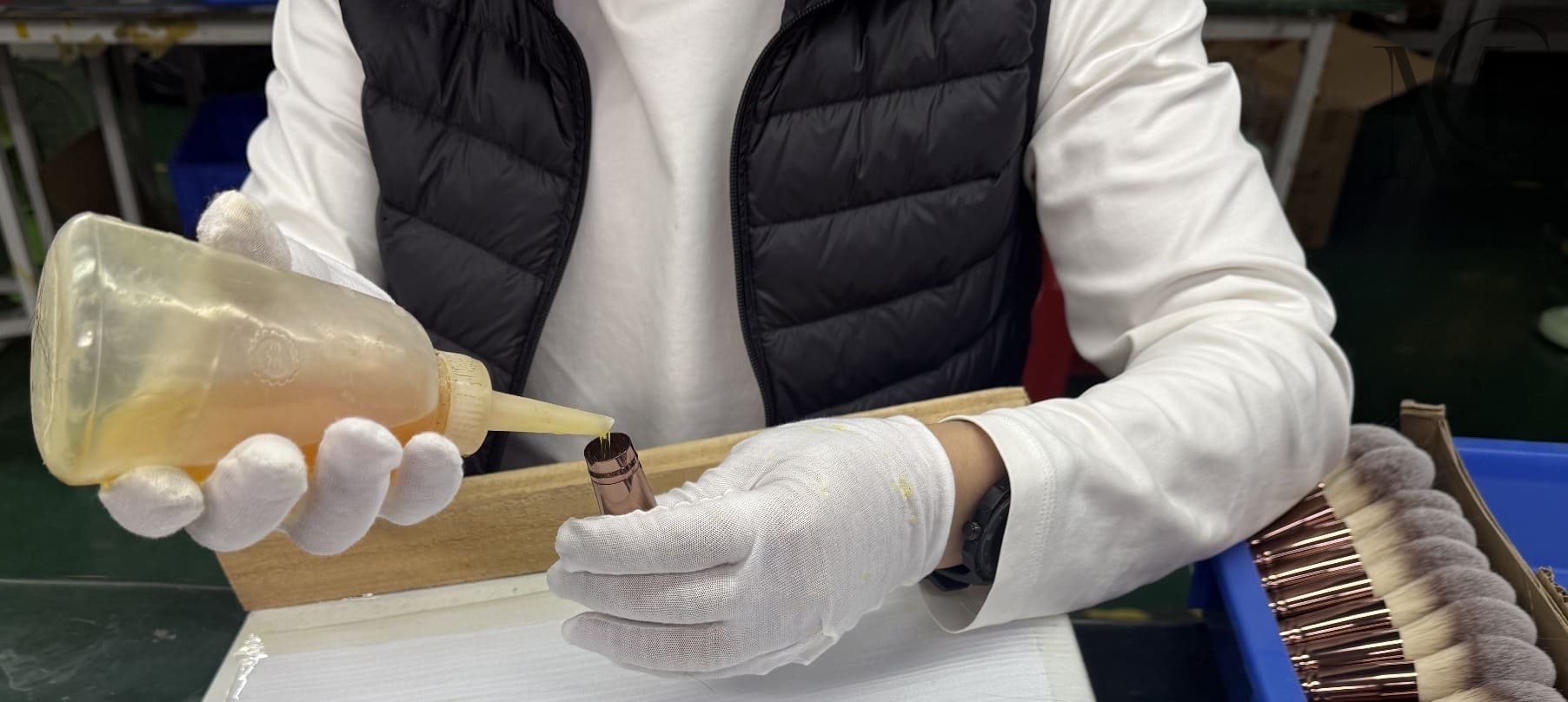
The most common cause of shedding is insufficient glue depth. If the glue only touches the very tips of the bristles, they will eventually pull free.
At Mecobrush, we utilize a "Deep Pour" Injection Method:
-
Precision Weighing: Every brush head is weighed to the milligram to ensure the density perfectly matches the ferrule size. If it’s too loose, bristles fall out; if it’s too tight, the glue can't penetrate.
-
Vertical Penetration: We inject the adhesive into the base of the ferrule, ensuring it saturates the bottom 3-5 mm of the bristle bundle. This creates a solid, unified "plug" at the base that is physically impossible to pull apart under normal use.
3. The Curing Process: Patience is Key
Speed is the enemy of quality. In some mass-production facilities, heat is used to "flash cure" the glue to ship faster. This makes the bond weak and brittle.
We allow for a slow-curing process in a temperature-controlled environment. This gives the epoxy time to bond molecularly with both the bristles (whether synthetic or natural) and the inner wall of the metal ferrule. The result is a rock-solid anchor.
4. The "Pull Test" & Quality Control
We don't just hope the glue works; we prove it. Before any batch leaves our factory, it undergoes rigorous testing:
-
The Pull Force Test: Random samples from every production line are subjected to a tension gauge. We apply force far exceeding normal usage (often up to several kilograms of pull force) to ensure the head remains intact.
-
The "Vibration" Test: Simulating shipping and rough handling to ensure the brush arrives in perfect condition.
-
Manual Combing: Finally, our skilled artisans manually "comb" every single finished brush. This removes any short, floating hairs (process debris) that weren't anchored in the glue bed, ensuring the end consumer's first swipe is clean.
5. Why This Matters for Your Brand
When you partner with an OEM manufacturer, you are entrusting them with your customer's trust. A brush that doesn't shed is a brush that customers reach for every day for years.
At Mecobrush, our "Anti-Shedding Protocol" isn't just about glue—it's about protecting your brand equity.
Conclusion
Quality isn't an accident; it's a series of deliberate choices. By combining premium imported adhesives with rigorous "Deep Pour" protocols, we deliver brushes that stand the test of time and daily use.
Ultimately, your choice of cosmetic brush manufacturer defines your product's longevity in the market. Don't let poor construction compromise your brand equity.
Ready to upgrade your product quality? Stop worrying about returns. [Contact our team today] to request a sample kit and perform your own "Pull Test" on our brushes.
Frequently Asked Questions About Brush Shedding & Quality
Q1: Is it normal for makeup brushes to shed?
A: It depends. When you first use a new brush, a few loose bristles (known as "floating hairs" left over from the trimming process) may fall out. This is normal. However, if a brush continues to shed after the first few washes, or if bristles come out in clumps, it is a sign of a manufacturing defect—usually due to poor quality glue or insufficient curing time.
Q2: Do natural hair brushes shed more than synthetic ones?
A: Generally, yes. Natural hair (like goat or pony) has an irregular surface and varies in thickness, making it slightly harder to anchor than uniform synthetic fibers. However, a professional cosmetic brush manufacturer will use specific gluing techniques and tighter ferrule compression to minimize shedding, even for premium natural hair collections.
Q3: How does Mecobrush test for shedding before shipping?
A: We employ a rigorous "Pull Test" protocol. Random samples from every production batch are subjected to a tension gauge to ensure they can withstand force far exceeding normal daily use. We also perform a manual "combing" process on 100% of our finished brushes to remove any process debris before packaging.
Q4: What causes the brush head to detach from the handle?
A: This is a separate issue from bristle shedding, but equally frustrating. It usually happens when the glue connecting the ferrule (metal part) to the handle degrades due to water exposure or temperature changes. At Mecobrush, we use water-resistant, industrial-strength epoxy and perform vibration tests to ensure the entire brush construction remains solid.
Recommended for you
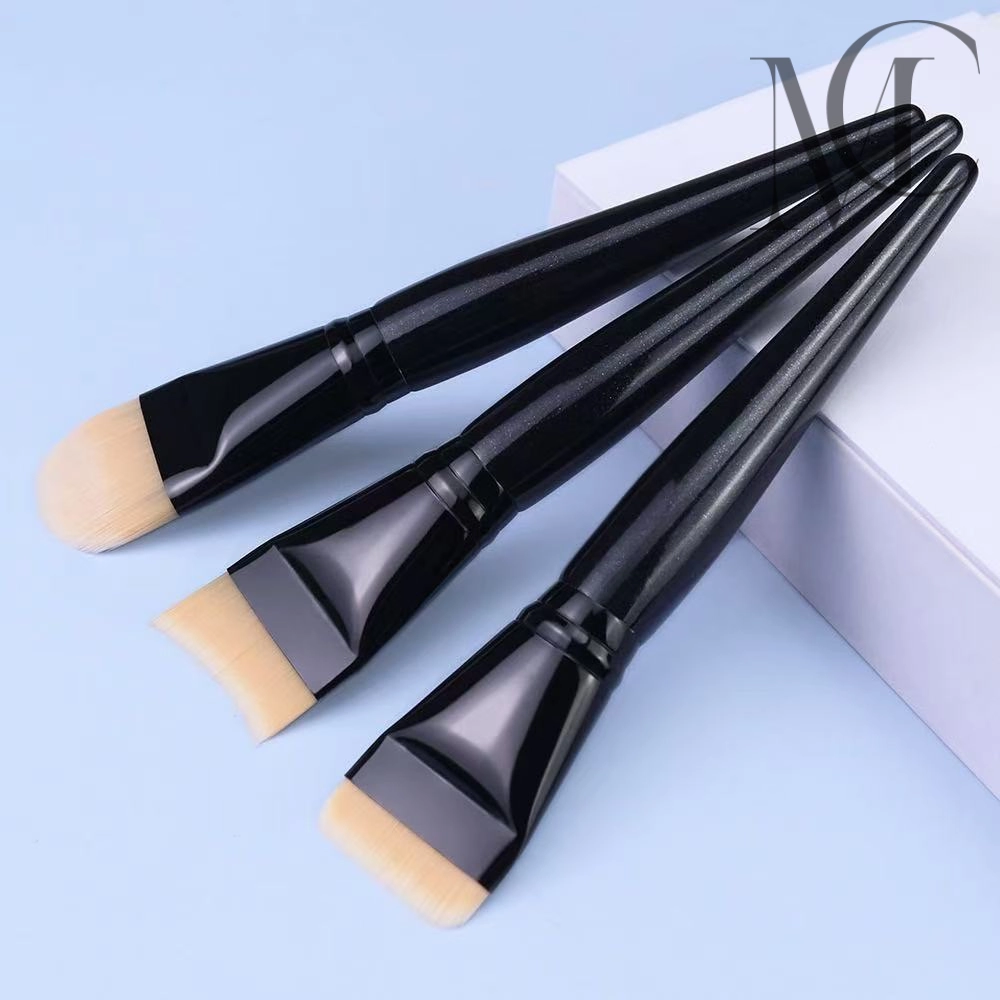
Custom Flat Top Foundation & Face Mask Brush | OEM Cosmetic Brush Manufacturer
Custom Wave-Shape Contour & Foundation Brush | Ergonomic & Fully Customizable
Premium One-Piece Seamless Wooden Makeup Brushes | Eco-Friendly & Ferrule-Free Design
Innovative Magnetic 4-in-1 Detachable Makeup Brush | Travel-Ready & Multi-Functional
Wholesale 2-in-1 Exfoliating Face Brush with Stand – Custom Laser Colors
Prdoucts Categories
FAQ
For Customization
What materials are used in MECO makeup brushes?
We use a wide variety of high-quality materials, including synthetic fibers (PBT, nylon) and natural hair (such as goat or pony hair) depending on your preference.
Our handles and ferrules are made from durable, eco-friendly materials with customizable finishes to match your brand aesthetics.
What is your payment and shipping policy?
We accept various payment methods, including T/T and PayPal for samples.
For shipping, we can work with your freight forwarder or arrange international shipping by air, sea, or courier (DHL, FedEx, UPS).
Can I request samples before placing a bulk order?
Yes. We offer sample production so you can test the quality, softness, and overall feel before confirming your bulk order. Sampling ensures every detail meets your brand expectations.
How do I pay?
Trade Assurance Order, Western Union, PayPal, T/T, L/C, D/A, MoneyGram.
How long does it take to produce custom makeup brushes?
Production time depends on your order details and customization requirements.
Typically, it takes 15–30 days after sample approval for bulk production.
If you have a specific deadline or launch date, we can create a tailored schedule to meet your timeline.
You may also like
Custom Flat Top Foundation & Face Mask Brush | OEM Cosmetic Brush Manufacturer
-
-
💎Expand your private label collection with our Custom Flat Top Foundation and Face Mask Brush. Engineered for dual-purpose versatility, this premium applicator bridges the gap between high-performance cosmetics and luxury skincare.
Featuring a dense, flat-cut bristle profile, it is expertly designed to buff liquid foundations into a flawless, airbrushed finish, or smoothly glide thick clay and mud masks over the skin without absorbing excess product. As a leading cosmetic brush manufacturer, we offer comprehensive OEM/ODM solutions, allowing you to fully customize this versatile tool to perfectly match your brand's aesthetic and target market.
-
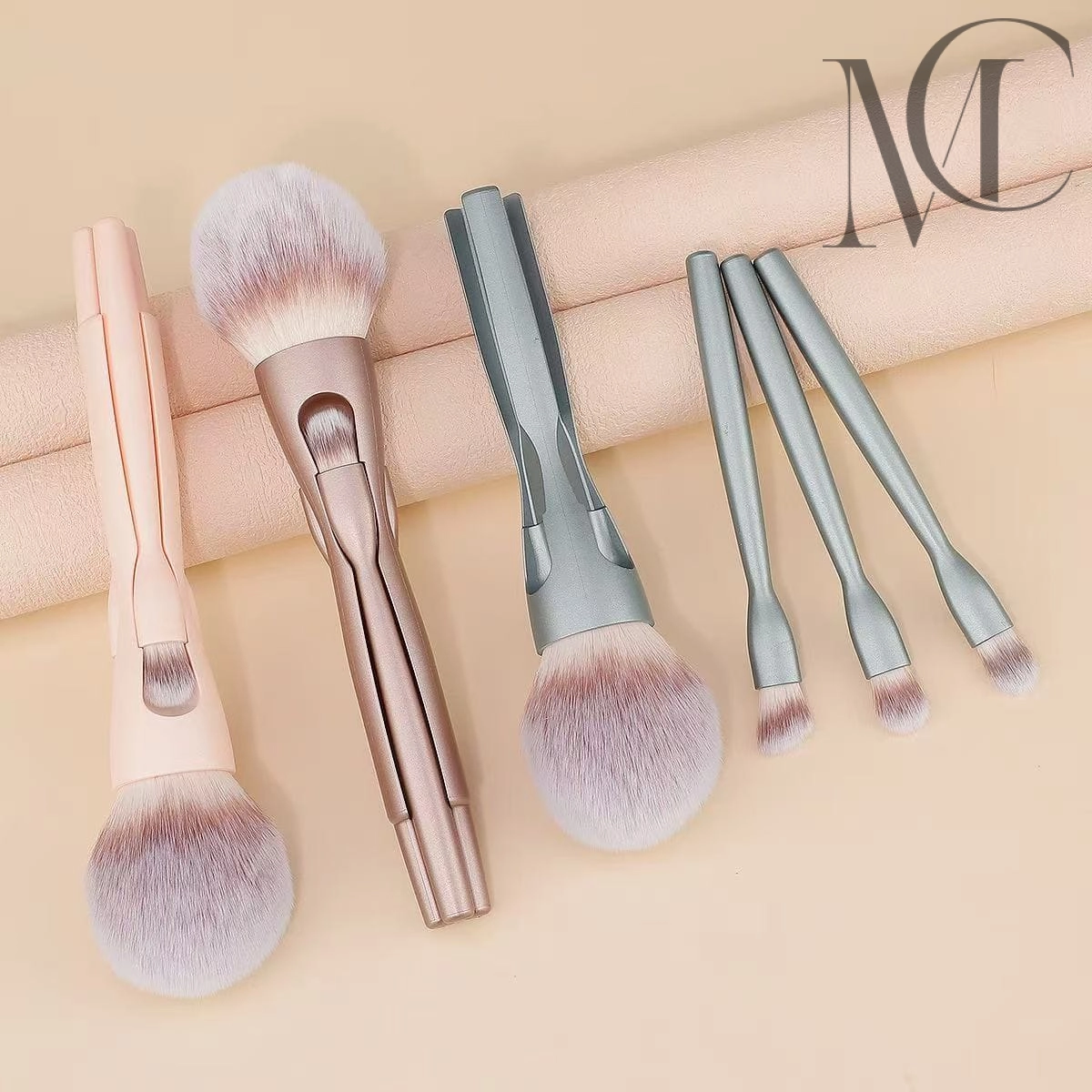
Innovative Magnetic 4-in-1 Detachable Makeup Brush | Travel-Ready & Multi-Functional
💎Redefine the Portable Beauty Experience with a Satisfying "Click." Meet the future of travel beauty tools. This revolutionary Magnetic 4-in-1 Detachable Makeup Brush breaks the limitations of traditional double-ended tools. Engineered with a precision magnetic core, it seamlessly transforms from a single, compact unit into two independent professional brushes—a fluffy face brush and a precise detail brush.
Designed for the modern, on-the-go lifestyle, this multifunctional beauty tool combines the hygiene of separate brushes with the portability of an all-in-one design. It is not just a brush; it is a high-value "Hero Product" ready to elevate your brand’s travel collection.
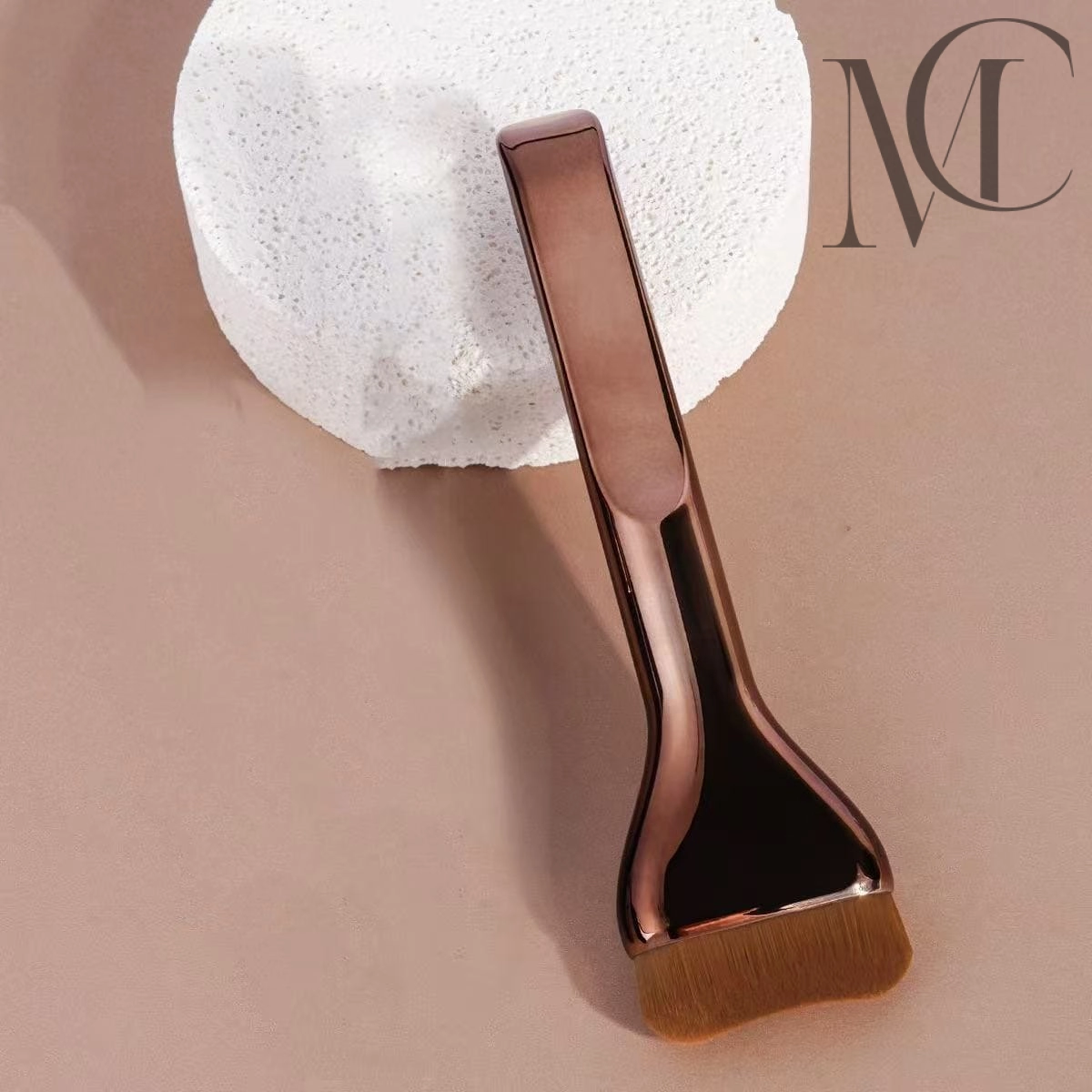
Custom Wave-Shape Contour & Foundation Brush | Ergonomic & Fully Customizable
💎 Meet the ultimate tool for flawless facial and body sculpting: the Wave-Shape Contour Makeup Brush. Engineered with a unique, custom-curved bristle head, this innovative brush is designed to perfectly hug the natural contours of the face, such as the jawline, cheekbones, and collarbones.
Whether applying liquid foundation, cream bronzer, or contour powder, the wavy design ensures maximum surface contact for a streak-free, airbrushed finish in half the time. Paired with a sleek, ergonomic handle featuring a specialized grip indent, this brush offers supreme control and comfort, making it a standout "hero product" for any modern beauty brand's collection.
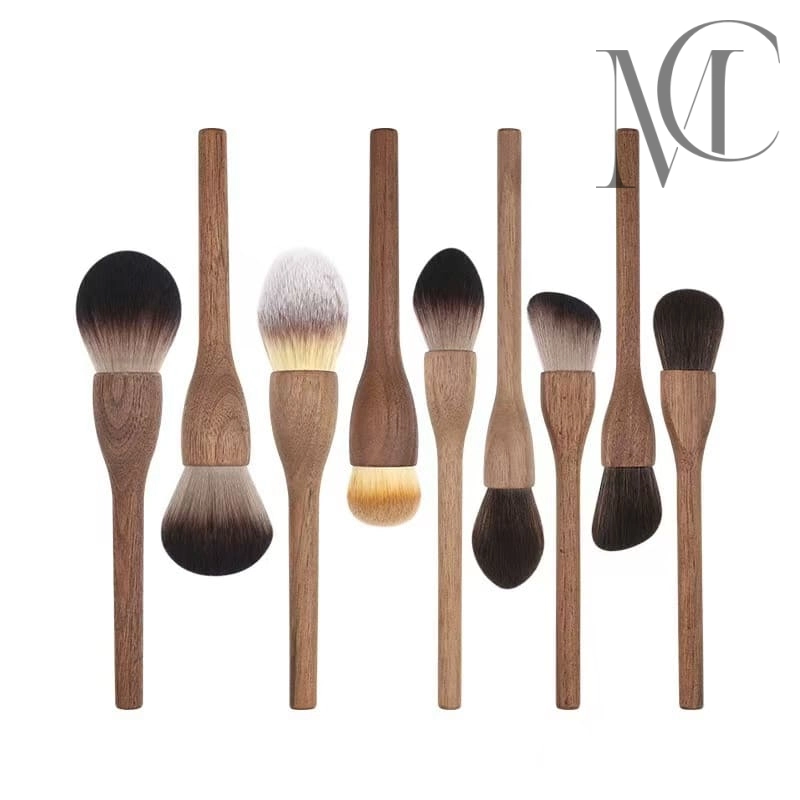
Premium One-Piece Seamless Wooden Makeup Brushes | Eco-Friendly & Ferrule-Free Design
-
-
💎Nature, Sculpted for Beauty. The Future of Sustainable Luxury.
Redefine your beauty tool collection with our One-Piece Seamless Wooden Makeup Brushes. Breaking away from traditional construction, these brushes eliminate the metal ferrule entirely. Each handle is precision-carved from a single block of premium hardwood, creating a fluid, organic silhouette that transitions smoothly from the grip to the brush head.
This innovative "ferrule-free" design not only offers a stunning minimalist aesthetic but also enhances durability by removing common breakage points. Perfectly weighted and warm to the touch, this series is the ultimate choice for brands seeking eco-luxury and artisanal craftsmanship.
-
Still wondering which type of makeup brush to customize?
A single makeup brush for gifting
Makeup brush sets for sale
Custom-designed makeup brushes with your exclusive logo
Luxurious wooden monoblock handle makeup brush
Environmentally friendly and recyclable makeup brushes
Easy-to-clean synthetic makeup brushes
Luxurious and elegant animal hair makeup brushes
Uniquely designed and vibrant acrylic makeup brushes
Premium Antibacterial Makeup Brushes
4-in-1 Multi-Function Makeup Brush
Compact and lightweight makeup brushes for on-the-go use
Custom-made makeup brushes in special sizes
Share your thoughts with us

Contact us
Tell us your needs—we’ll create the perfect custom makeup brushes for your brand.

Contact Information


+86 18768106014

Baolong Subdistrict, Longgang District, Shenzhen City, Guangdong Province Nanyue Dalang North District
Add our WhatsApp
+86 133 9214 4121
Communicate efficiently and learn more
Direct factory supplier of premium makeup brushes, offering small to large-scale customization.
Quick Links
• Tel: +86 13392144121
• Add: Baolong Subdistrict, Longgang District, Shenzhen City, Guangdong Province Nanyue Dalang North District