

info@mecobrush.com
Kabuki Brush vs Stippling Brush: The OEM Procurement Decision Guide for Beauty Brands
2025-10-26
- The Core Difference — Why This Decision Matters for Your Brand
- Construction Differences — What Each Format Requires in Production
- Kabuki Brush Construction Requirements
- Stippling Brush Construction Requirements
- Formula Compatibility — Matching Format to Your Product Ecosystem
- Bristle Specification — What Each Format Requires
- For Kabuki Brushes
- For Stippling Brushes
- Set Configuration Strategy — When to Develop Each Format
- Start with Kabuki if:
- Start with Stippling if:
- Develop Both if:
- The Two-Piece Set Opportunity
- MOQ and Production Reality — What to Expect
- Sourcing Checklist — Before You Brief a Manufacturer
- Meco's OEM Program for Both Formats
- Frequently Asked Questions
The Core Difference — Why This Decision Matters for Your Brand
The kabuki brush and stippling brush are built around opposite application philosophies.
A kabuki brush is an instrument of coverage and control. Dense bristle packing, concentrated fiber structure, and short-handle ergonomics are all engineered for buffing product into skin — building coverage, blending cream and powder formulas thoroughly, and delivering a polished, finished result. When a consumer wants full coverage, seamless blending, or professional sculpting results, they reach for a kabuki.
A stippling brush is an instrument of diffusion and sheerness. The duo-fiber design — longer sparser outer fibers over a denser shorter inner layer — picks up a controlled amount of product and deposits it in a dotting motion that creates an airbrushed, skin-like finish. When a consumer wants a natural glow, layered coverage that does not look applied, or a sheer wash of color, they reach for a stippling brush.
The commercial implication of this difference is direct. A brand whose product narrative centers on full coverage and professional results needs a kabuki. A brand whose narrative centers on natural skin finish, glass skin, or no-makeup makeup needs a stippling brush. A brand with both narratives in its product line benefits from both formats — specified and positioned differently.
Construction Differences — What Each Format Requires in Production
Kabuki Brush Construction Requirements
Dense bristle bundles create specific structural demands that standard face brush construction cannot reliably withstand. The ferrule must be specified with wall thickness proportional to bristle density — a thin-wall ferrule that performs adequately on a sparse powder brush will deform under the higher compression load of a kabuki bristle bundle, creating the micro-gaps that allow water infiltration during cleaning.
Double-crimp ferrule construction is non-negotiable for kabuki formats. The mechanical stress of daily buffing use — concentrated pressure applied in circular and stippling motions — requires two anchor points to distribute load. Single-crimp construction produces the wobble and eventual head separation that generates the return rate that erodes brand margins.
Bristle bundle shape retention under repeated cleaning must be specified as a production requirement, not evaluated as a post-launch discovery. Request 5kg pull-test documentation and 30-cycle cleaning simulation results before approving bulk production.
Stippling Brush Construction Requirements
The duo-fiber construction of a stippling brush introduces a production complexity that kabuki manufacturing does not have — two distinct fiber lengths within the same bristle bundle, with a specific length differential that determines the sheer stippling effect the brush delivers.
The longer outer fibers must be calibrated to the correct softness to pick up product without over-loading. The shorter inner fibers must provide sufficient density to blend the product into skin without streaking. The length differential between the two layers — typically 3 to 5mm — is the specification variable that most directly determines whether the brush delivers the airbrushed finish it promises.
This specification must be defined in your OEM brief with precise measurements. A manufacturer who produces stippling brushes with a generic "duo-fiber" specification without defined length differential and density ratios is not engineering the brush — they are assembling components and hoping the result performs correctly.
Formula Compatibility — Matching Format to Your Product Ecosystem
| Formula Type | Kabuki | Stippling | Recommendation |
|---|---|---|---|
| Full-coverage liquid foundation | ✅ Excellent | ⚠️ Light coverage only | Kabuki — if coverage is the positioning |
| Sheer / skin-tint foundation | ⚠️ Can over-apply | ✅ Excellent | Stippling — if natural finish is the positioning |
| Cream contour / blush | ✅ Excellent | ✅ Good for light application | Kabuki for precision, stippling for diffusion |
| Powder bronzer / contour | ✅ Excellent | ❌ Not recommended | Kabuki |
| Liquid highlighter | ⚠️ Dense application | ✅ Excellent diffusion | Stippling — for natural glow positioning |
| Setting powder | ✅ Excellent | ❌ Not ideal | Kabuki |
| Mineral foundation | ✅ Excellent | ⚠️ Very light coverage | Kabuki |
The companion product implication: If your brand produces full-coverage foundations, serums, or skin tints, the correct companion brush is determined by your formula's coverage level — not by which brush format is more popular. Specifying the wrong brush as a companion product generates consumer disappointment that damages both the brush and the formula's review scores simultaneously.
Bristle Specification — What Each Format Requires
For Kabuki Brushes
High-grade PBT synthetic fiber is the correct specification for kabuki brushes designed for liquid, cream, and powder foundation applications. Non-porous construction ensures full product transfer without absorption — the specification that makes the coverage performance kabuki brushes are marketed for actually achievable in consumer use.
Nanofiber synthetic is the premium tier for brands positioning at $35 and above retail pricing — replicating natural hair cuticle structure for superior blending quality in a fully vegan format.
Natural goat hair in Saikoho grade remains the correct specification for luxury powder-only kabuki brushes at $45 and above, where the natural cuticle structure's powder diffusion quality is the genuine differentiator that justifies the price point and the ethical sourcing conversation.
Density calibration must be specified per kabuki head shape — an angled contour kabuki and a domed bronzing kabuki in the same set require different density ranges to perform correctly for their respective functions. Generic density specification across a set produces brushes optimized for one function and compromised for the others.
For Stippling Brushes
Synthetic fiber is the mandatory specification for stippling brushes. The stippling technique requires the outer fibers to pick up a controlled, minimal amount of product per stipple — natural hair's superior absorption quality works against the sheer finish stippling is designed to create, loading too much product per motion and producing the uneven application that defeats the purpose of the format.
The outer fiber grade must be ultra-soft — stiffer outer fibers create a poking sensation during stippling that generates immediate negative consumer feedback. Specify fiber softness for the outer layer explicitly, and request a stippling technique test on the sample before approving bulk production.
The inner fiber density must be calibrated to blend the stippled product without streaking. Too sparse and the inner layer fails to blend — too dense and the brush transitions from stippling to buffing behavior, losing the sheer airbrushed effect.
Set Configuration Strategy — When to Develop Each Format
Start with Kabuki if:
Your brand's primary formula products are full-coverage or medium-coverage foundations, contour, bronzer, or setting powder. Your target consumer is seeking professional-quality coverage results. Your retail positioning is in the mid-premium to luxury tier where performance narrative drives purchase. You are developing a companion brush for an existing formula product launch and coverage is the formula's primary claim.
Start with Stippling if:
Your brand's primary formula products are skin tints, sheer foundations, liquid highlighters, or glass-skin serums. Your target consumer is seeking a natural, no-makeup makeup result. Your brand narrative centers on skin health, clean beauty, or minimal coverage aesthetics. You are targeting the social-first retail channel where the stippling application technique generates strong content.
Develop Both if:
Your brand has a full product ecosystem covering both coverage and natural finish positioning. You are building a professional artist collection where both application techniques are represented. You are developing a premium gift set where format variety increases perceived collection value.
The Two-Piece Set Opportunity
A kabuki and stippling brush presented as a coordinated two-piece set — same handle design, same ferrule finish, complementary bristle colors — covers both coverage and natural finish application in one retail SKU. This configuration addresses the most common consumer question about brush selection without requiring the consumer to choose — they get both. Retail price point for a well-specified two-piece kabuki and stippling set: $35 to $58.
MOQ and Production Reality — What to Expect
One correction to the MOQ information commonly cited in the industry: the 1,000 to 5,000 unit MOQ range stated by many B2B guides reflects trading company minimums, not direct manufacturer minimums.
At Meco, MOQ starts from 500 units per style for both kabuki and stippling brush formats using existing mold library designs with custom handle color and logo application. This makes both formats accessible for emerging brands and new product launches without the capital commitment that trading company sourcing requires.
For fully custom stippling brush constructions with proprietary duo-fiber length differential specifications, or for kabuki formats with new head geometry molds, MOQ is evaluated based on tooling complexity and discussed at the brief stage.
Standard production timeline: samples in 7 to 10 business days from design confirmation, bulk production in 25 to 35 days from sample approval.
Sourcing Checklist — Before You Brief a Manufacturer
For Kabuki:
→ Head shape confirmed — flat-top, domed, angled, or tapered based on primary application function
→ Bristle fiber type specified — PBT, nanofiber, or natural hair based on retail price point
→ Density range specified per head shape — not generic across the set
→ Double-crimp ferrule construction confirmed — single-crimp not acceptable
→ Pull-test documentation requested — 5kg minimum
→ Formula compatibility confirmed — bristle porosity matched to formula type
For Stippling:
→ Outer fiber softness grade specified — must be ultra-soft for stippling technique
→ Duo-fiber length differential specified — 3 to 5mm range with precise measurement
→ Inner fiber density calibrated for blending without streaking
→ Synthetic fiber confirmed — natural hair not compatible with stippling technique
→ Stippling technique test requested on sample approval — not just visual inspection
For Both:
→ Handle design unified if developing as a coordinated set
→ Ferrule finish consistent across both formats
→ Packaging format selected for retail channel
→ Certification requirements confirmed — vegan, cruelty-free, SGS as applicable
Meco's OEM Program for Both Formats
Meco Brush produces kabuki and stippling brushes for private label brands, wholesale buyers, and beauty brand founders globally — with full specification control from bristle fiber processing through handle fabrication and retail packaging.
For kabuki formats, our program covers all head configurations in standard and custom geometry, PBT and nanofiber synthetic with density calibration per head shape, natural hair options in Saikoho goat and squirrel grades, double-crimp ferrule construction as standard, and 5kg pull-test documentation on every production batch.
For stippling formats, our program covers duo-fiber construction with defined length differential specification, ultra-soft outer fiber grades tested for stippling application, inner fiber density calibration for blending performance, and synthetic-only specification aligned with formula compatibility requirements.
Both formats are available in coordinated handle designs for two-piece set development — same handle material, color, and ferrule finish across both brushes.
MOQ from 500 units per style. Samples in 7 to 10 business days. Bulk production in 25 to 35 days from sample approval.
Certifications: ISO 9001 | BSCI | SGS | Vegan | Cruelty-Free | FSC
Trusted by 8,000 plus brands across 50 plus countries.
Frequently Asked Questions
Should I develop a kabuki or stippling brush as my first OEM brush product?
Determine your brand's formula positioning first. If your primary products are full-coverage foundations, contour, bronzer, or setting powder — develop a kabuki. If your primary products are skin tints, sheer foundations, or liquid highlighters — develop a stippling brush. If your brand spans both positioning narratives, a coordinated two-piece set covering both formats is the strongest single SKU you can develop as a first brush product.
What is the most important specification difference between a kabuki and stippling brush in production?
For kabuki, the critical specification is ferrule wall thickness calibrated to bristle density and double-crimp construction — structural durability under daily buffing use. For stippling, the critical specification is duo-fiber length differential with defined measurements — the construction variable that determines whether the brush delivers the sheer airbrushed finish it is designed for. Both specifications must be defined in the OEM brief — neither should be left to factory default.
Can a stippling brush be used with powder products?
Not effectively. The duo-fiber stippling construction picks up product in controlled minimal amounts per motion — a technique calibrated for liquid and cream formulas at sheer coverage levels. Powder products require the dense buffing pressure of a kabuki construction for effective pickup and distribution. Using a stippling brush with powder produces under-pigmented, patchy application that generates negative consumer reviews regardless of formula quality.
What handle design works best for a coordinated kabuki and stippling two-piece set?
The handle design should be identical across both brushes in the set — same material, same color, same ferrule finish. The visual coherence of a matched pair communicates a designed collection rather than two separate brushes assembled together. The handle length can differ — kabuki handles are typically shorter for buffing control, stippling handles slightly longer for lighter application technique — while maintaining all other design elements consistently across both pieces.
Ready to develop your kabuki or stippling brush collection?
Request a free sample of both formats and evaluate construction quality, application performance, and visual coherence before committing to production. Our team responds to all OEM inquiries within 24 hours.
→ Request a Free Sample → Get a Custom Quote
📧 info@mecobrush.com 💬 WhatsApp: +86 133 9214 4121
Recommended for you
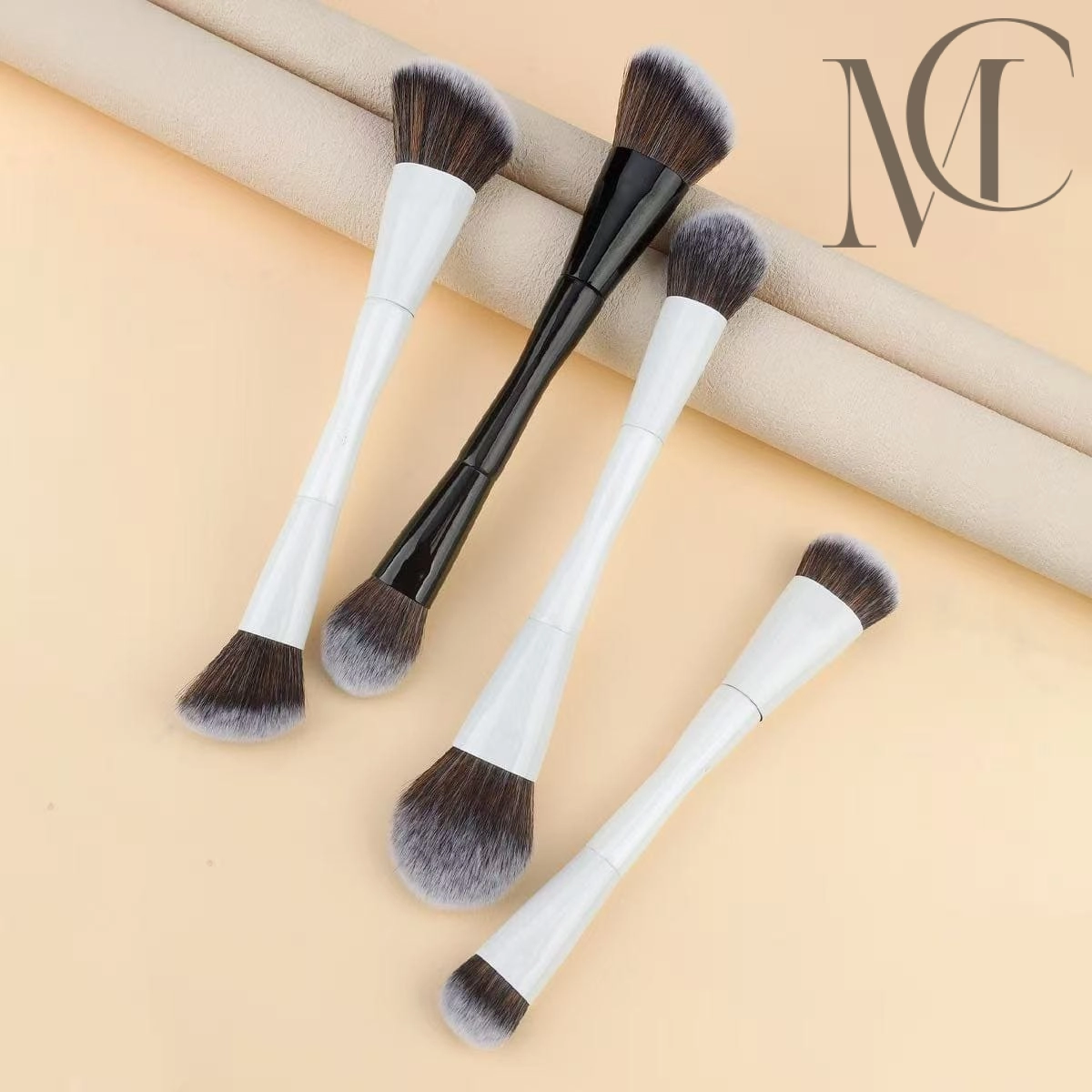
Dual-Ended Foundation & Contour Brush | 2-in-1 OEM Private Label
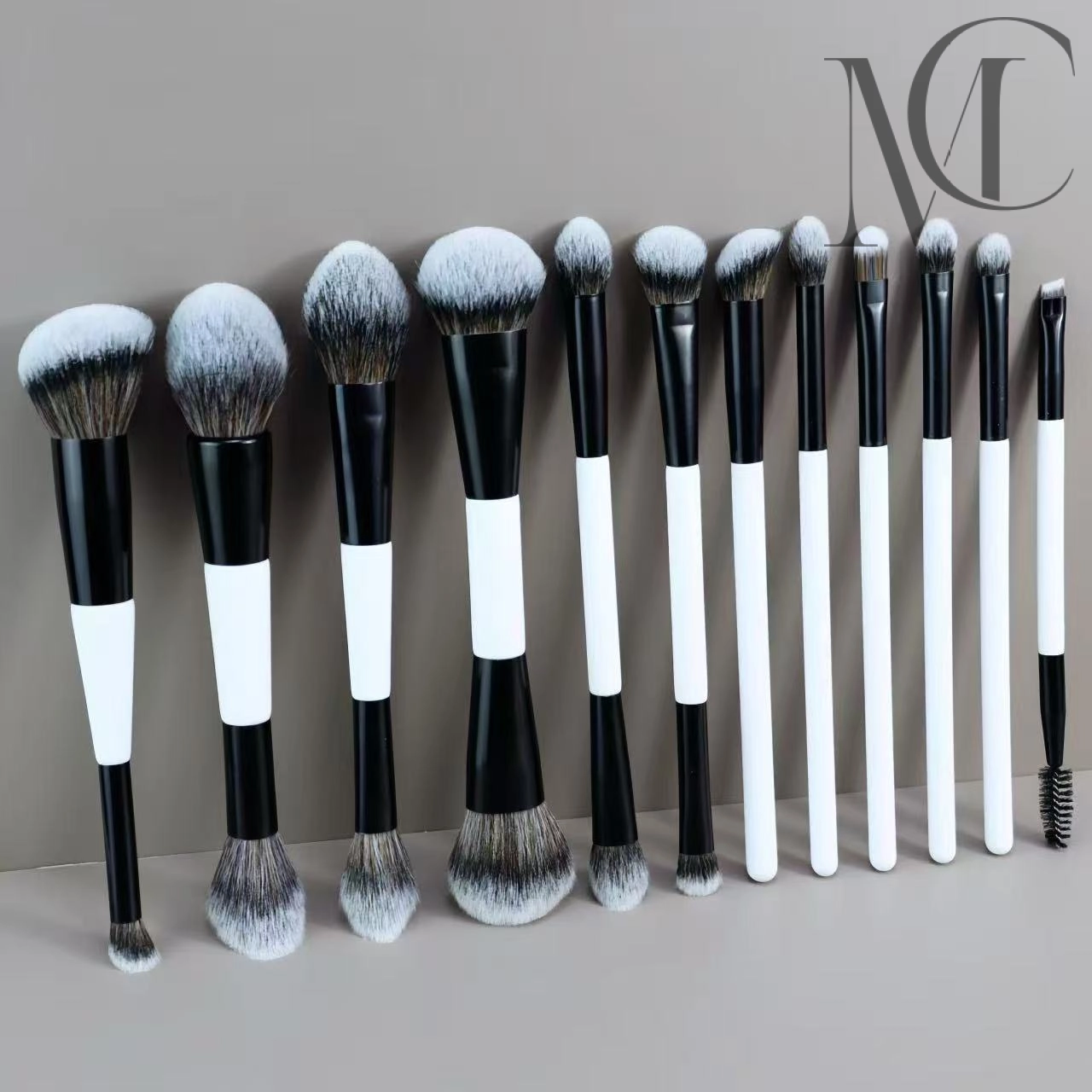
Private Label 12-Piece / 19-Head Dual-Ended Pro Makeup Brush Set | OEM Customization
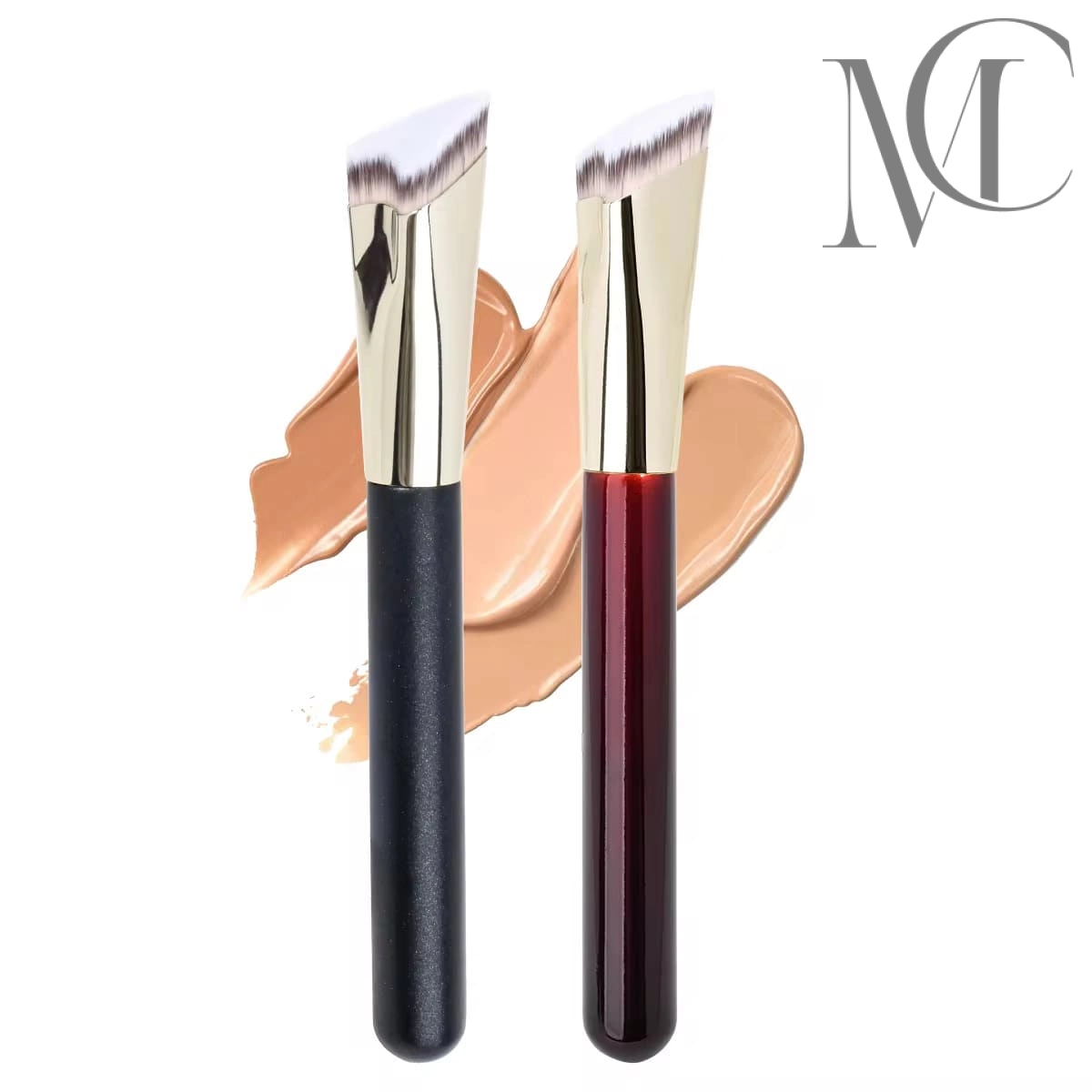
Premium Angle Foundation Brush with Synthetic Hair & Thickened Aluminum Ferrule, Elegant Wooden Handle
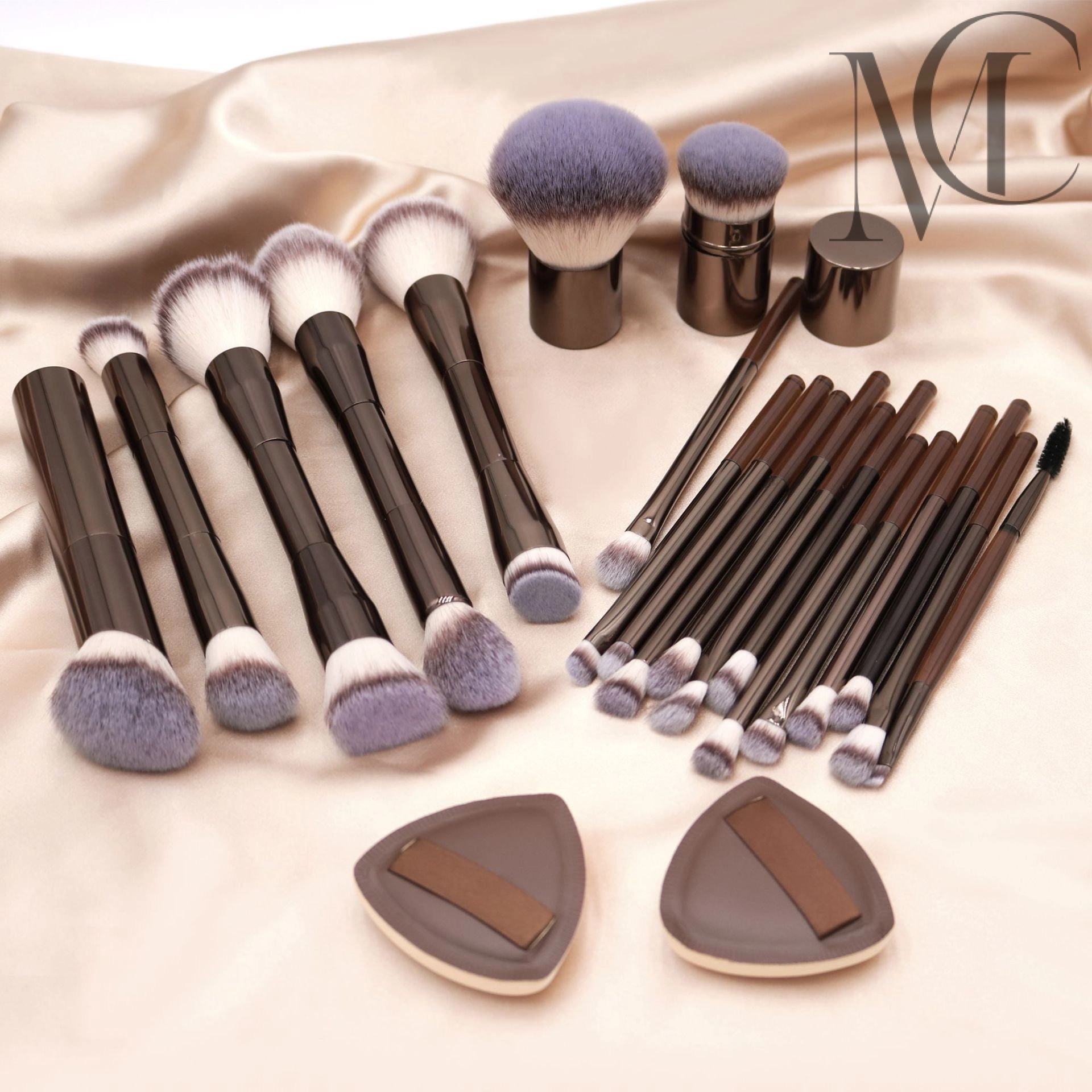
22-Piece Professional Makeup Brush Set| Brown Luxury Series | OEM Private Label Ready | Wholesale Cosmetic Brush Manufacturer
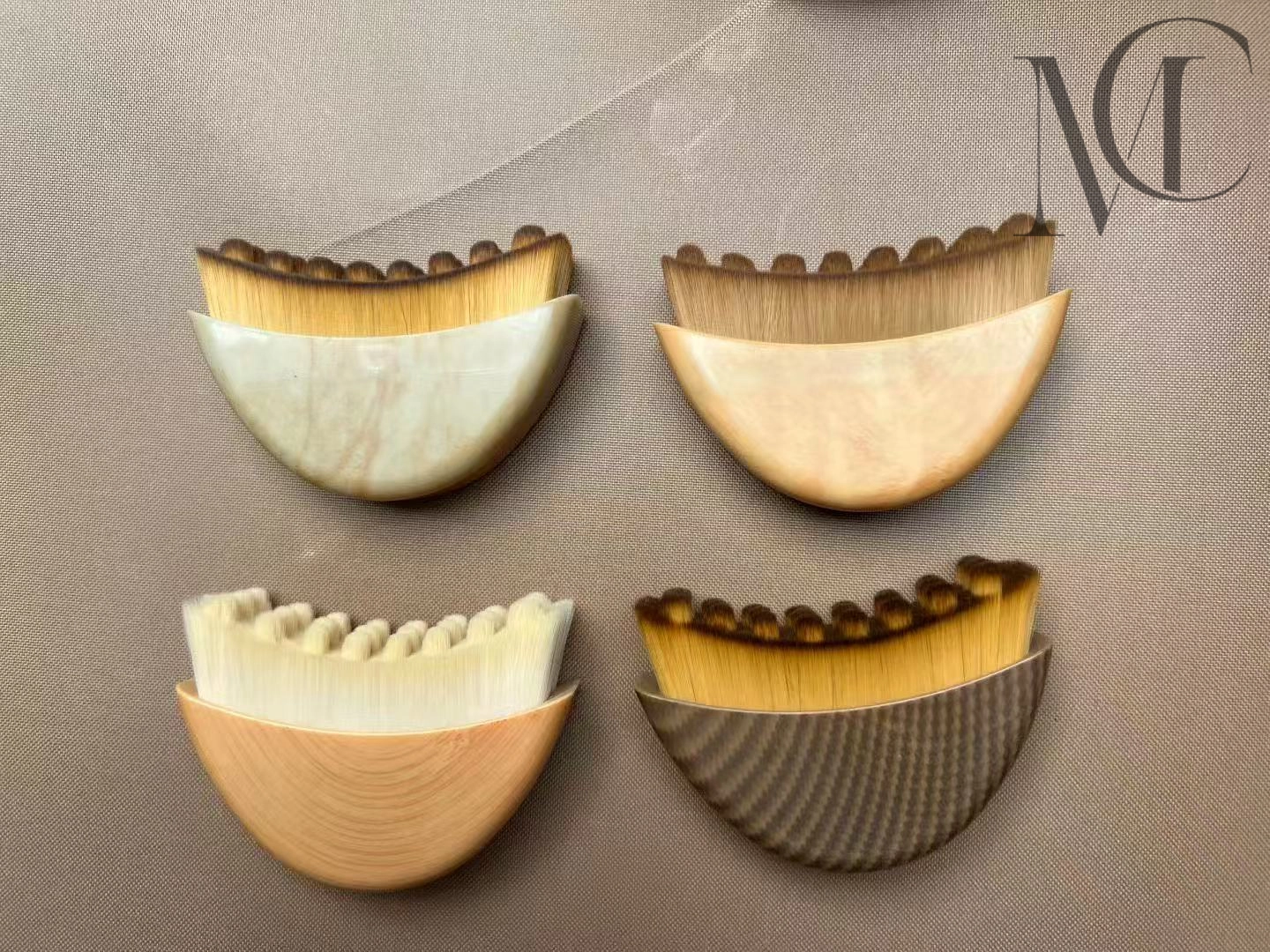
Premium Lymphatic Contour Facial Brush | Popular Makeup Brush Manufacturers
Prdoucts Categories
FAQ
For Company
Do you work with small beauty brands or startups?
Yes! MECO Brush supports emerging beauty brands and entrepreneurs by offering flexible MOQs and personalized service. Whether you’re a new brand or an established company, we’ll help you launch your brush line successfully.
What services does MECO Brush provide?
MECO Brush is a professional Cosmetic Brush Manufacturer specializing in Custom Makeup Brushes, OEM, and ODM solutions. We offer end-to-end services — from design concept, mold making, and sample development to full-scale production and packaging customization.
For Customization
Can I request samples before placing a bulk order?
Yes. We offer sample production so you can test the quality, softness, and overall feel before confirming your bulk order. Sampling ensures every detail meets your brand expectations.
Can MECO Brush help with packaging design?
Definitely. We offer custom packaging services — from simple pouches and paper boxes to luxury gift sets. Our design team can help create packaging that enhances your brand presentation and customer experience.
Do you offer eco-friendly or vegan makeup brushes?
Yes. MECO Brush offers eco-friendly and vegan options, including recycled aluminum ferrules, sustainable wood handles, and cruelty-free synthetic fibers that replicate natural performance.
More Insights from an Expert Cosmetic Brush Manufacturer
Dive deeper into the engineering secrets, material guides, and OEM supply chain strategies that help global beauty brands build their next best-sellers.

Hero SKU vs. Full Set: How to Build the Right Product Mix for Your Makeup Brush Brand
A lot of brand owners conflate two separate decisions when thinking about their product line: product structure and sales strategy. Untangling them makes everything clearer.
This guide explores the supply chain and commercial logic behind single hero brushes versus complete brush sets, helping you structure a product mix that maximizes Average Order Value (AOV), minimizes inventory risk, and builds a defensible luxury makeup brushes private label brand.
04/08/2026
Details ››

Skincare Applicators & Spa Brushes: The Next Big OEM Growth Category for Beauty Brands (2026)
The global spa and wellness market is projected to reach $6.6 trillion by 2025.
The professional skincare tools segment is growing at twice the rate of makeup brushes.
Most cosmetic brush brands have not noticed yet.
The ones that have are quietly launching skincare applicator lines that command retail price points 40% to 60% higher than equivalent makeup brushes—with lower competitive saturation and stronger repeat purchase rates.
This is your manufacturing guide to the category before it gets crowded.
04/06/2026
Details ››

Eco-Friendly Makeup Brushes: The Complete OEM Sourcing Guide for Sustainable Beauty Brands (2026)
In 2024, the EU banned over 2,400 chemical substances from cosmetic products. In 2025, major US retailers began requiring sustainability documentation from all new beauty tool suppliers. In 2026, your customer is reading your material list before they read your price.
The question is no longer whether your brush brand needs a sustainability strategy. The question is whether your current manufacturer can actually deliver one.
Sustainability in makeup brushes is no longer a niche positioning play for indie clean beauty brands. It is a baseline sourcing requirement being driven simultaneously by three forces:
→ Retail buyers at Sephora, Target, and major EU chains now require ESG documentation from suppliers
→ EU and US regulations are actively restricting virgin plastics and non-compliant chemical finishes
→ Millennial and Gen Z consumers—now the dominant beauty purchasing demographic—treat sustainability as a non-negotiable brand filter
This guide gives you the practical, technical framework for building a genuinely eco-friendly makeup brush line—covering materials, production standards, certifications, packaging, and what to actually ask your cosmetic brush manufacturer before placing an order.
04/05/2026
Details ››

B2B Sourcing Guide: How to Transition to a New Cosmetic Brush Factory Without Supply Chain Risks
Switching cosmetic brush suppliers without supply chain disruption is possible. Meco's B2B guide covers the 4-step transition roadmap, shedding prevention, and pilot run strategy. MOQ from 500 units. Factory-direct Shenzhen.
03/24/2026
Details ››

Beyond Synthetic: How a Vegan Makeup Brushes Manufacturer Crafts Professional-Grade Tools (2026 Edition)
True vegan brush manufacturing goes beyond synthetic bristles — it requires auditing adhesives, handle coatings, and every hidden component. Meco's complete B2B guide covers materials, certification, and sourcing strategy. Factory-direct from Shenzhen.
03/12/2026
Details ››

The Complete Technical Guide to Eco-Friendly Makeup Brushes (2026 OEM Specification)
Eco-friendly brushes require more than a bamboo handle. Meco's OEM engineering guide covers FSC, PCR, bristle specs, and retail compliance for Sephora, EU & Amazon. MOQ 500 units. Factory-direct Shenzhen.
03/02/2026
Details ››
Request Sample
Request a sample today, and our team will arrange fast delivery, helping you evaluate our materials and craftsmanship.

Contact Information


+86 133 9214 4121

Baolong Subdistrict, Longgang District, Shenzhen City, Guangdong Province, Nanyue, Dalang, North District
Add our WhatsApp
+86 133 9214 4121
Direct factory supplier of premium makeup brushes, offering small to large-scale customization.
Quick Links
• Tel: +86 13392144121
• Add: Baolong Subdistrict, Longgang District, Shenzhen City, Guangdong Province; Nanyue Dalang North District