

info@mecobrush.com
Custom Makeup Brush Set with Case: How to Build a High-Margin OEM Collection for Private Label Brands (2026)
2025-12-19
- Bristle Engineering: Aligning Material with Market Positioning
- The Vegan Shift: Bionic Synthetic Fibers
- Antimicrobial Integration: The Premium Hygiene Angle
- Private Label Brush Set Configurations: Matching Assortment to Your Target Market
- Core Essentials Set (5–7 Pieces)
- Pro-Artistry Kit (15+ Pieces)
- Travel Kit (8–10 Pieces)
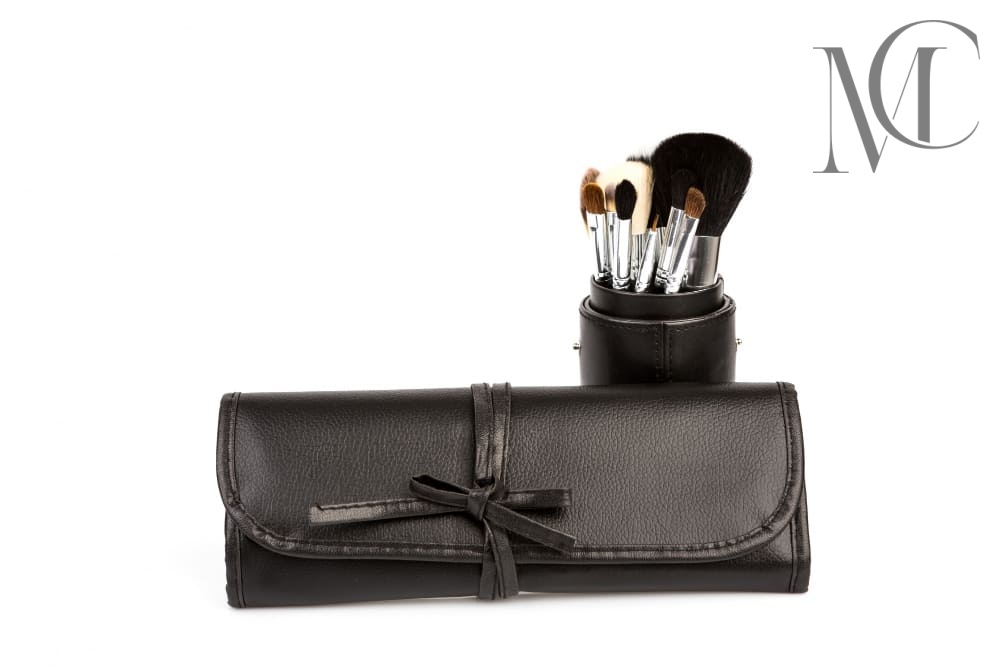
- The Case: Why Your Bag Is as Important as Your Brushes
- Material Guide for Makeup Brush Cases
- Interior Architecture Matters
- The Meco OEM Advantage: One Roof, Zero Supply Chain Gaps
- FAQ: Sourcing Custom Brush Sets & Cases
- Ready to Build Your Custom Brush Set Collection?
The average makeup brush set sells for $18. The same brushes packaged with a custom branded case retail for $45.
That $27 difference is not the cost of the bag. It is the value of a complete beauty solution — and it is exactly where your margin lives in 2026.
For beauty brand founders and wholesale buyers, the shift from selling individual brushes to launching a curated brush-and-case collection is one of the highest-ROI product decisions available in today's market. It elevates perceived value, increases average order value (AOV), and transforms a commodity tool into a shoppable brand experience.
But executing it well requires more than assembling brushes in a pretty bag. It requires a manufacturing partner who understands both tool engineering and packaging fabrication — under one roof.
This is the insider OEM guide from Shenzhen Meco Technology Co., Ltd. — a vertically integrated cosmetic brush manufacturer trusted by 8,000+ brands across 50+ countries.
Bristle Engineering: Aligning Material with Market Positioning
The bristle material you choose directly determines your product's performance tier, unit cost, and marketing narrative. Getting this decision right at the sourcing stage protects your margins and your brand reputation.
The Vegan Shift: Bionic Synthetic Fibers
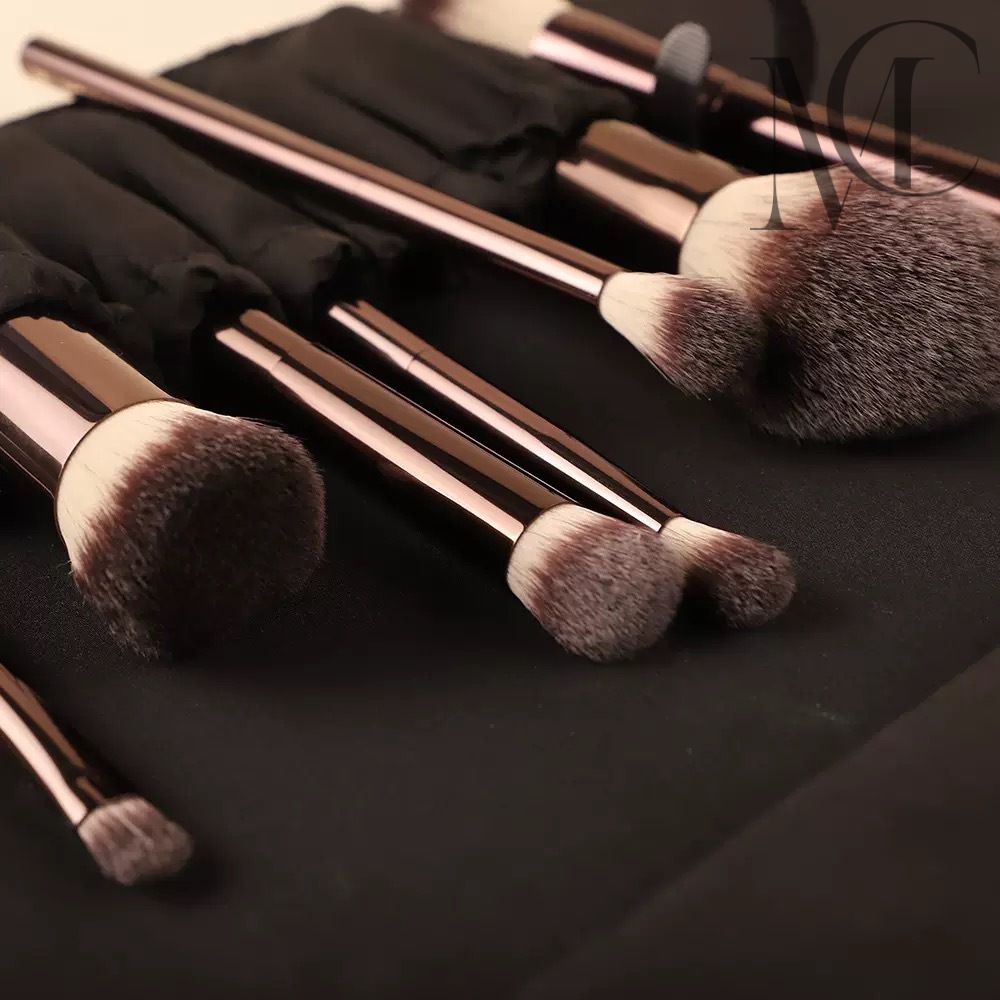
The 2026 market demands cruelty-free performance without compromise. Meco engineers advanced bionic synthetic fibers — Nanofibers and PBT — that replicate the cuticle structure of animal hair without the porosity.
For brands, this means three concrete advantages:
-
· Less product waste: Liquid foundation is not absorbed into the fiber.
-
· Easier cleaning: End-users report significantly faster wash cycles.
-
· Clean marketing alignment: Fully compatible with vegan, ESG, and cruelty-free brand claims.
In our facility, we process synthetic fiber at scale every month. What that volume has taught us: fiber diameter consistency is the single most important variable in brush performance. Brands that specify fiber grade in their OEM brief — rather than leaving it to factory default — consistently receive better end-product reviews.
Antimicrobial Integration: The Premium Hygiene Angle
Hygiene is no longer a niche concern. Post-2020 consumer behavior has permanently elevated cleanliness as a purchase driver, particularly in tools that touch the face daily.
Meco can integrate silver-ion antimicrobial technology directly into synthetic fibers during the manufacturing process — not as a surface coating that wears off, but as a structural fiber property.
For brands, this unlocks a genuine premium price point and a marketing claim that most competitors cannot match. We provide full material data sheets and compliance documentation to support your product's hygienic positioning across all markets.
⚠️ Factory Note: The most common mistake we see brands make when specifying antimicrobial brushes is not requesting third-party lab verification. Always ask your manufacturer for ISO 22196 test results — we provide these as standard.
Private Label Brush Set Configurations: Matching Assortment to Your Target Market
A profitable private label makeup brush set is not a random collection of tools. It is a deliberately curated assortment built around a specific consumer profile and retail price point.
Here are the three core configurations Meco supports:
| Set Configuration | Brush Count | Target Demographic | Recommended Case / Pouch | Est. Retail Price |
| Core Essentials | 5–7 Pieces | Indie Brands / Entry-Level | Minimalist Drawstring / Canvas | $15–$28 |
| Pro-Artistry Kit | 15+ Pieces | Pro Brands / Premium Retail | EVA Hard-Shell Case | $45–$85 |
| Travel Kit | 8–10 Pieces | Travel Retail / Sub Boxes | Magnetic Roll-Up Pouch | $25–$42 |
Core Essentials Set (5–7 Pieces)
Ideal for indie brands, skincare crossover launches, or entry-level price points. Focus on high-utility tools — powder, foundation, and blending — housed in a minimalist vegan pouch. Low tooling cost, fast to market, and high perceived value relative to unit cost.
Pro-Artistry Kit (15+ Pieces)
Designed for makeup academies, professional MUA suppliers, and premium brand tiers. Includes specialized tools (fan brushes, precision liners, detail blenders) with custom handle ergonomics and weighted brass ferrules that satisfy the tactile demands of working artists. Packaged in a structured hard-shell case with individual brush slots — a non-negotiable for professional positioning.
Travel Kit (8–10 Pieces)
Built around portability. Features space-saving short handles or our proprietary magnetic detachable handle system, fitted into a compact roll-up or zip pouch. Ideal for travel retail channels, airline amenity kits, and beauty subscription box brands where dimensions and weight are tightly controlled.
The Case: Why Your Bag Is as Important as Your Brushes
In our 10+ years of OEM production, we have seen one pattern repeat itself consistently: brands that invest in brush quality but cut corners on the case end up with return rates that erode all their margin gains.
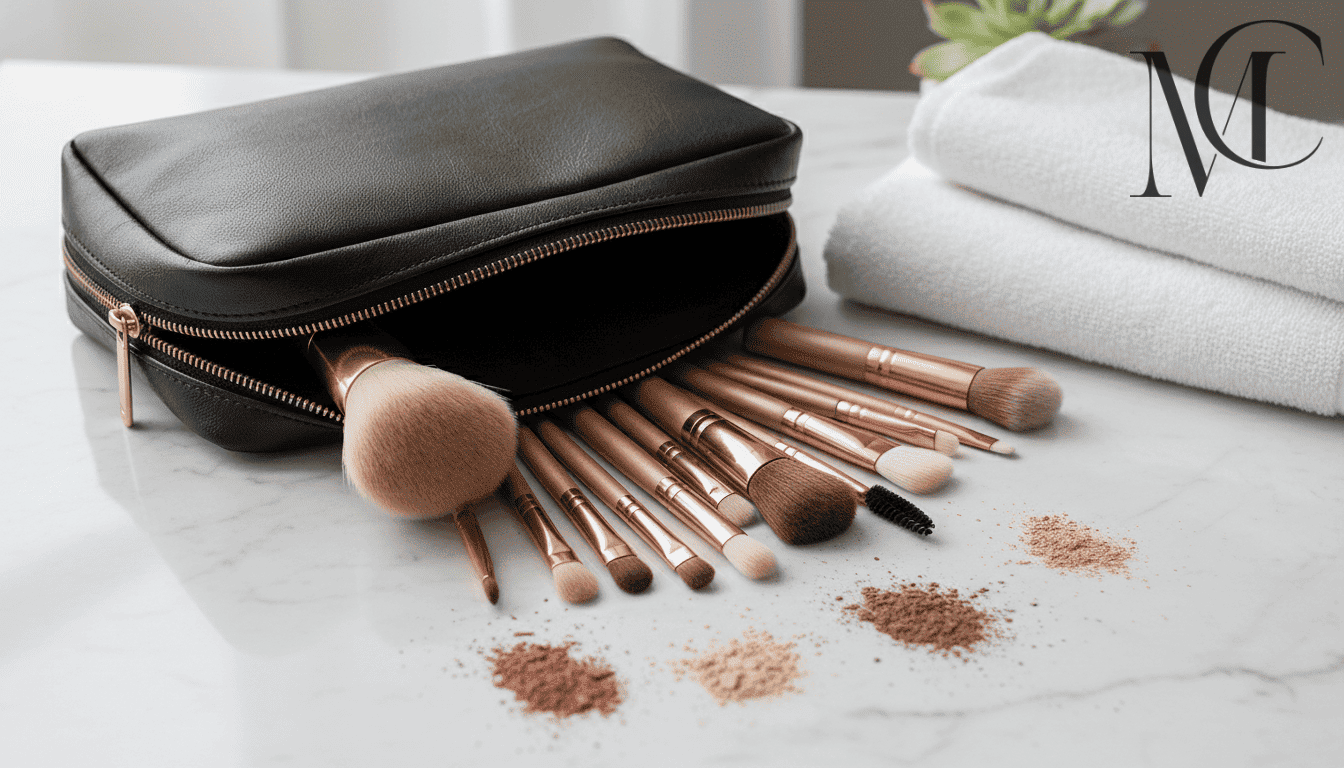
The bag is not packaging. It is part of the product. Here is what to specify — and what to avoid:
Material Guide for Makeup Brush Cases
-
Vegan Leather (PU): * Best for: Premium retail, gift sets, luxury brand positioning.
-
Key spec: Always request a minimum 1.0mm PU thickness. Anything under 0.8mm will begin peeling within 3 months of regular retail use — the single most common quality complaint we hear from brands switching suppliers.
-
Branding: Excellent for foil hot-stamping and debossing.
-
-
600D Nylon & Canvas: * Best for: Professional MUA kits, travel roll pouches, salon supplier collections.
-
Key spec: Tear-proof, water-resistant, and cost-effective at scale. The industry standard for brush belts and professional roll-up cases.
-
Branding: Screen printing and woven labels.
-
-
TPU / Clear Interior Flaps: * Best for: Any set where pigment contamination is a risk.
-
Pro Tip: Integrating clear waterproof interior flaps prevents residual pigment from staining the bag lining — a small engineering decision that dramatically reduces returns and negative reviews.
-
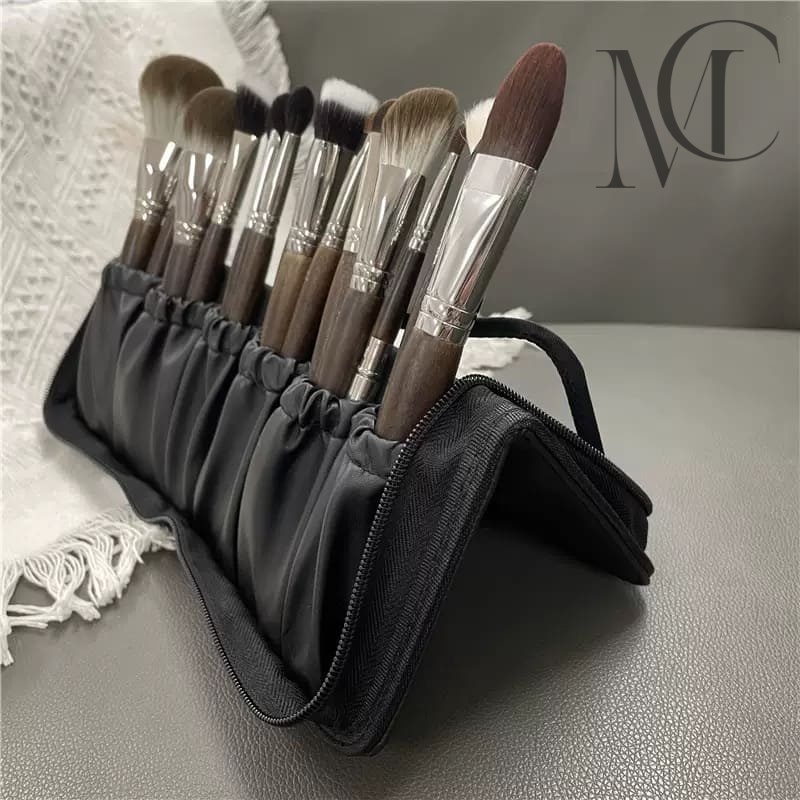
Interior Architecture Matters
Brush head protection during global shipping is an engineering challenge, not a packaging afterthought. Meco designs every case with:
-
Individual elastic or ribbon brush slots to prevent bristle contact and deformation.
-
Interior protective flaps over brush heads.
-
Rigid exterior structures (EVA hard shells or reinforced PU boards) for sets shipping internationally via air or sea freight.
The Meco OEM Advantage: One Roof, Zero Supply Chain Gaps
The most expensive mistake in brush set sourcing is using separate factories for brushes and bags. Dimensional mismatches, inconsistent quality timelines, and doubled logistics costs are the predictable result.
Meco eliminates this entirely. As a vertically integrated custom cosmetic tools manufacturer, we operate brush assembly, fiber processing, and packaging fabrication under one facility in Shenzhen. Every set that leaves our factory has been built, fitted, quality-checked, and assembled by a single team working to a single quality standard.
-
01 — In-House Fiber Processing: We process our own bristle fibers. We do not buy pre-made tufts from third-party suppliers. This gives us direct control over fiber diameter, density, and performance consistency across every batch.
-
02 — 16-Step QC Protocol: Every brush in every set passes mechanical pull-testing, powder pickup assessment, and ferrule bond strength verification before assembly. AQL inspection reports are available to all wholesale clients.
-
03 — Integrated Sewing & Packaging Workshop: Our in-house sewing team produces every case to the exact dimensional specification of the brush set. Guaranteed fit, every time. No outsourcing. No sizing surprises when the shipment arrives.
-
04 — NDA-Protected OEM Process: Your designs, colorways, and brand specifications are protected by NDA before any prototyping begins. Your IP stays yours, always.
FAQ: Sourcing Custom Brush Sets & Cases
Q: What is the MOQ for a completely custom makeup brush set with a branded bag?
A: MOQ varies by customization level. Sets using our existing mold library with custom logo printing carry a lower MOQ than fully custom bag dimensions or proprietary handle molds. Contact our sales team for a precise tier breakdown based on your specific brief — we respond within 24 hours.
Q: Do you manufacture the cases in-house or outsource them?
A: Fully in-house. We operate integrated sewing and packaging workshops alongside our brush assembly lines. This means your brush set and its case are manufactured, quality-checked, and assembled under one roof — eliminating the sizing mismatch issues that are common when sourcing from separate factories.
Q: Can we request antimicrobial fibers for a travel brush set?
A: Yes, and we strongly recommend it for travel kits where brushes are stored in enclosed bags between uses. We provide ISO 22196 test results and full material compliance documentation to support your brand's hygienic marketing claims across all major markets.
Q: How do you ensure bristles are not crushed during global shipping?
A: Packaging engineering is built into our design process. Every case is designed with individual brush slots, interior protective flaps, and rigid exterior structures appropriate to the shipping method. We conduct compression and drop testing on all new case designs before approving them for production.
Q: What is the typical lead time from sample approval to bulk delivery?
A: Sample delivery takes 7–10 business days from design confirmation. Bulk production takes 25–35 days from sample approval. We provide real-time production updates and pre-shipment inspection reports on every order.
Ready to Build Your Custom Brush Set Collection?
Partner with a manufacturer that controls every step — from fiber processing to final stitching — and has delivered consistent, factory-certified quality to 8,000+ brands across 50+ countries. Our team responds to all wholesale and OEM inquiries within 24 hours.
👉 [Request Your Free 2026 Material Swatch Kit & Custom Tooling Quote Today]
-
Email: info@mecobrush.com
-
WhatsApp: +86 133 9214 4121
Recommended for you
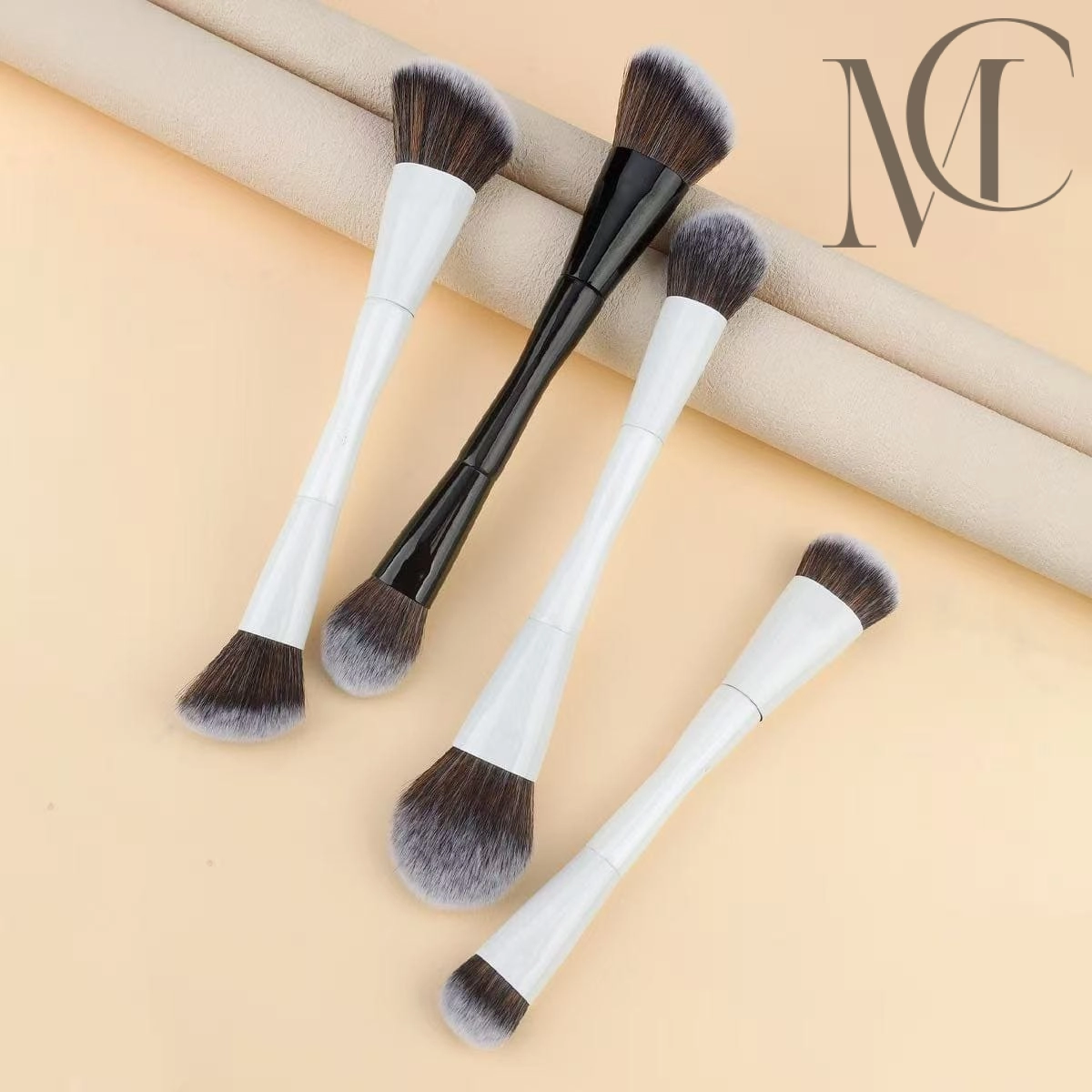
Dual-Ended Foundation & Contour Brush | 2-in-1 OEM Private Label
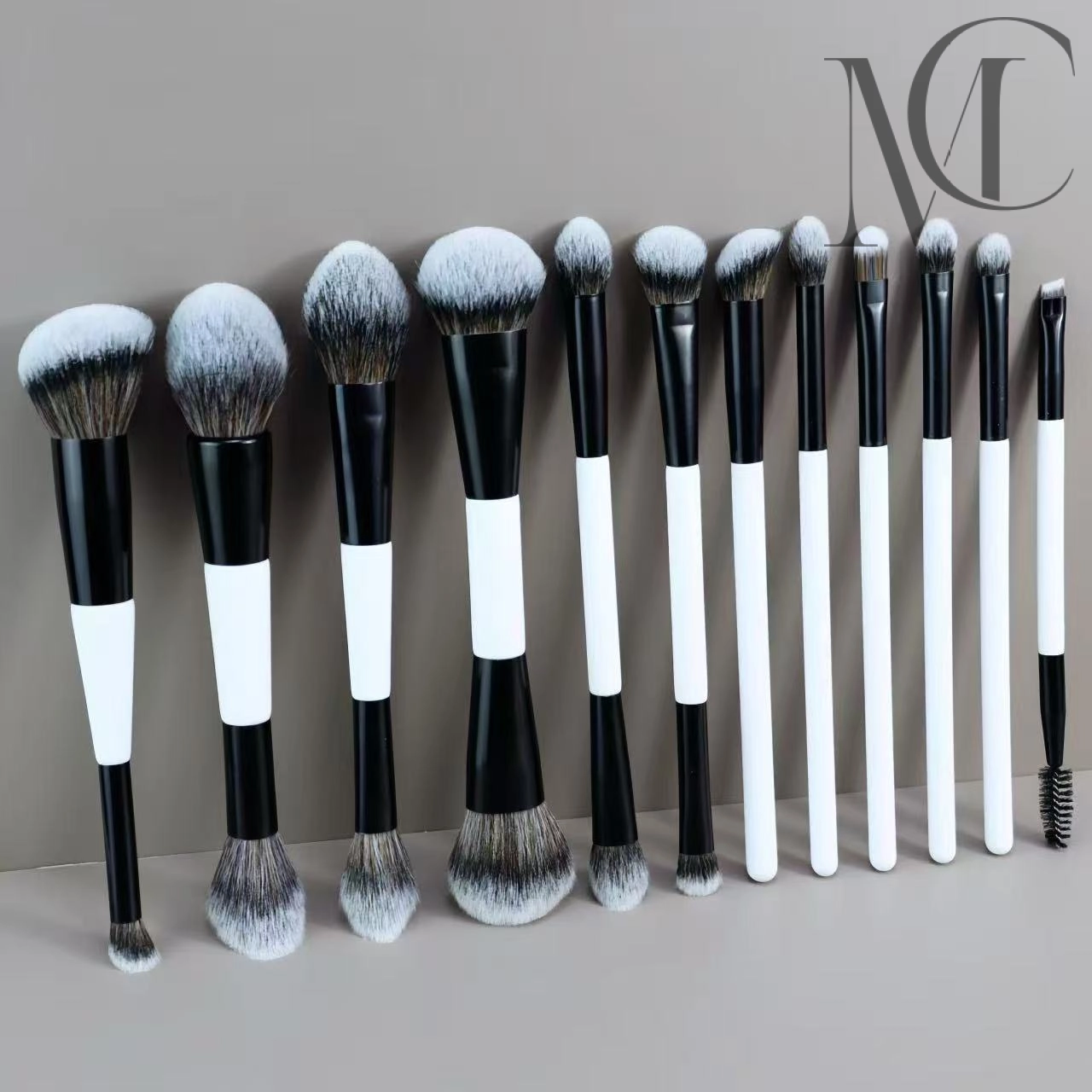
Private Label 12-Piece / 19-Head Dual-Ended Pro Makeup Brush Set | OEM Customization
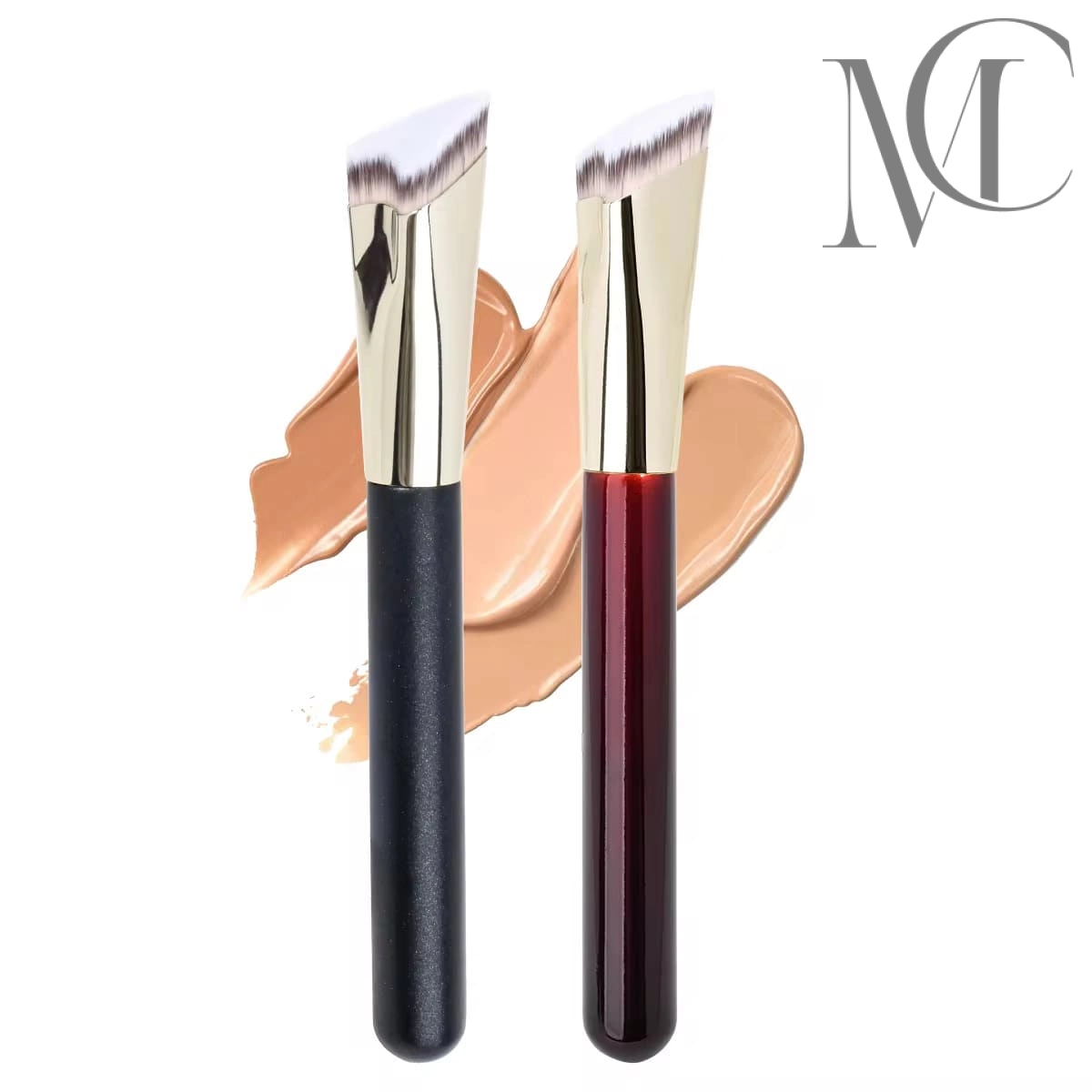
Premium Angle Foundation Brush with Synthetic Hair & Thickened Aluminum Ferrule, Elegant Wooden Handle
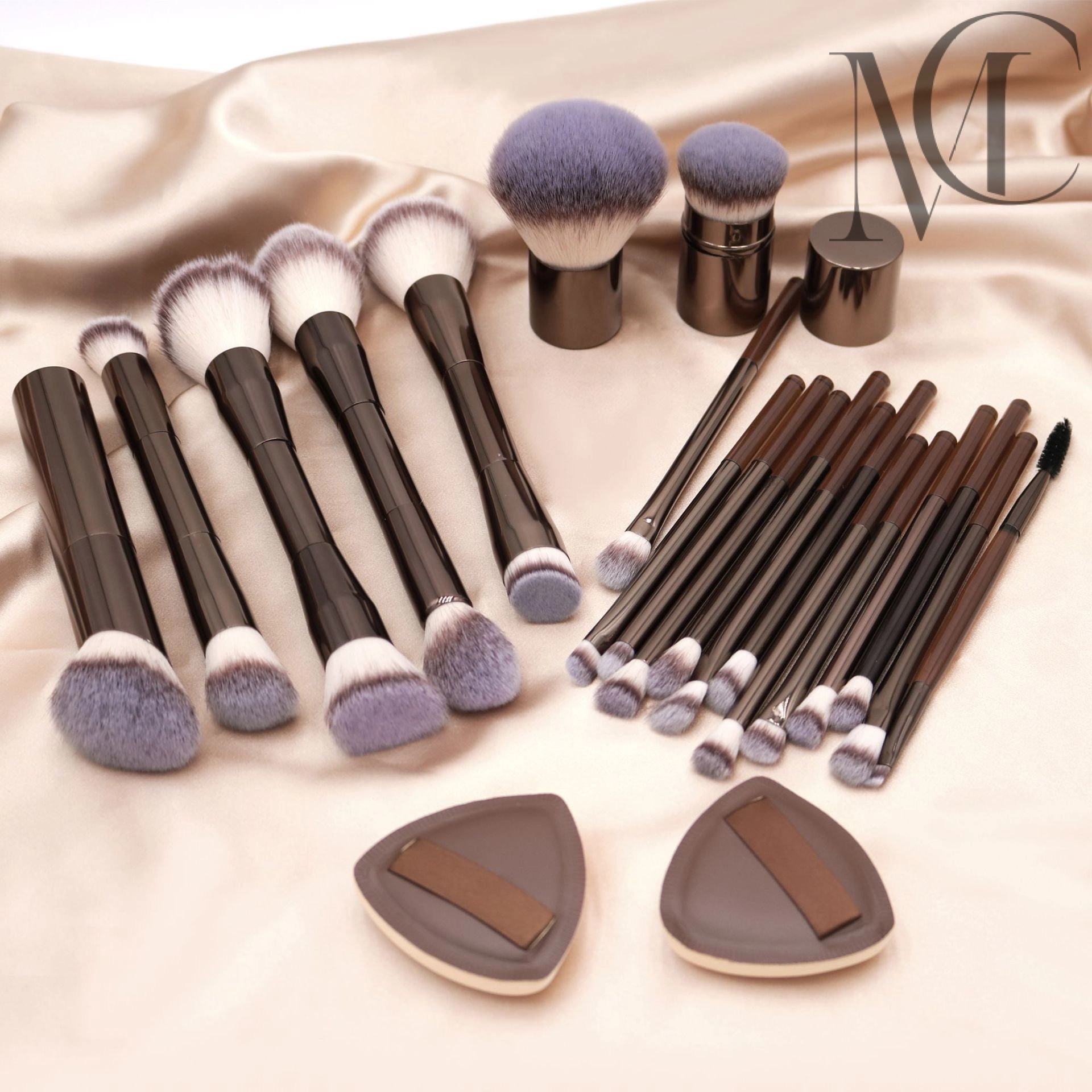
22-Piece Professional Makeup Brush Set| Brown Luxury Series | OEM Private Label Ready | Wholesale Cosmetic Brush Manufacturer
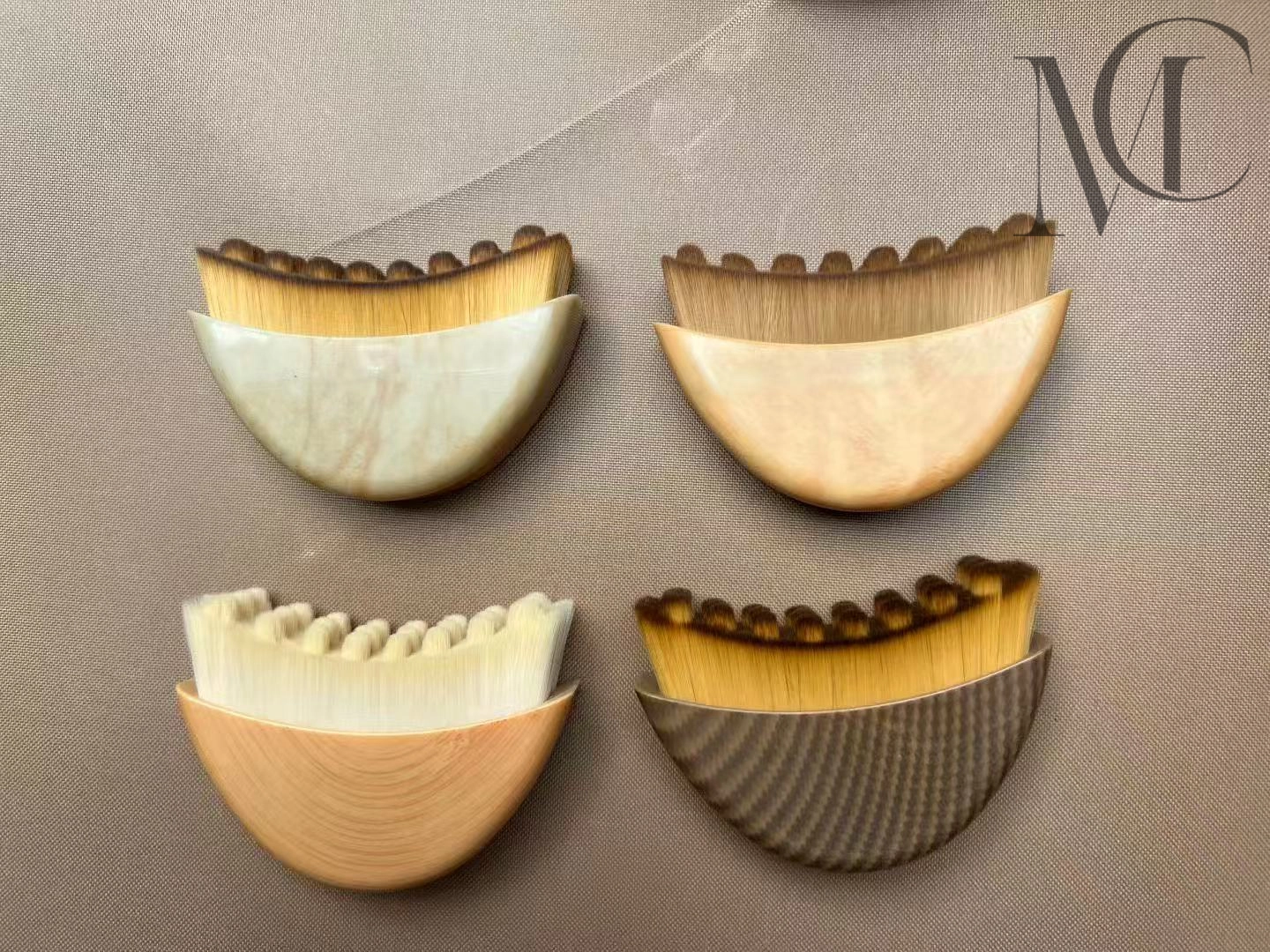
Premium Lymphatic Contour Facial Brush | Popular Makeup Brush Manufacturers
Prdoucts Categories
FAQ
For Customization
Can MECO Brush help with packaging design?
Definitely. We offer custom packaging services — from simple pouches and paper boxes to luxury gift sets. Our design team can help create packaging that enhances your brand presentation and customer experience.
What parts of a makeup brush can I customize?
Almost every part—bristles, handles, ferrules, logos, and packaging. You can choose materials, shapes, finishes, and branding styles to perfectly match your brand identity.
What is your payment and shipping policy?
We accept various payment methods, including T/T and PayPal for samples.
For shipping, we can work with your freight forwarder or arrange international shipping by air, sea, or courier (DHL, FedEx, UPS).
What is your Minimum Order Quantity (MOQ)?
For in-stock brushes, our MOQ is relatively low, making it ideal for small or startup brands.
For customized brushes, the MOQ varies depending on design complexity — typically around 500–1000 sets.
For Company
How can I start my custom makeup brush project with MECO Brush?
Simply reach out to our team via the contact form or email.
We’ll guide you through every step — from selecting materials to final packaging.
More Insights from an Expert Cosmetic Brush Manufacturer
Dive deeper into the engineering secrets, material guides, and OEM supply chain strategies that help global beauty brands build their next best-sellers.

Hero SKU vs. Full Set: How to Build the Right Product Mix for Your Makeup Brush Brand
A lot of brand owners conflate two separate decisions when thinking about their product line: product structure and sales strategy. Untangling them makes everything clearer.
This guide explores the supply chain and commercial logic behind single hero brushes versus complete brush sets, helping you structure a product mix that maximizes Average Order Value (AOV), minimizes inventory risk, and builds a defensible luxury makeup brushes private label brand.
04/08/2026
Details ››

Skincare Applicators & Spa Brushes: The Next Big OEM Growth Category for Beauty Brands (2026)
The global spa and wellness market is projected to reach $6.6 trillion by 2025.
The professional skincare tools segment is growing at twice the rate of makeup brushes.
Most cosmetic brush brands have not noticed yet.
The ones that have are quietly launching skincare applicator lines that command retail price points 40% to 60% higher than equivalent makeup brushes—with lower competitive saturation and stronger repeat purchase rates.
This is your manufacturing guide to the category before it gets crowded.
04/06/2026
Details ››

Eco-Friendly Makeup Brushes: The Complete OEM Sourcing Guide for Sustainable Beauty Brands (2026)
In 2024, the EU banned over 2,400 chemical substances from cosmetic products. In 2025, major US retailers began requiring sustainability documentation from all new beauty tool suppliers. In 2026, your customer is reading your material list before they read your price.
The question is no longer whether your brush brand needs a sustainability strategy. The question is whether your current manufacturer can actually deliver one.
Sustainability in makeup brushes is no longer a niche positioning play for indie clean beauty brands. It is a baseline sourcing requirement being driven simultaneously by three forces:
→ Retail buyers at Sephora, Target, and major EU chains now require ESG documentation from suppliers
→ EU and US regulations are actively restricting virgin plastics and non-compliant chemical finishes
→ Millennial and Gen Z consumers—now the dominant beauty purchasing demographic—treat sustainability as a non-negotiable brand filter
This guide gives you the practical, technical framework for building a genuinely eco-friendly makeup brush line—covering materials, production standards, certifications, packaging, and what to actually ask your cosmetic brush manufacturer before placing an order.
04/05/2026
Details ››

B2B Sourcing Guide: How to Transition to a New Cosmetic Brush Factory Without Supply Chain Risks
Switching cosmetic brush suppliers without supply chain disruption is possible. Meco's B2B guide covers the 4-step transition roadmap, shedding prevention, and pilot run strategy. MOQ from 500 units. Factory-direct Shenzhen.
03/24/2026
Details ››

Beyond Synthetic: How a Vegan Makeup Brushes Manufacturer Crafts Professional-Grade Tools (2026 Edition)
True vegan brush manufacturing goes beyond synthetic bristles — it requires auditing adhesives, handle coatings, and every hidden component. Meco's complete B2B guide covers materials, certification, and sourcing strategy. Factory-direct from Shenzhen.
03/12/2026
Details ››

The Complete Technical Guide to Eco-Friendly Makeup Brushes (2026 OEM Specification)
Eco-friendly brushes require more than a bamboo handle. Meco's OEM engineering guide covers FSC, PCR, bristle specs, and retail compliance for Sephora, EU & Amazon. MOQ 500 units. Factory-direct Shenzhen.
03/02/2026
Details ››
Request Sample
Request a sample today, and our team will arrange fast delivery, helping you evaluate our materials and craftsmanship.

Contact Information


+86 133 9214 4121

Baolong Subdistrict, Longgang District, Shenzhen City, Guangdong Province, Nanyue, Dalang, North District
Add our WhatsApp
+86 133 9214 4121
Direct factory supplier of premium makeup brushes, offering small to large-scale customization.
Quick Links
• Tel: +86 13392144121
• Add: Baolong Subdistrict, Longgang District, Shenzhen City, Guangdong Province; Nanyue Dalang North District