

info@mecobrush.com
Cosmetic Brush Wholesale: The Complete B2B Sourcing Guide for Beauty Brands (2026)
2025-12-11
- Why Wholesale Sourcing Strategy Matters More in 2026
- Trading Company vs. Direct Manufacturer: The Most Important Decision
- What to Evaluate When Sourcing Cosmetic Brushes Wholesale
- 1. Bristle Specification (The Most Important Variable)
- 2. Ferrule Construction (The Hidden Failure Point)
- 3. Batch Consistency (The Scale Variable)
- Synthetic vs. Natural Hair Bristles: A Practical Guide
- Understanding MOQ (Minimum Order Quantity)
- Certifications That Matter for Wholesale Compliance
- How to Structure a Wholesale Sourcing Brief
- Meco Brush: Factory-Direct Wholesale from Shenzhen
- Frequently Asked Questions
Most beauty brands make the exact same wholesale sourcing mistake.
They find a supplier with attractive unit pricing, place a bulk order, and discover three months later that the bristles shed, the ferrules loosen, and the customer reviews they worked so hard to build are being quietly destroyed by a component that cost less than a cent to engineer correctly.
"Cosmetic brush wholesale is not complicated. But it requires asking the right questions before placing an order — not after receiving it."
This guide covers everything a beauty brand, retailer, or distributor needs to know to source wholesale makeup brushes correctly in 2026 — from evaluating supplier credentials to specifying bristle grades, understanding MOQ structures, and building a supply chain that scales.

Why Wholesale Sourcing Strategy Matters More in 2026
The global makeup brush market is growing consistently, driven by a consumer base that is more educated about application tools than at any previous point in industry history. Consumers who understand the difference between a nanofiber and a standard PBT fiber are the same consumers who write detailed negative reviews when a brush fails.
Three specific market shifts are reshaping wholesale sourcing decisions right now:
-
Elevated Hygiene Expectations: Post-2020, cleanliness is a primary purchase driver. Antimicrobial fiber specifications and easy-clean synthetic bristles are no longer premium differentiators — they are baseline expectations.
-
Sustainability as a Compliance Requirement: Major retail buyers (Sephora, Target, and EU chains) now audit supplier sustainability credentials. Brands without FSC certification, GRS documentation, or cruelty-free statements are being deprioritized.
-
The Rise of Advanced Synthetics: For liquid and cream formulas, high-grade synthetic nanofibers now match or exceed natural hair performance—with the added commercial advantage of full vegan certification.
Trading Company vs. Direct Manufacturer: The Most Important Decision
Before evaluating any other criteria, establish whether you are speaking with a direct manufacturer or a trading company. This single distinction dictates your pricing, quality control, and long-term reliability.
-
❌ A Trading Company sources finished brushes from multiple factories. They offer fast catalog ordering but lack engineering capability, direct production control, and leverage when quality problems arise.
-
✅ A Direct Manufacturer controls production from inside their facility. Engineering specs, QC protocols, and material sourcing are managed by the team making your brushes. When a quality issue arises, it is investigated and solved at the source.
The Acid Test: Ask any potential supplier for their manufacturing facility address and request a virtual production tour. A direct manufacturer will welcome this; a trading company will deflect it.
What to Evaluate When Sourcing Cosmetic Brushes Wholesale
1. Bristle Specification (The Most Important Variable)
The bristle grade is the single most impactful decision. Fiber diameter, measured in microns, determines application feel and longevity. A manufacturer who processes their own bristle fibers—rather than purchasing pre-made tufts from third parties—has tighter control over the consistency variable that drives most quality complaints.
2. Ferrule Construction (The Hidden Failure Point)
The ferrule is the metal sleeve connecting bristles to the handle. It is the most common point of structural failure. Double-crimp ferrule construction, combined with water-based chemical-resistant epoxy, is the engineering standard that prevents shedding.
(💡 Pro Tip: Request 5kg mechanical pull-test results before placing any wholesale order.)
3. Batch Consistency (The Scale Variable)
A single perfect sample proves a factory can make one good brush. It doesn't prove they can make 5,000. Request Batch QC Reports from previous runs. A 2% defect rate on 500 units is 10 brushes; on 50,000 units, it's 1,000 angry customers.
Synthetic vs. Natural Hair Bristles: A Practical Guide
The bristle material decision affects performance, retail price point, and compliance. Here is a practical framework:
| Bristle Type | Best Application | Retail Positioning | Key Advantage |
| Synthetic PBT | Liquid, cream, powder | Mass to Premium | Vegan, highly consistent, easy-clean |
| Synthetic Nanofiber | Premium liquid, cream | Premium / Pro Artistry | Animal-hair performance, 100% vegan |
| Natural Goat (Saikoho) | Loose powder, blush | Luxury ($40+) | Superior powder diffusion |
| Natural Squirrel | Ultra-luxury powder | Ultra-Premium | Unmatched softness for delicate skin |
The Verdict for 2026: High-grade synthetic PBT and nanofiber bristles are the recommended default. They do not absorb liquid formulas, are cruelty-free, eliminate batch-to-batch variation, and generate higher repeat purchase rates due to easy maintenance.
Understanding MOQ (Minimum Order Quantity)
MOQ structures vary based on customization levels:
-
Standard Tooling: For designs using an existing mold library with custom logos and colors, MOQ typically starts from 500 units per style. This makes wholesale sourcing highly accessible for emerging brands.
-
Proprietary Custom Tooling: For unique handle shapes or new brush head geometries, MOQ is evaluated based on tooling complexity. Higher MOQs lower the per-unit amortized tooling cost.
-
Volume Pricing: For ongoing supply agreements, pricing tiers reward brands that commit to quarterly or annual volume forecasts.
Certifications That Matter for Wholesale Compliance
Eliminate costly compliance retrofitting by verifying these certificates before production:
-
ISO 9001: Baseline quality management standard.
-
BSCI: Ethical social compliance (Required for EU/US retail).
-
FSC: Forest Stewardship Council certification for sustainable wood/bamboo handles.
-
SGS: Material safety testing (heavy metals, formaldehyde).
-
REACH: Chemical safety compliance (Mandatory for the EU).
-
Cruelty-Free / Vegan: Essential for clean beauty positioning.
How to Structure a Wholesale Sourcing Brief
Suppliers produce to the specifications they receive — not the ones you assumed were implied. A complete OEM brief must include:
-
Target retail price point and positioning.
-
Bristle fiber type, grade, and color.
-
Handle material, finish, and exact Pantone color.
-
Ferrule material and crimping method.
-
Logo application method (with vector artwork).
-
Required certifications and packaging formats.
Meco Brush: Factory-Direct Wholesale from Shenzhen
Meco Brush is a vertically integrated cosmetic brush manufacturer producing wholesale and private label collections for global beauty brands.
-
Full OEM Development: From 500 units per style.
-
Uncompromising QC: Every wholesale order includes batch QC reports (bristle pull tests, ferrule dimensions, and handle durability).
-
Global Compliance: ISO 9001, BSCI, SGS, Vegan, Cruelty-Free, FSC, and REACH certified.
-
Fast Turnaround: Samples in 7-10 days | Bulk production in 25-35 days.
Trusted by 8,000+ brands across 50+ countries. Ensure your next wholesale order scales without quality compromises.
[REQUEST A WHOLESALE QUOTE & SAMPLES ]
📧 Email: info@mecobrush.com
💬 WhatsApp: +86 133 9214 4121
Frequently Asked Questions
Q: What is the minimum order quantity for cosmetic brushes wholesale?
A: MOQ starts from 500 units per style at Meco for designs using our existing mold library with custom logos/colors. We support pilot launch quantities for emerging brands and large-scale ongoing production from the same facility.
Q: How do I verify that a supplier is a direct manufacturer?
A: Request a virtual production tour and ask which stages are conducted in-house. Bristle processing, handle fabrication, ferrule crimping, and packaging should all be confirmable as in-house operations.
Q: What bristle specification should I use for a liquid foundation brush?
A: High-grade synthetic PBT or nanofiber bristles. They are non-porous, meaning they do not absorb liquid formulas, which reduces product waste and improves application efficiency. Avoid natural hair for liquid formulas.
Q: How do I prevent quality inconsistency across multiple orders?
A: Lock your specs in a written brief, request Batch QC reports for every run, and establish a "golden sample" approval process. The retained golden sample serves as the immutable quality reference for all future orders.
Recommended for you
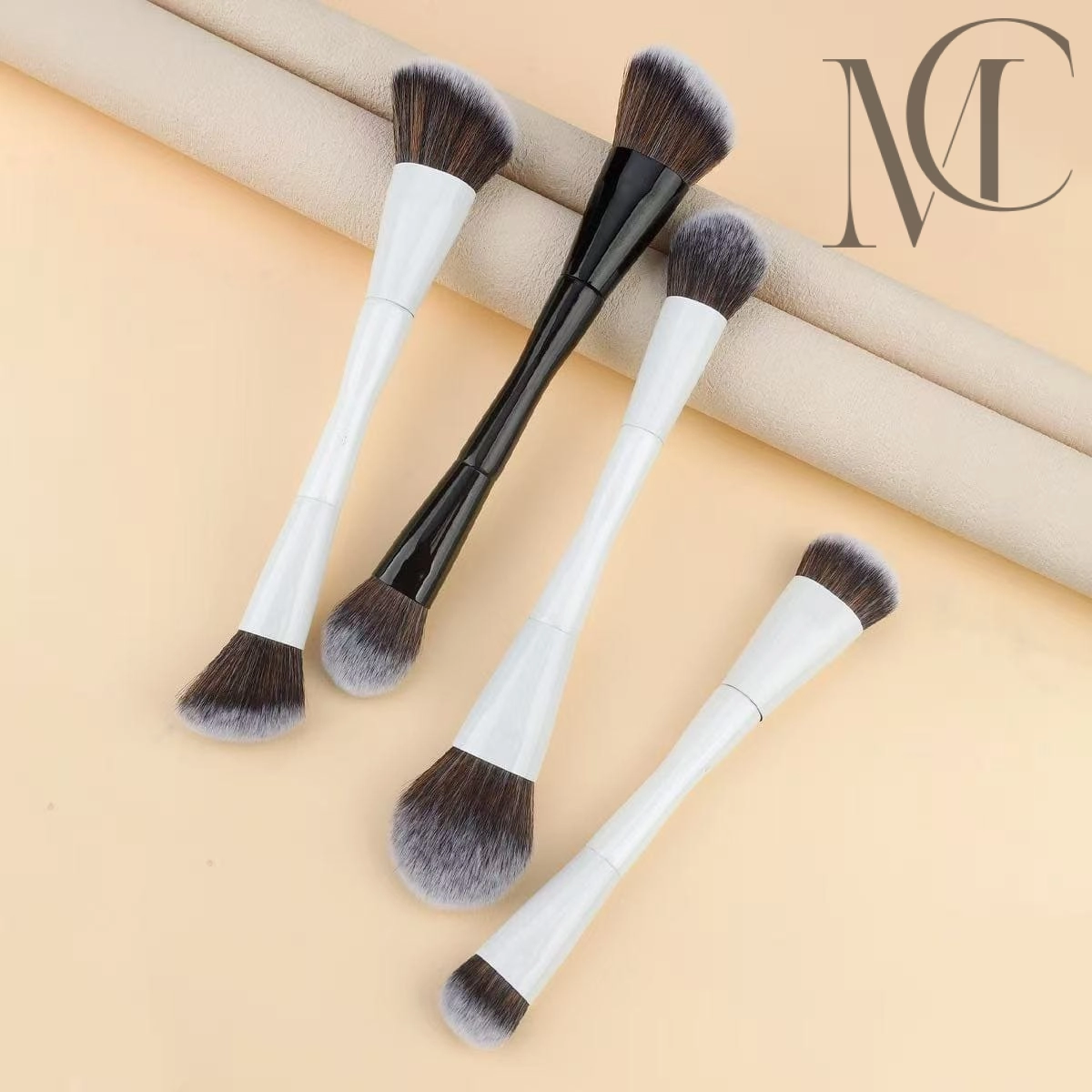
Dual-Ended Foundation & Contour Brush | 2-in-1 OEM Private Label
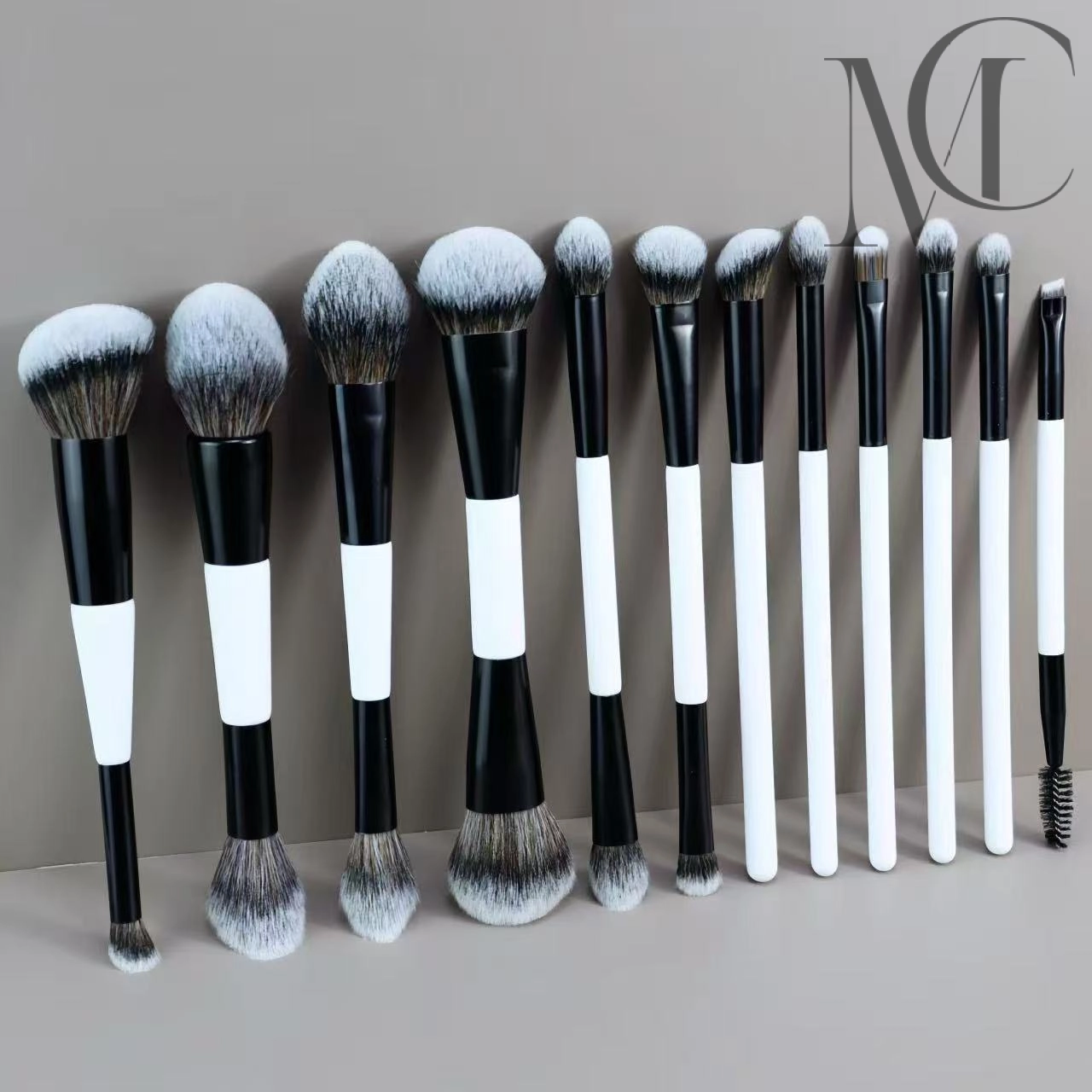
Private Label 12-Piece / 19-Head Dual-Ended Pro Makeup Brush Set | OEM Customization
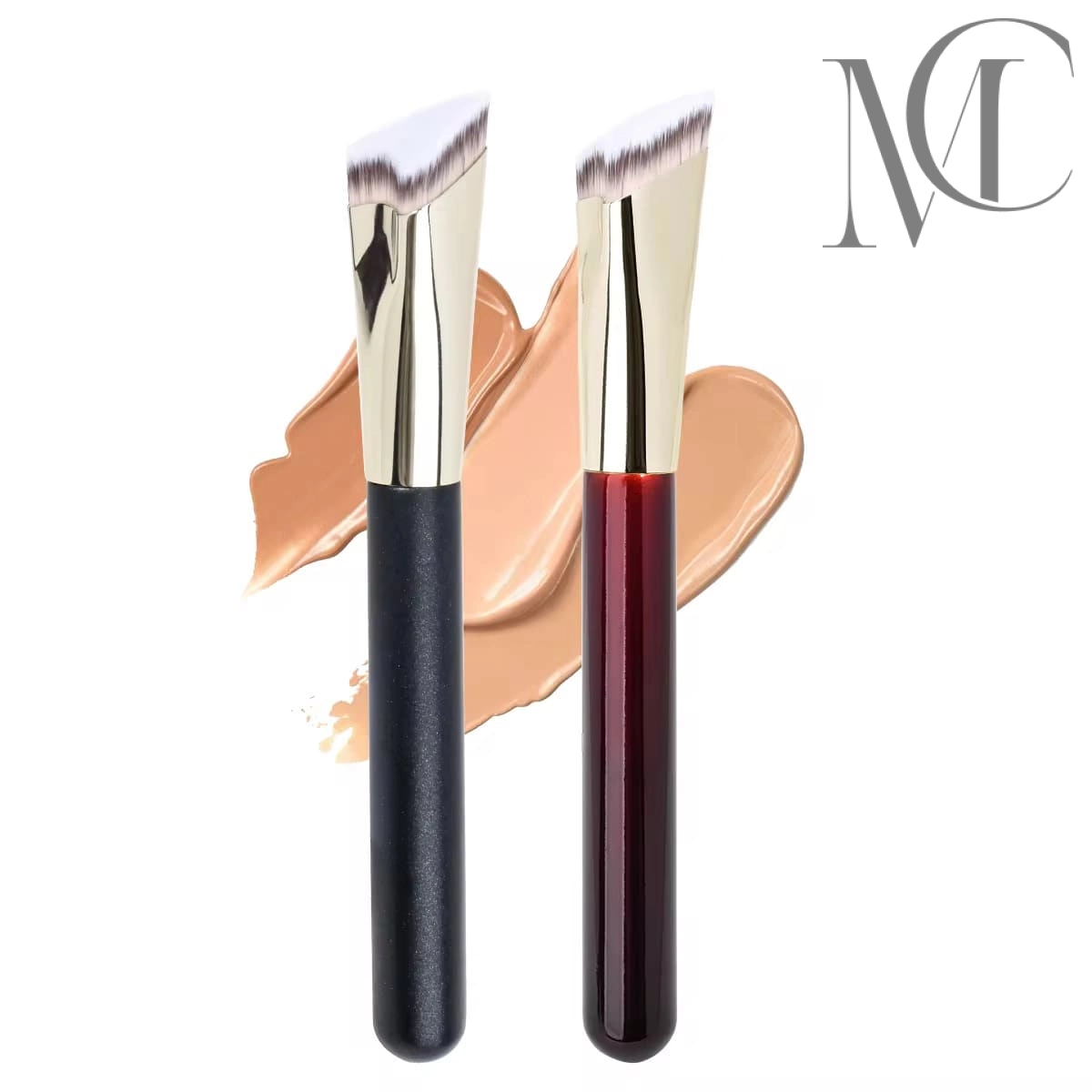
Premium Angle Foundation Brush with Synthetic Hair & Thickened Aluminum Ferrule, Elegant Wooden Handle
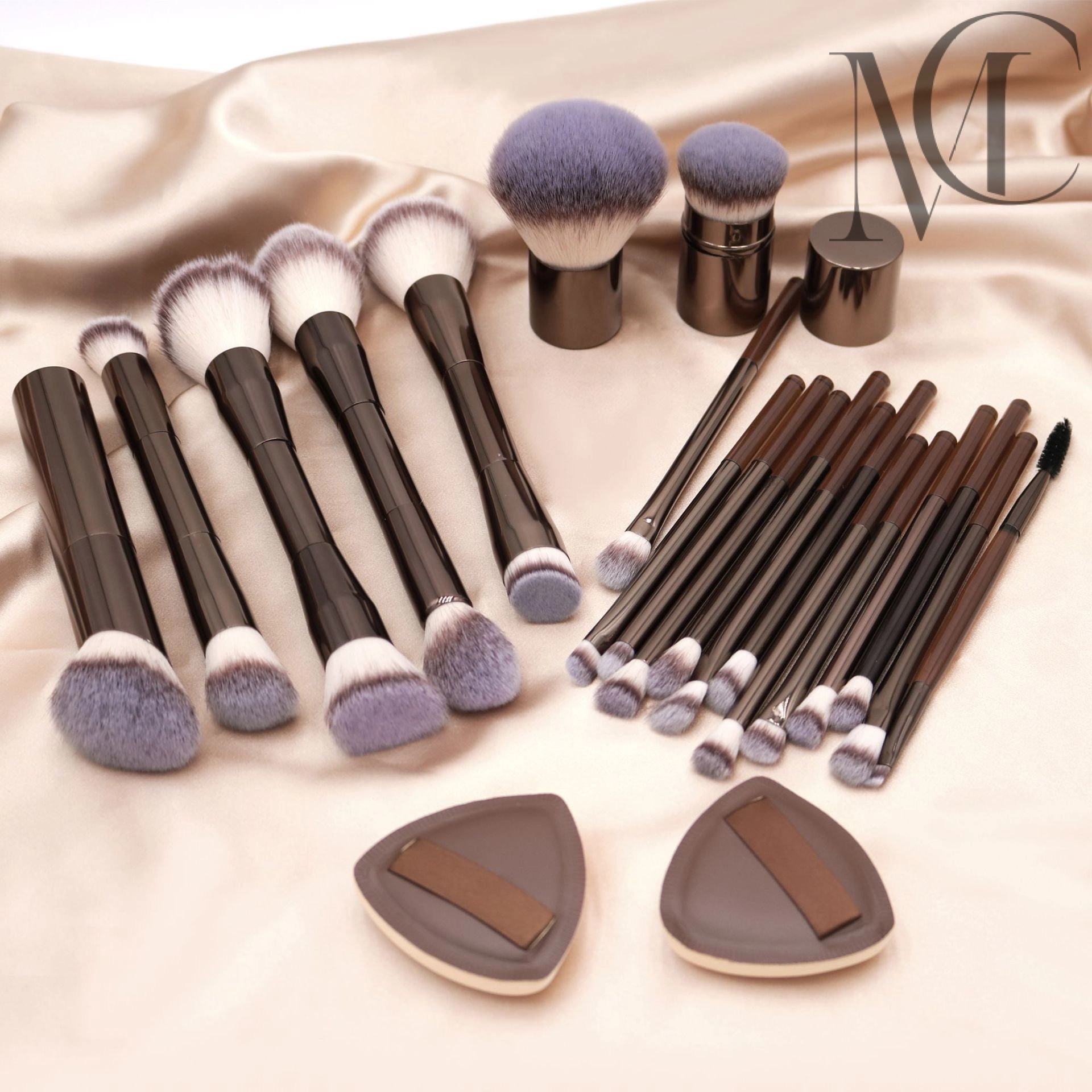
22-Piece Professional Makeup Brush Set| Brown Luxury Series | OEM Private Label Ready | Wholesale Cosmetic Brush Manufacturer
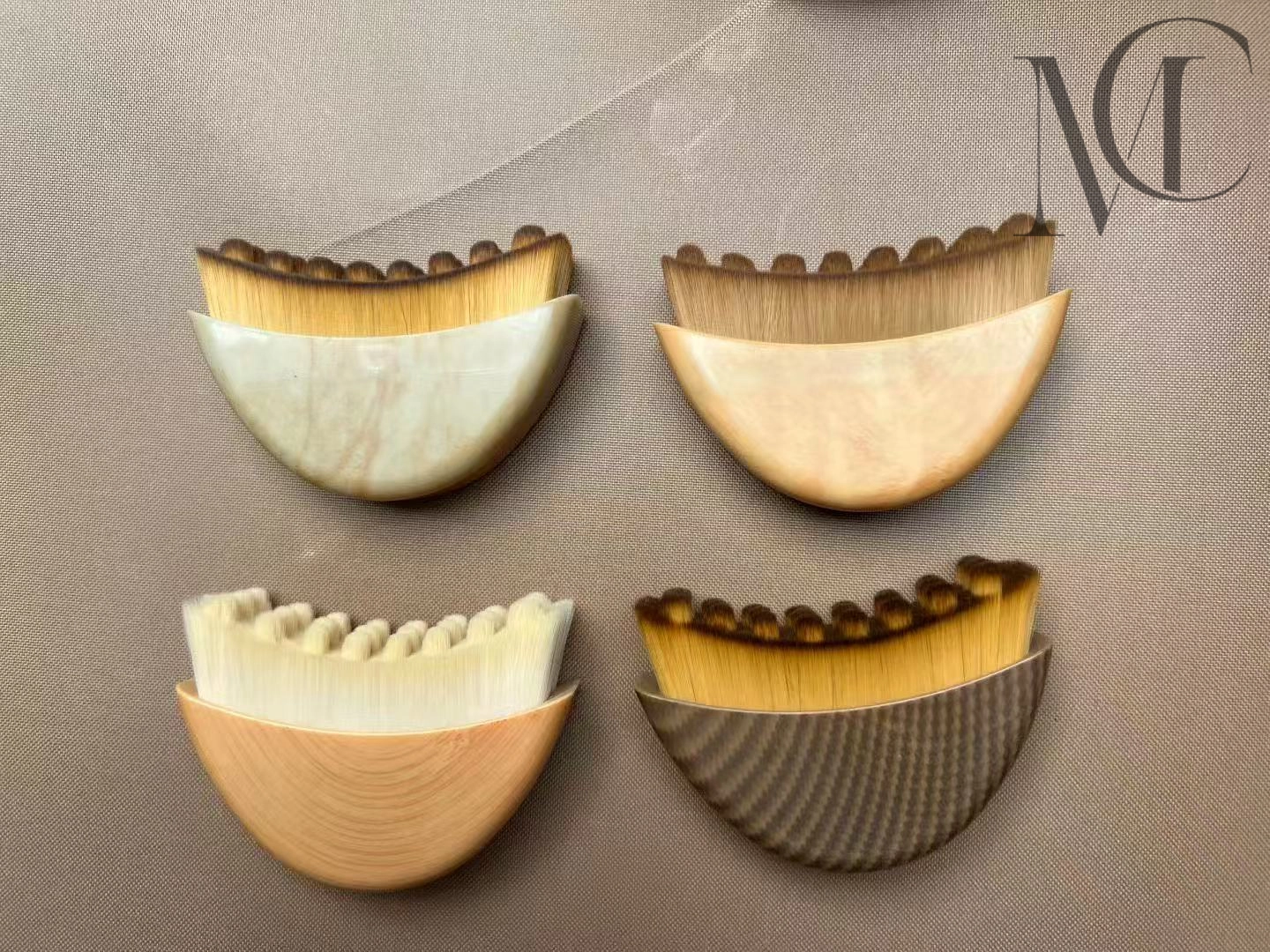
Premium Lymphatic Contour Facial Brush | Popular Makeup Brush Manufacturers
Prdoucts Categories
FAQ
For Company
Are you a factory or a trading company?
We are a professional manufacturing factory, integrating industry and trade.
For Customization
What is your Minimum Order Quantity (MOQ)?
For in-stock brushes, our MOQ is relatively low, making it ideal for small or startup brands.
For customized brushes, the MOQ varies depending on design complexity — typically around 500–1000 sets.
Do you offer OEM and ODM services?
Yes, we provide both OEM (Original Equipment Manufacturing) and ODM (Original Design Manufacturing) services. Whether you have a full design ready or just an idea, our team can help bring your concept to life with professional design and technical support.
What parts of a makeup brush can I customize?
Almost every part—bristles, handles, ferrules, logos, and packaging. You can choose materials, shapes, finishes, and branding styles to perfectly match your brand identity.
Where are your brushes manufactured?
All our makeup brushes are produced in our factory in China, where we maintain strict quality control standards throughout every stage of production. Our advanced facilities and skilled team ensure consistent quality and competitive pricing.
More Insights from an Expert Cosmetic Brush Manufacturer
Dive deeper into the engineering secrets, material guides, and OEM supply chain strategies that help global beauty brands build their next best-sellers.

Hero SKU vs. Full Set: How to Build the Right Product Mix for Your Makeup Brush Brand
A lot of brand owners conflate two separate decisions when thinking about their product line: product structure and sales strategy. Untangling them makes everything clearer.
This guide explores the supply chain and commercial logic behind single hero brushes versus complete brush sets, helping you structure a product mix that maximizes Average Order Value (AOV), minimizes inventory risk, and builds a defensible luxury makeup brushes private label brand.
04/08/2026
Details ››

Skincare Applicators & Spa Brushes: The Next Big OEM Growth Category for Beauty Brands (2026)
The global spa and wellness market is projected to reach $6.6 trillion by 2025.
The professional skincare tools segment is growing at twice the rate of makeup brushes.
Most cosmetic brush brands have not noticed yet.
The ones that have are quietly launching skincare applicator lines that command retail price points 40% to 60% higher than equivalent makeup brushes—with lower competitive saturation and stronger repeat purchase rates.
This is your manufacturing guide to the category before it gets crowded.
04/06/2026
Details ››

Eco-Friendly Makeup Brushes: The Complete OEM Sourcing Guide for Sustainable Beauty Brands (2026)
In 2024, the EU banned over 2,400 chemical substances from cosmetic products. In 2025, major US retailers began requiring sustainability documentation from all new beauty tool suppliers. In 2026, your customer is reading your material list before they read your price.
The question is no longer whether your brush brand needs a sustainability strategy. The question is whether your current manufacturer can actually deliver one.
Sustainability in makeup brushes is no longer a niche positioning play for indie clean beauty brands. It is a baseline sourcing requirement being driven simultaneously by three forces:
→ Retail buyers at Sephora, Target, and major EU chains now require ESG documentation from suppliers
→ EU and US regulations are actively restricting virgin plastics and non-compliant chemical finishes
→ Millennial and Gen Z consumers—now the dominant beauty purchasing demographic—treat sustainability as a non-negotiable brand filter
This guide gives you the practical, technical framework for building a genuinely eco-friendly makeup brush line—covering materials, production standards, certifications, packaging, and what to actually ask your cosmetic brush manufacturer before placing an order.
04/05/2026
Details ››

B2B Sourcing Guide: How to Transition to a New Cosmetic Brush Factory Without Supply Chain Risks
Switching cosmetic brush suppliers without supply chain disruption is possible. Meco's B2B guide covers the 4-step transition roadmap, shedding prevention, and pilot run strategy. MOQ from 500 units. Factory-direct Shenzhen.
03/24/2026
Details ››

Beyond Synthetic: How a Vegan Makeup Brushes Manufacturer Crafts Professional-Grade Tools (2026 Edition)
True vegan brush manufacturing goes beyond synthetic bristles — it requires auditing adhesives, handle coatings, and every hidden component. Meco's complete B2B guide covers materials, certification, and sourcing strategy. Factory-direct from Shenzhen.
03/12/2026
Details ››

The Complete Technical Guide to Eco-Friendly Makeup Brushes (2026 OEM Specification)
Eco-friendly brushes require more than a bamboo handle. Meco's OEM engineering guide covers FSC, PCR, bristle specs, and retail compliance for Sephora, EU & Amazon. MOQ 500 units. Factory-direct Shenzhen.
03/02/2026
Details ››
Request Sample
Request a sample today, and our team will arrange fast delivery, helping you evaluate our materials and craftsmanship.

Contact Information


+86 133 9214 4121

Baolong Subdistrict, Longgang District, Shenzhen City, Guangdong Province, Nanyue, Dalang, North District
Add our WhatsApp
+86 133 9214 4121
Direct factory supplier of premium makeup brushes, offering small to large-scale customization.
Quick Links
• Tel: +86 13392144121
• Add: Baolong Subdistrict, Longgang District, Shenzhen City, Guangdong Province; Nanyue Dalang North District