

info@mecobrush.com
The Rise of Skincare Brushes: Why Beauty Brands Are Adding Custom Tools for Masks & Serums
2026-01-27
- Introduction
- Why Skincare Tools Are Becoming a Strategic Product Category
- The Toolbox: Matching the Right Skincare Tool to the Right Formula
- For Clay & Mud Masks
- For Acids & Liquid Serums
- For Rich Creams & Treatments
- Manufacturing Spotlight: Why Skincare Tools Are Not “Just Makeup Brushes”
- The Business Case: How Brands Use Skincare Tools to Drive Growth
- Conclusion
- Frequently Asked Questions About Custom Skincare Tools
(Elevating the At-Home Spa Experience and Increasing AOV with Custom-Manufactured Skincare Tools)
Introduction
Behind every effective skincare routine is not only a well-formulated product but also the right tool. As the global beauty industry embraces "Skinification"—the blending of skincare principles into every step of beauty—consumers are no longer treating skincare as a basic daily habit. It has evolved into a personal ritual, where texture, hygiene, and sensory experience matter as much as results.
From the perspective of a cosmetic brush manufacturer, this shift is creating a fast-growing opportunity. Brands offering masks, serums, and treatments are increasingly turning to custom skincare tools wholesale to differentiate their products in a crowded market.

Why Skincare Tools Are Becoming a Strategic Product Category
Hygiene-Driven Consumer Behavior Modern consumers are increasingly uncomfortable with dipping fingers into jars of masks or creams. Concerns over contamination and product freshness are driving demand for dedicated skincare application tools. For brands, this shift positions skincare brushes not as optional accessories but as hygienic necessities that preserve the integrity of the formula.
2. Improved Product Efficiency
High-value skincare products—such as serums, acids, and specialty masks—are easily wasted when applied by hand. Purpose-built tools ensure more precise, even application, allowing consumers to use less product while achieving better results. This efficiency directly enhances Perceived Value, making skincare tools ideal companions for premium formulations.
3. The “At-Home Spa” Effect
Using a brush to apply a mask or serum elevates the experience. It transforms a routine into a ritual, reinforcing a brand’s premium positioning. For many brands, this experiential upgrade justifies higher price points and drives repeat purchases.
The Toolbox: Matching the Right Skincare Tool to the Right Formula
Choosing the correct tool is critical. Unlike makeup brushes, skincare tools must be engineered around formulation behavior, viscosity, and chemical interaction.
For Clay & Mud Masks
-
· Recommended: Silicone applicator heads (Easy-Clean)
-
· Why: Non-porous and resistant to product buildup. Silicone spreads thick masks evenly without wasting a drop.
-
· Brand Insight: Ideal for bundled mask kits and entry-level skincare sets.
For Acids & Liquid Serums
-
· Recommended: Ultra-thin synthetic fiber brushes (Fan or Flat styles)
-
· Why: Lightweight fibers minimize friction, allowing controlled application of active ingredients (like AHAs/BHAs) without irritating sensitive skin.
-
· Brand Insight: A must-have for clinical skincare brands and dermatologist-backed lines.
For Rich Creams & Treatments
-
· Recommended: Dense, rounded kabuki-style brushes
-
· Why: High-density fibers assist in massaging products into the skin, improving absorption and tactile comfort.
-
· Brand Insight: Works perfectly for luxury night creams and anti-aging collections.
Manufacturing Spotlight: Why Skincare Tools Are Not “Just Makeup Brushes”
From a production standpoint, skincare tools demand a higher technical standard than traditional makeup brushes. At Mecobrush, we treat skincare tools as specialized instruments:
-
· Chemical Resistance Matters: Skincare formulations often contain acids, essential oils, and active ingredients that are more corrosive than makeup pigments. We use chemically resistant industrial adhesives and anti-oxidation aluminum ferrules to ensure long-term durability. Without these considerations, tools may shed or rust after contact with acidic serums.
-
· Easy-Clean Fiber Technology: Our advanced synthetic fibers are treated to reduce product residue and bacterial buildup. This not only improves hygiene but also extends product lifespan—a key selling point for your eco-conscious customers.
The Business Case: How Brands Use Skincare Tools to Drive Growth
-
· Bundled Kits Increase AOV: Pairing a mask with a matching applicator brush increases the Average Order Value (AOV). Consumers perceive the bundle as a "complete solution" rather than just a product.
-
· Ideal for GWP Campaigns: Skincare tools are cost-efficient yet have a high perceived value, making them perfect for Gift-With-Purchase (GWP) promotions.
-
· Low-Risk Expansion: Compared to formulating a new cream, developing a private label tool line involves lower MOQs and no shelf-life expiration risks.
Conclusion
Skincare brushes are no longer secondary accessories; they are experience-enhancing tools that improve hygiene, optimize product performance, and elevate brand perception.
For brands already offering masks or serums, partnering with a specialized cosmetic brush manufacturer like Mecobrush is the most efficient way to increase value without expanding formulation complexity.
Looking to develop custom skincare tools with reliable quality? [Contact Mecobrush Today] to request samples of our silicone and fiber skincare applicators. Let’s create the perfect partner for your formula.
Frequently Asked Questions About Custom Skincare Tools
Q1: What is the best material for mask application: Silicone or Synthetic Bristles?
A: It depends on your product's texture. For thick clay or mud masks, silicone heads are superior because they don't absorb product and are easiest to clean. For runny liquids, serums, or acid peels, synthetic bristles (like our fan brushes) are better as they hold the liquid and allow for a thinner, more controlled application. As a professional cosmetic brush manufacturer, we can recommend the best tool based on your formula samples.
Q2: Will the glue in these brushes dissolve when used with active skincare ingredients?
A: This is a common issue with low-quality tools, but not with Mecobrush. We understand that skincare products often contain acids (AHAs/BHAs) or essential oils that can degrade standard adhesives. We use specialized chemically resistant industrial epoxy and perform accelerated aging tests to ensure the brush head remains secure, even after months of exposure to active ingredients.
Q3: Can we print our logo on silicone mask brushes?
A: Yes. We offer multiple branding options for skincare tools wholesale. For silicone brushes, we can print your logo on the handle (wooden or plastic). For higher MOQs, we can even create a custom mold to deboss (indent) your logo directly onto the silicone head itself for a premium, custom look.
Q4: Are these brushes suitable for sensitive skin?
A: Absolutely. Our skincare brush fibers are made from high-grade, dermatologically friendly synthetic materials (PBT/Taklon) that are hypoallergenic and antibacterial. They are softer than natural hair and non-porous, reducing the risk of bacteria buildup that can cause breakouts—a key selling point for acne-focused skincare brands.
Q5: What is the MOQ (Minimum Order Quantity) for custom skincare tools?
A: We strive to support brands of all sizes. For standard shapes (public molds) with custom logo printing, our MOQs are very flexible. If you require a fully custom shape (e.g., a unique spatula design), the MOQ will be higher due to mold costs. Contact our team to get a specific quote for your project.
Recommended for you
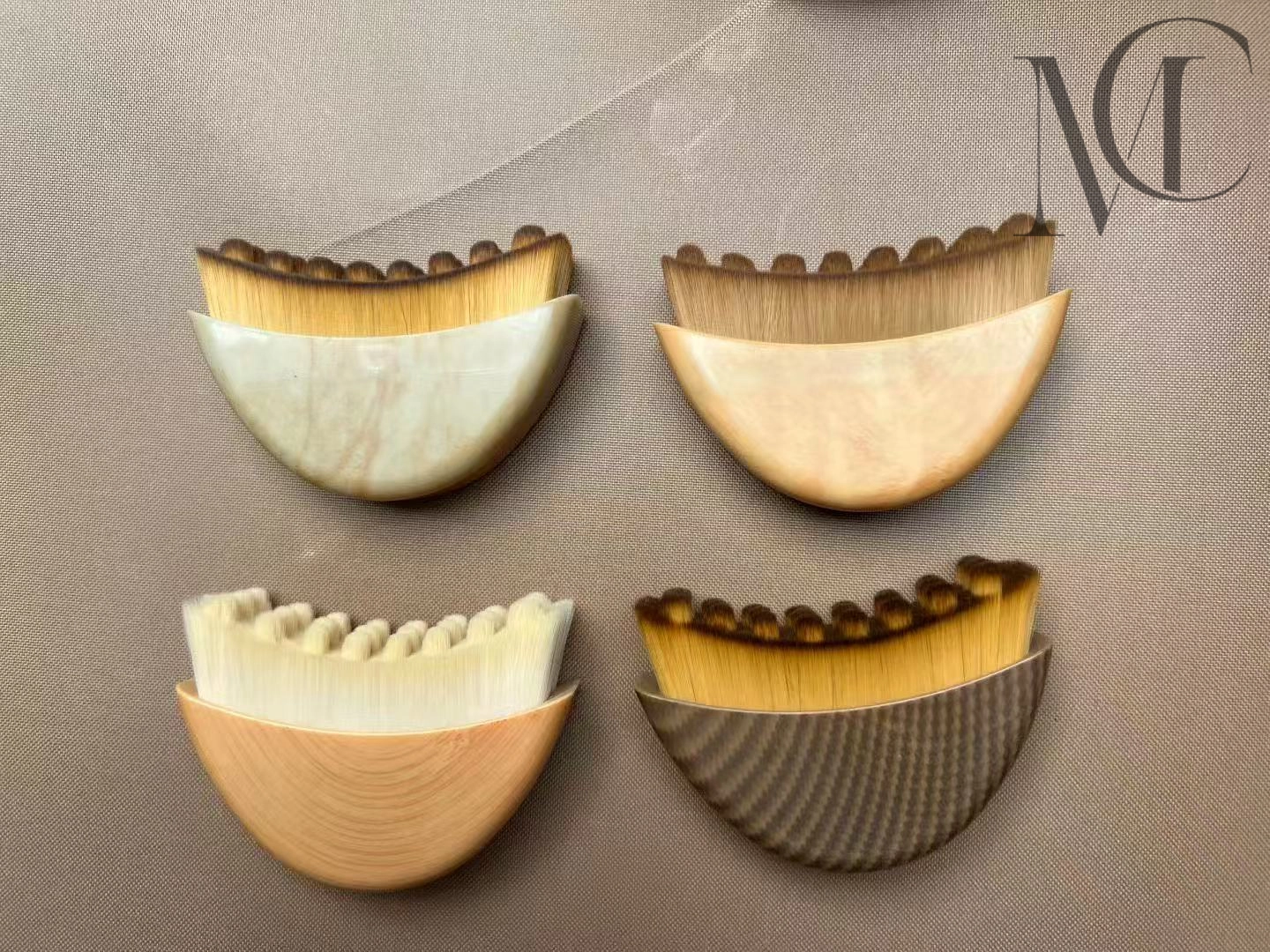
Premium Lymphatic Contour Facial Brush | Popular Makeup Brush Manufacturers
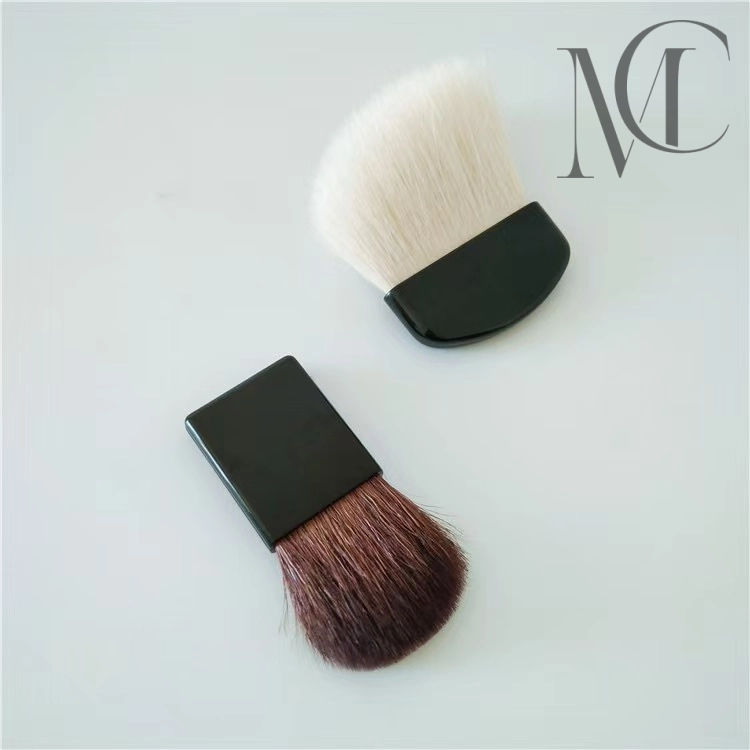
Premium Half-Moon Compact Brushes | Leading Synthetic Powder Brush Manufacturer
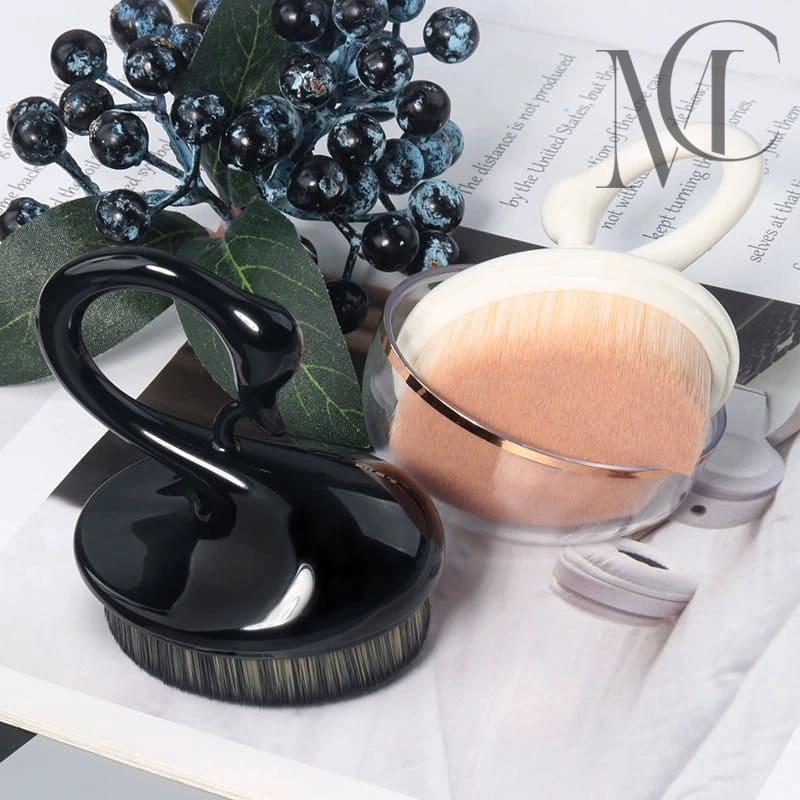
Premium Ergonomic Swan-Neck Body & Face Brush with Hygienic Cap
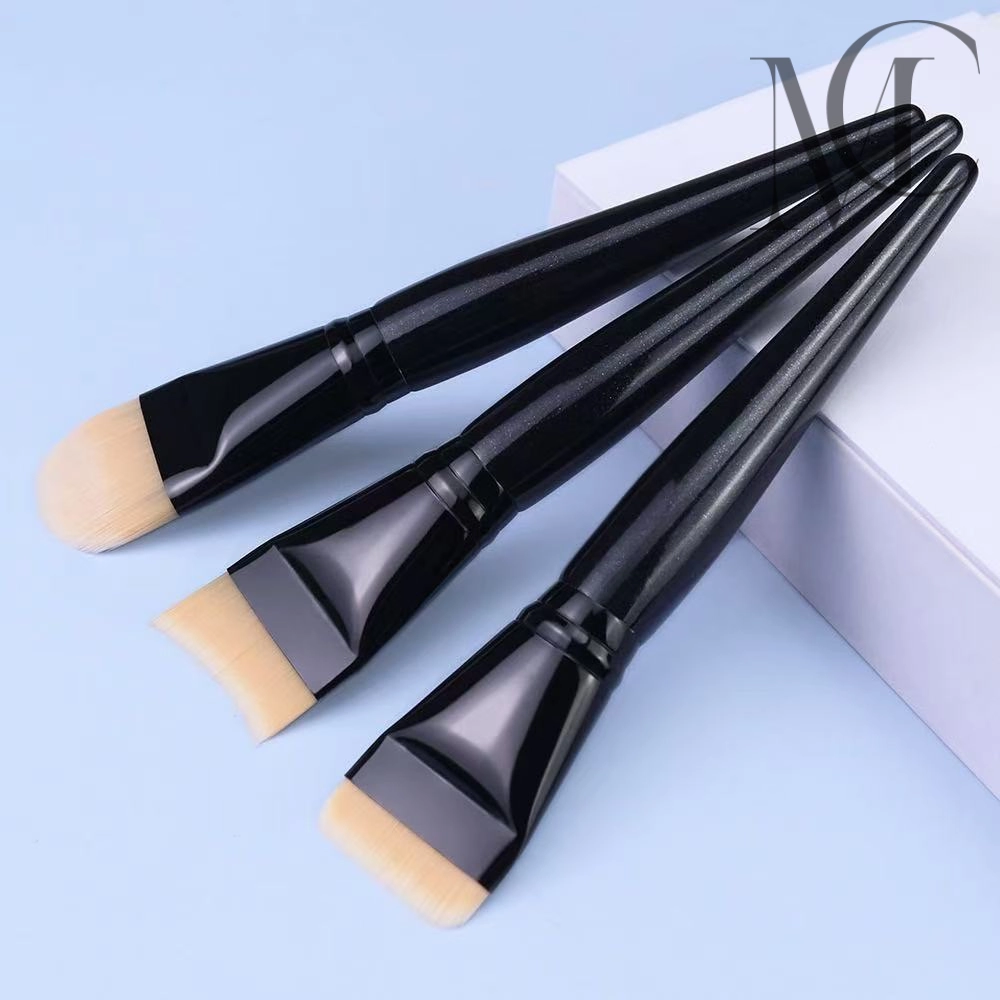
Custom Flat Top Foundation & Face Mask Brush | OEM Cosmetic Brush Manufacturer
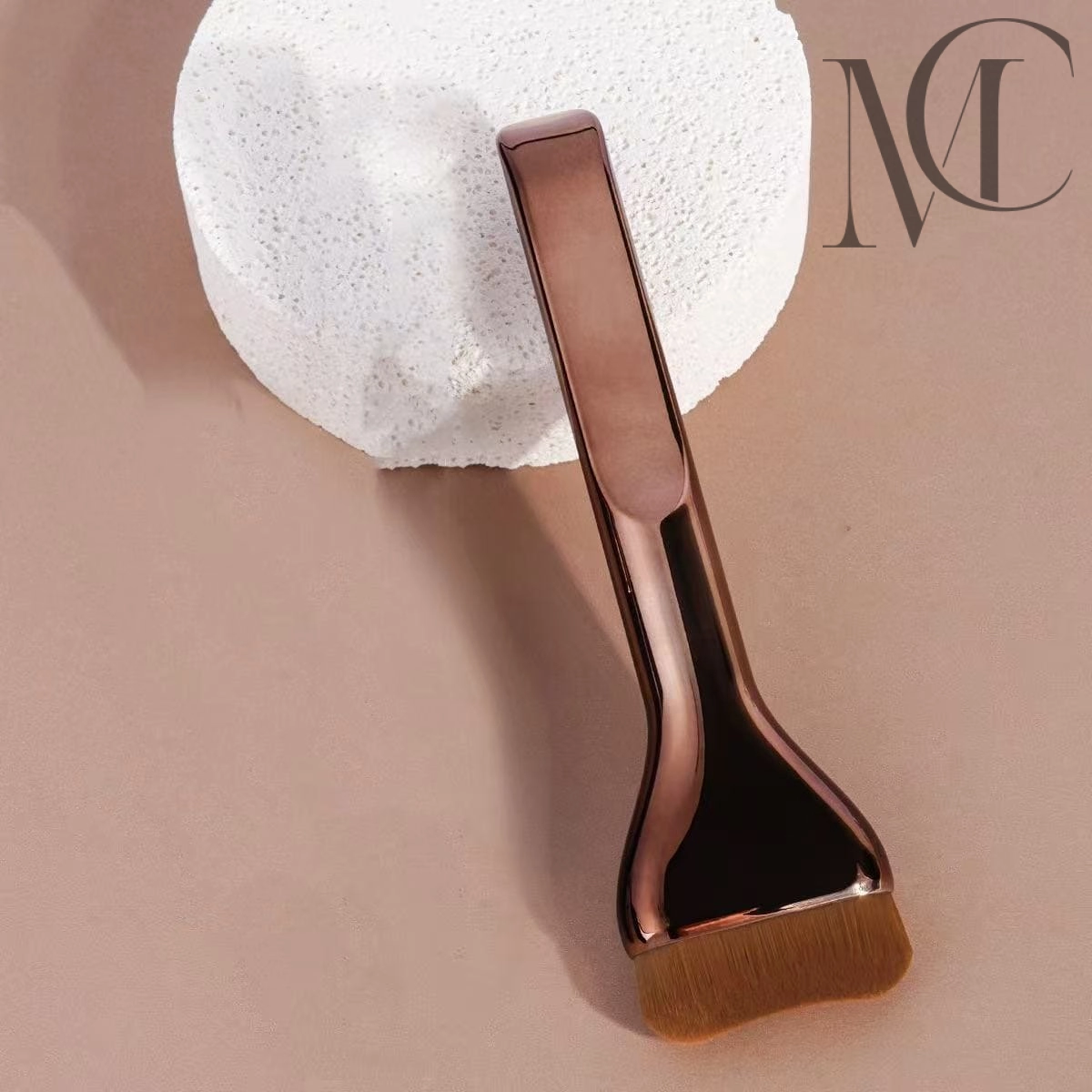
Custom Wave-Shape Contour & Foundation Brush | Ergonomic & Fully Customizable
Prdoucts Categories
FAQ
For Customization
Can I request samples before placing a bulk order?
Yes. We offer sample production so you can test the quality, softness, and overall feel before confirming your bulk order. Sampling ensures every detail meets your brand expectations.
How long does it take to produce custom makeup brushes?
Production time depends on your order details and customization requirements.
Typically, it takes 15–30 days after sample approval for bulk production.
If you have a specific deadline or launch date, we can create a tailored schedule to meet your timeline.
What is your Minimum Order Quantity (MOQ)?
For in-stock brushes, our MOQ is relatively low, making it ideal for small or startup brands.
For customized brushes, the MOQ varies depending on design complexity — typically around 500–1000 sets.
How long does it take for samples to ship? How long does it take to arrive?
In-stock samples will ship within 10 days, and custom samples will take 15-20 days. We usually use DHL, UPS, and FedEx Express, and they usually arrive 5-10 days after delivery.
For Company
How can I start my custom makeup brush project with MECO Brush?
Simply reach out to our team via the contact form or email.
We’ll guide you through every step — from selecting materials to final packaging.
More Insights from an Expert Cosmetic Brush Manufacturer
Dive deeper into the engineering secrets, material guides, and OEM supply chain strategies that help global beauty brands build their next best-sellers.

Popular Makeup Brushes: The Complete Guide from a Cosmetic Brush Manufacturer
Discover the secrets behind the beauty industry's best-selling tools. As a professional cosmetic brush manufacturer, we break down the design innovations, material choices, and manufacturing strategies that make popular makeup brushes go viral. Read our complete guide to learn how to engineer your brand's next highly profitable hero product.
02/23/2026
Details ››

Ferrule Failure Can Ruin Everything: Aluminum vs. Brass Deep Dive from a Professional Cosmetic Brush Manufacturer
Why do luxury makeup brushes survive years of professional use, while others fall apart in weeks? The secret rarely lies in the bristles or the handle. It hides in the middle: the ferrule. This small metal sleeve is the structural backbone of your beauty tools. Choose the wrong material, and even the softest synthetic fibers won't save your product from shedding, cracking, or catastrophic failure.
In this expert guide, a seasoned cosmetic brush manufacturer pulls back the curtain on the "invisible craftsmanship" of brush making. We break down the engineering reality of Aluminum vs. Brass makeup brush ferrules, helping beauty brands make bulletproof manufacturing decisions that protect their reputation and bottom line.
02/21/2026
Details ››

Kolinsky vs Synthetic Nail Brushes: Precision, Snap & Acetone Resistance Explained
Is your nail brush "snapping" back, or just snapping under pressure?
In the precision-driven world of nail artistry, the difference between a loyal customer and a product return often hangs by a single bristle. With the 2026 market demanding ultra-fine liners and intricate 3D sculpting, the debate between Kolinsky (Natural) and Synthetic fibers has never been more critical.
But material is only half the story. As a veteran cosmetic brush manufacturer applying engineering precision to nail tools, we are pulling back the curtain on the "invisible craftsmanship."
In this guide, we dive deep into the science of acetone resistance, the art of double-crimp ferrules, and how to choose the perfect tool for Acrylic versus Gel systems. Whether you are a private label brand or a salon supplier, this is your blueprint for building a high-performance nail brush collection that lasts.
02/12/2026
Details ››

2026 Ultimate Guide to Custom Makeup Brushes: A Deep Dive from Bristle Science to Handle Craftsmanship
Discover meco’s 2026 Guide to Custom Makeup Brushes, exploring bristle science and handle craftsmanship. As a leading makeup brush company, we deliver expert insights to help you choose quality, durable brushes tailored to your beauty needs.
02/05/2026
Details ››

Understanding MOQs in Makeup Brush Manufacturing: Why Custom Molds Cost More (But Are Worth the Investment)
Discover why MOQs matter in makeup brush manufacturing and how investing in custom molds enhances quality. Meco, a trusted custom makeup brushes manufacturer, explains the cost factors and benefits, helping meco stand out with superior, tailor-made tools.
02/04/2026
Details ››

Men's Grooming 2.0: Why Your Brand Needs a Mens Makeup Brush Series (Beyond Just Beards)
Men's grooming has evolved beyond beards to "invisible correction." In this guide, we explore why male consumers reject feminine tools and how brands can capture this market by launching a specialized men's makeup brush series designed with tool-inspired ergonomics and reinforced fibers.
01/28/2026
Details ››
Request Sample
Request a sample today, and our team will arrange fast delivery, helping you evaluate our materials and craftsmanship.

Contact Information


+86 133 9214 4121

Baolong Subdistrict, Longgang District, Shenzhen City, Guangdong Province, Nanyue, Dalang, North District
Add our WhatsApp
+86 133 9214 4121
Direct factory supplier of premium makeup brushes, offering small to large-scale customization.
Quick Links
• Tel: +86 13392144121
• Add: Baolong Subdistrict, Longgang District, Shenzhen City, Guangdong Province; Nanyue Dalang North District